A dissatisfied housewife brings home a stranded alien and
gradually falls in love, high school students live in fear after a beautiful student
is found dead, her back snapped across the gymnasium balance beam, a young teen
dates the enigmatic daughter of a mad scientist, in one town aliens have
actually become part of the community and started attending the local school, a
late-night DJ picks up signals from across space which appear to be from his
recently abducted wife, the real Creature from the Black Lagoon finds himself
working in Hollywood and falling for Julie Adams, teens on Lover’s Lane find
themselves fighting back against a potential alien invasion, and mysterious
video tapes show the real Bela Lugosi in films made by Ed Wood that cannot
possibly exist, given that he had died years before.
This new collection of stories by Dale Bailey (some of
which were previously published in magazines including Asimov’s Science
Fiction and Lightspeed) draws on his own memories of half-watched movies
on late-night TV and reading articles in Fangoria. Perhaps because of
this many of the stories are told as if distant, troubling memories are being
reluctantly recalled. Although the cover art may suggest a fun,
nostalgia-tinged trip back to the fifties, these are stories infused with loss,
grief and melancholy; one man recalls visiting his dead brother’s apartment in
Hollywood, trying to understand how they drifted apart, another, whose wife has
been missing since he claims to have witnessed her being taken up into the sky,
can no longer fully connect with the people around him, a young wife lives in a
trailer park struggling to overcome the tragedy of her baby daughter dying just
minutes after birth, and the Creature tries to reconcile his feelings for Julie
Adams with his desperate need to return to the swamps. These are people whose
lives have not turned out the way they had hoped, trying to understand and come
to terms with their frightening, life-changing experiences. Yet at the same
time, Dale, not forgetting what most of us are here for, combines B-movie
tropes and titles such as ‘Invasion of the Saucer-Men', ‘The Ghoul Goes West’, ‘Night
Caller from Outer Space’ and ‘I Was a Teenage Werewolf’, with humour,
real-world heartbreak and longing.
This hardback collection, published by Electric
Dreamhouse, is a wonderful read for any classic movie fan. Each story is
accompanied by a suitably pulpy illustration (dome-headed aliens, slavering
werewolves and pulchritudinous heroines appear to be Sheady’s specialty), and
the book cover is a work of art in itself, packed with imagery from many
drive-in movies, and not just those referenced in the book. These are stories
that will linger in your mind long after reading, much like the tragic tales
themselves have lingered in the minds of their respective narrators.
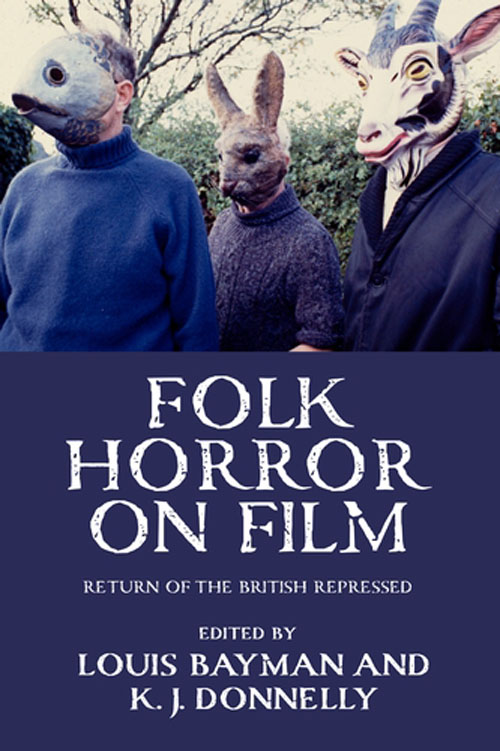
Some credit director Piers Haggard with coining the term
‘Folk Horror’ during an interview to set his film The Blood on Satan’s Claw
(1971) apart from the more traditional horror offerings by the likes of Hammer
Films and Amicus. As the term has taken hold, such films have become more
closely aligned with a European arthouse style of filmmaking. The genre has
since been retrospectively assigned to many films including the aforementioned
film, alongside the other two points of the ‘Unholy Trinity’ of British Folk Horror;
Witchfinder General (1968) and The Wicker Man (1973). This is a
‘wyrd’ genre, where the films are often unsettling rather than outright
horrifying, although in the case of modern folk horrors such as Kill List (2011),
both things can be said to be true.
When director Ben Wheatley went into the woods to shoot In
the Earth (2021), not only was he returning to the tone and style of his
earlier films Kill List and A Field in England (2013), but he was
also with the title addressing the very essence of Folk Horror: as this new
book discusses in detail, Folk Horror is something with its roots in ancient
(pagan) times, something in the earth, just below the surface - perhaps in an
English field - that once disturbed seeps out, terrifying some, whilst bringing
others together with its community rituals and human sacrifice.
In this new collection of academic essays, the old and
new British examples of the genre are explored in detail from a range of
fascinating perspectives; studies of history, folklore and Britain’s
non-Christian past, the close-knit communities often at the heart of Folk
Horror films and their clashes with modernity, Celtic Folk Horror, the way in
which female filmmakers have subverted tropes and shifted generic conventions,
the recurring use of drums in pagan ceremonies and rituals, the evils of the British
landscape, social and political influences on the films across the decades, and
the relevance and influence of certain British writers such as Arthur Machen on
the genre. As well as the three films of the ‘Unholy Trinity’, each of which
gets a fair amount of analysis here, other films under discussion include Ken
Russell’s wildly entertaining The Lair of the White Worm (1988), based
on the Bram Stoker novel which itself is based on the north-eastern legend of
the Lampton Worm, The Company of Wolves (1984), Doomwatch (1972),
Cry of the Banshee (1970), Psychomania (1973), and many more
including several modern films which this writer was previously unfamiliar but
has to now seek out.
As with all academic collections, the caveat must be
added that the hardback price is because this edition is aimed at libraries,
and a more affordable paperback edition will be available in due course. This
is a worthwhile collection for anyone interested in this ‘wyrd’ sub-genre of
the British horror film, particularly now that Spring is here and soon ‘Summer
is icumen in’.
Published by Drugstore Indian Press (imprint
of PS Publishing)
May 2023
512 pages
Paperback
ISBN: 9781786368997
RRP: £15.99
Review by Adrian Smith
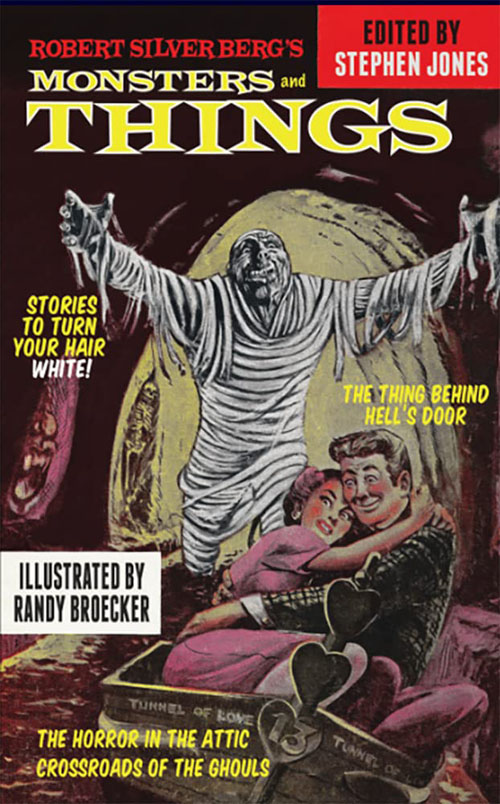
If, like me, you love old movies, the chances are high
that a love for the thrilling pulp magazines of the 1950s can’t be far behind.
Robert Silverberg, now an award-winning science fiction author, was one of the
most prolific writers (allegedly averaging around 1 million words a year) for
dozens of magazines throughout that decade including Super-Science Fiction,
Monster Parade, Fantastic and Monsters and Things, amongst
many more. Capable of seemingly churning out stories in any genre he turned his
hand to (including pornography when required), these short tales were designed
to be read once and then forgotten once the next issue came along. Of course,
what was once disposable is now highly sought-after and original copies of many
of these short-lived magazines are out of reach to us mere mortals. Thankfully
the almost equally prolific writer and editor Stephen Jones has compiled a representative
sample of Silverberg’s horror and sci-fi stories published between 1957 and
1959 for this excellent new collection published by Drugstore Indian Press,
accompanied by suitably retro illustrations from American artist Randy Broeker.
Most of the stories are just a few pages long, so no time
is wasted before the thrills and chills set in. From premature burials, mad
doctors, demons, werewolves, vampires and ghouls to aliens, global conspiracies,
sinister cults and outer space adventures, the stories pack a pulp punch and
are all very enjoyable, especially the ones with twist endings that would not
be out of place in an episode of The Twilight Zone. With titles
including ‘Secrets of the Torture Cult,’ ‘Beasts of Nightmare Horror’ and ‘Vampires
from Outer Space’ (a precursor to Colin Wilson’s The Space Vampires
perhaps?), Silverberg's imagination was extraordinary, producing a continual
stream of stories, often published under pseudonyms so that it didn’t look like
he’d written the entire magazine. In his introduction to this collection (he’s
still with us, at the ripe old age of 89!), he discusses his early career and
his need to keep the [were]wolf from the door by writing anything he could get
paid for, and it was clearly good preparation for the highly-respected novels
which would earn him fame later on.
Given the sheer number of short stories Silverberg
produced, one can only hope that another collection from Drugstore Indian Press
is on its way. These are really fun, pulpy stories that remind us of all of another
era; when guys called Skip drove hot rods, when Big Jack hosted late-night talk
shows about the occult on stations like WYXD, and when teenage librarians like
Marty could accidentally raise the old gods using a stolen copy of the
Necronomicon. Robert Silverberg’s Monsters and Things belongs on the
shelf of any discerning 1950s nostalgia junkie.
One of the UK’s most beloved film franchises
has been somewhat neglected of late. Despite decades of television reruns,
since the DVD boxset release over a decade ago there has been no sign of any
sort of upgrade of the ‘Carry On ‘films, which, if there were any justice,
would have been raised to Criterion levels by now. Remarkably this is still the
case in the UK, so thankfully Australian company Via Vision Entertainment have
taken a firm grip of the baton and begun releasing the ‘Carry On’ films in
series order, four at a time. The first eight films in the series were mostly shot
in black and white and based around everyday life, such as military service,
the healthcare system, schools, the police, cruise holidays, and the beginnings
of second-wave feminism (Carry On Cabby (1963), if you’re wondering). But
then Peter Rogers, the producer and brains behind the series, had the fabulous
idea to begin making period dramas and spoofs of current hits. Carry On Jack
(1964), about pirates, was the first of these, and with that move, in my
opinion, the ‘Carry On’ films really hit their creative and comedic peak.
This means that ‘Carry On... Collection 3’
contains arguably the four best films in the entire franchise (although I know some
fans would beg to differ): Carry On Spying (1964), Carry On Cleo
(1964), Carry On Cowboy (1965) and Carry
On Screaming (1966).
Carry On Spying
(1964), the last one shot in black-and-white and the first to directly spoof
genre conventions, has perhaps been forgotten in favour of the more smutty ‘Carry
On’ films that followed later. Starring regulars Bernard Cribbins, Kenneth
Williams, Charles Hawtrey, and introducing newcomer Barbara Windsor as Daphne
Honeybutt, a name even Ian Fleming would have been proud of. Far from being the
giggling saucepot she would later be known for, Windsor’s character here is
brave, intelligent and forthright, more than once saving the mission and her
hopeless compatriots. Hot on the heels of From Russia with Love (1963), the
film is a hilarious and almost spot-on spoof of the budding James Bond
franchise (Cubby Broccoli objected to one character being called Agent 009½ so they
were reluctantly renamed 000), coming before the flood of Eurospy films that
would take all sorts of liberties with Bond a couple of years later. Shot at
Pinewood Studios, already the home of Bond, it is unsurprising that the sets here
are very close to Ken Adam’s designs, especially the secret underground
headquarters of STENCH, led by the evil Doctor Crow, and were probably built
and lit by many of the same technicians. The cast, with Kenneth Wiliams taking
a rare lead role, are a joy. Williams, who would often be cast as pompous,
arrogant authority types in later films, plays here his idiotic character made
famous in Hancock’s Half Hour, complete with his catchphrase “Stop
messing about!” The comedy is hilarious,
and as a Bond spoof it works very well as a standalone film for those who may
be unfamiliar with the charms of the ‘Carry On’ franchise. Naturally, given
that it is now sixty years old, some of the humour is a little painful,
reflecting some of the post-colonial attitudes of the time. But the odds are
that if you are Cinema Retro regular, you can probably handle it.
Carry On Cleo is
probably the franchise’s most lavish and high budget production, thanks to the
genius decision of Peter Rogers to move in on the abandoned Cleopatra sets
left behind at Pinewood when the disastrous Elizabeth Taylor production was
shipped off to Cinecittà in Rome to start again. With full access to sets,
props and costumes, Carry On Cleo looks a million dollars, and is also a
million times more entertaining than Joseph L. Mankiewicz’s Cleopatra. The
cast are fabulous, with Kenneth Williams in full arrogant mode as Caesar, Sid
James as the lecherous Mark Anthony, Jim Dale as an escaped English slave, but
most importantly with Amanda Barrie, who had an important role in Carry On
Cabby, as the beautiful and mesmerising Cleopatra. Whether in costumes
originally created for Liz Taylor, or bathing naked in ass's milk, she's simply
stunning. It has always been my favourite ‘Carry On’ film, packed with sight
gags, brilliant nods to the original film (20th Century Fox were
particularly furious at the original Carry On Cleo poster design which
mercilessly spoofed theirs) and wonderful sets and matte paintings. This was
the heyday of Pinewood Studios, and the skill and expertise on show here sets
it apart from the later, cheaper ‘Carry On ‘films shot mainly in muddy fields.
Carry On Cowboy
arrived just as the Spaghetti Westerns were getting started in Italy but owes
more to the prevalence of American western films and TV shows (Bonanza, Gunsmoke,
etc.), and is another clear spoof in the Carry On Spying mode. Genre
conventions are milked for all their comic potential, and the cast are
uniformly excellent, from Jim Dale’s accidental sheriff, Sid James as the
villainous Rumpo Kid, Charles Hawtrey as the whisky-addled Big Chief Heap, Joan
Sims as a prostitute with a heart of gold, Kenneth Williams as a cowardly mayor
and, in a reference to actual history, Angela Douglas as the first-rate shot
Annie Oakley. This is great fun, and not far removed from what Mel Brooks would
do less than ten years later, but without the fourth wall breaking.
The last film in the set is possibly the most
well known outside of the UK – Carry On Screaming. This time they had
Hammer Films firmly in their sights, with references to Frankenstein, Jekyll
and Hyde, spooky mansions and the sexiest of sexy vamps, all mixed together
with plenty of gags and a plot which borrows heavily from House of Wax
(1953), meaning Vincent Price gets a bit of a nod as well. In the lead role as Police
Sargeant Bung is Harry H. Corbett, making his only ‘Carry On’ appearance, but
he was an extremely popular comedy actor in the UK at the time thanks to his
starring role in the sitcom Steptoe and Son. Kenneth Williams plays the
undead Dr Watt (his name allowing for some “Who’s on first?”-type comedy confusion),
alongside Jim Dale, Angela Douglas, Joan Sims, Charles Hawtrey and the stunning
Fenella Fielding, who vamps for all she’s worth in a red dress so tight fitting
that she was unable to sit down between takes.
Across the films are appearances from other
‘Carry On’ favourites including Bernard Bresslaw, Kenneth Connor, Peter
Butterworth and a pre-Doctor Who Jon Pertwee, who in the early 1960s was
probably best known for doing funny voices on radio comedy shows like The
Navy Lark.
It’s wonderful to see these films restored
and available in HD at last. They look fantastic and remind us of what great
craftsmanship there was in British cinema in the 1960s, even at the cheaper end
of the production scale. This boxset also comes with a lovely booklet which
reproduces in full colour the original pressbooks for the first twelve ‘Carry
On’ films. They’re fascinating to look at, although you might need a magnifying
glass if you want to read some of them! Bonus features-wise, the sets are a bit
light, simply including original trailers for each film and the commentary
tracks which were recorded for the original DVD releases more than a decade
ago. Whilst it’s great to have these, and they are very entertaining (Fenella
Fielding has the kind of voice you could listen to all day), it would be great
to see some of the archival documentaries and interviews that have been shown
on TV over the years included too, or even commission the official ‘Carry On’
historian Robert Ross, whose new co-authored book Carry On Girls is also
excellent, to produce some new documentary material.
However, we physical media collectors are
spoiled these days and often expect too much! For the price, this boxset
delivers what we really want, which is excellent restorations of much-loved
British comedy gems. These really are the best of the series, and if you don’t
agree, in the immortal words of Sid James: “Knickers!”
You can order ‘Carry On Collection 3’ direct
from Via Vision here:
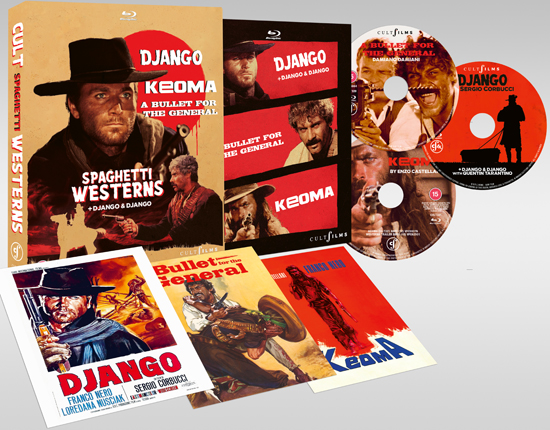
Franco Nero was too young to take the lead role as the titular Django (Sergio Corbucci, 1966), a grizzled Civil War veteran dragging a coffin across the mud flats of the southern US-Mexican border, but some clever makeup and several days of stubble added at least ten years to the then 25-year-old and a star was born. His piercing blue eyes dazzled audiences, and he hasn’t stopped stealing the screen from his co-stars ever since. Whenever he appears on screen he leaves an impression, whether he’s mowing down an entire western town with a machine gun in Django or playing the Pope to Russell Crowe’s exorcist in, er, The Pope’s Exorcist (2023).
UK label CultFilms have restored and released Nero’s career-making Italian western Django, available for the first time in the UK on Blu-ray, alongside two other hugely entertaining westerns, Keoma(Enzo G. Castellari, 1976), also starring Nero, and A Bullet for the General (Damiano Damiani, 1967), which sadly doesn’t star Nero, meaning this collection doesn’t quite add up to a Franco Nero boxset. However, A Bullet for the General does star a magnificent Gian Maria Volonté alongside Klaus Kinski and Martine Beswicke, and could arguably be the best film of the three. Rounding out this fantastic set is the documentary Django & Django (2021) which, perhaps inevitably, focuses on Quentin Tarantino’s relationship with the original Django and Spaghetti Westerns in general, and it is a great deep dive into why these films continue to resonate with audiences in the 21st Century.
Each of the films in this set is accompanied by a terrific set of bonus features too: there are new and archival interviews with many of key players, including Franco Nero himself, but this reviewer’s favourite addition is the introductions to each film by Alex Cox; writer, director and former presenter of Moviedrome, the influential late-night cult film slot back in the mid-1990s. He knows a thing or two about Italian cinema, and having seen Cox appear on other discs introducing and discussing films as well, I would like to argue for his inclusion on all film releases from now on. He is authoritative and has an encyclopaedic knowledge, and he is also witty and likeable. Watching him on these discs really makes me miss Moviedrome. Each of his three introductions here are worth their weight in stolen Mexican gold.
The boxset comes in a card case with three poster reproductions and is an essential addition to any western aficionado's library. CultFilms have also released Django as a standalone 4K UHD set which comes complete with a 64-page bound book written by Kevin Grant, who has written some excellent books on European westerns, published by FAB Press.Truly we live in a golden age. (The discs are region-free).
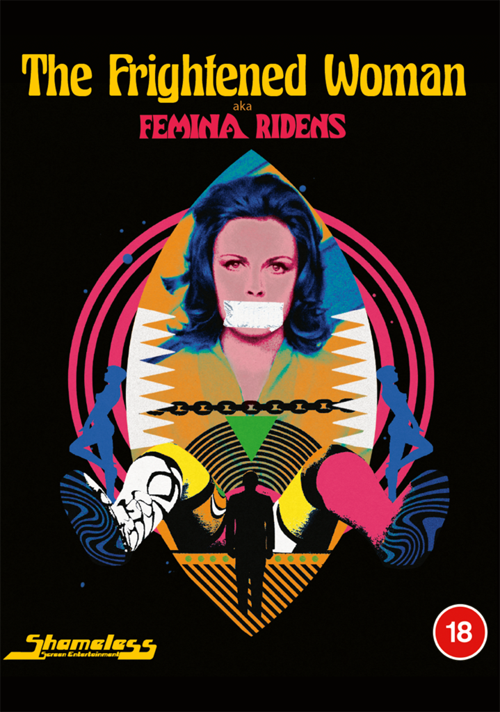
In 1965 a huge brightly-painted sculpture of a reclining woman, called ‘Hon – enkatedral’ (She – a cathedral), was displayed in a gallery in Stockholm. Visitors would enter the sculpture by walking through an open vagina, and inside they found two floors of amusements including a slide, a vending machine, silent film screenings, a public telephone and a ‘lovers' bench’ whose romantic conversations were secretly transmitted via microphone to a bar. This massive artwork was created by an art collective lead by French artist Niki de Saint Phalle and was a perfect melding of pop art and second wave feminism.
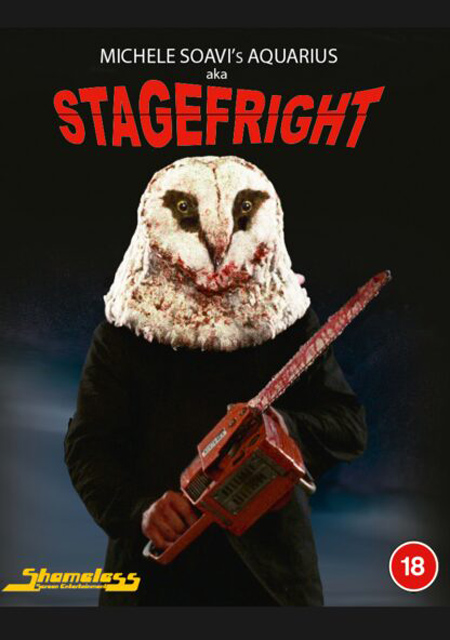
‘Hon - enkatedral’ was clearly an inspiration to Italian television director Piero Schivazappa, who having had success on a number of different dramas (including the epic adaptation of Homer’s Odyssey in 1968, which also featured episodes directed by Mario Bava), drew on this sculpture and what it represented for his first feature film Femina Ridens. A life-size recreation of the sculpture features throughout the film, with the addition of sharp, jagged vaginal teeth that snap sideways as men queue to enter its dark interior. The film’s title, which translates from the Latin as ‘The Laughing Woman,’ suggests that this new power that women have found has come at the expense of men, who have become the butt of a great joke (the alternate title ‘The Frightened Woman’ makes for a more marketable thriller but is very misleading).
This is a film where it is best not to know too much going in, but the setup is essentially: “What if Christian Grey was also an incel who was afraid that feminism would result in a society entirely consisting of women reproducing through parthenogenesis?” Starring French actor Philippe Leroy and German actress DagmarLassander, both speaking English on an Italian production, Femina Ridens is essentially a two-hander about the powerplay between a man who seeks to dominate women and his chosen victim, who may be more than she first appears. With its fantastic pop-modernist design, the dreamlike imagery of men being eaten by Niki de Saint Phalle’s vagina dentata, and the two sexy leads, Femina Ridens is the perfect evocation of late sixties Italian cinema and popular culture and is well worth seeking out.
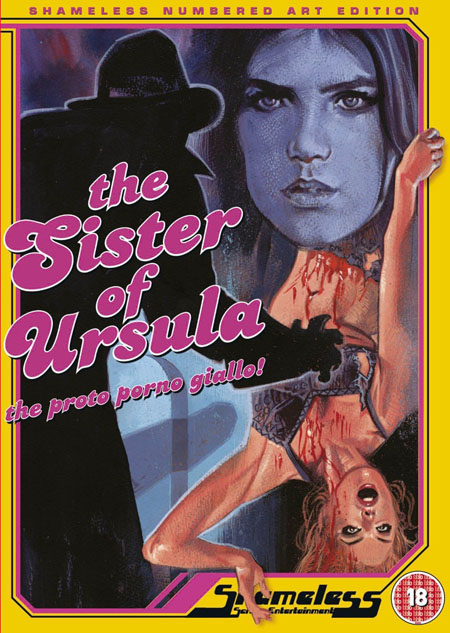
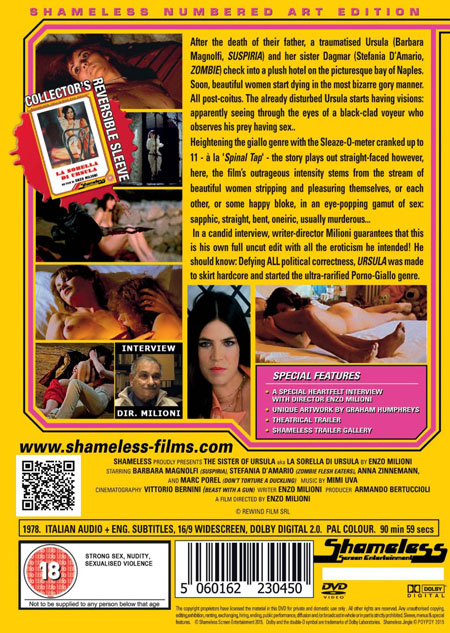
Thanks to Shameless Entertainment, we now have a new 4K restoration of the preferred director’s cut available in the UK on Blu-ray. It features a fascinating new interview with Dagmar Lassander, who admits that it’s often true that German’s have no sense of humour (her character is involved in a hilarious visual gag that she needed explaining to her afterwards), and also an archival interview with Piero Schivazappa. He discusses his career at length, his inspirations for the film and the production itself, and both of these interviews alongside the restored film (available to watch in English or Italian) make this disc a must-have for all fans of cult Italian cinema.(This release is region-free.)
Paperback
Street Date: October 5, 2023
Size: 229mm x 152mm
Pages: 434
Illos: 64 B&W stills and ads
ISBN: 978-1-915316-09-7
RRP: UK£22.99
Review by
Adrian Smith
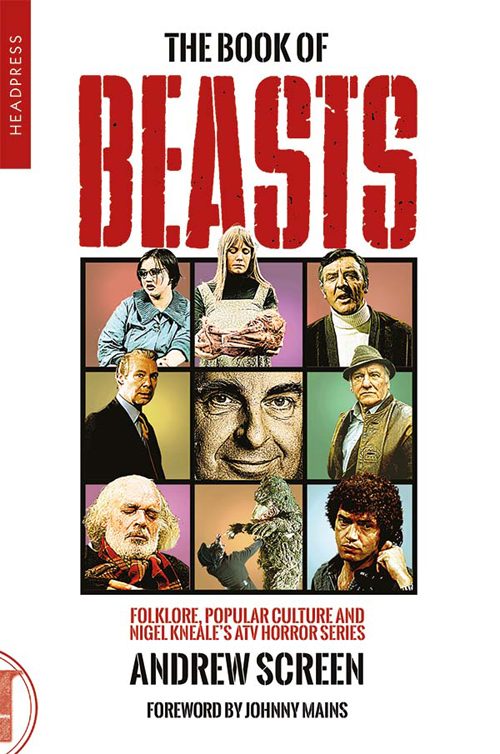
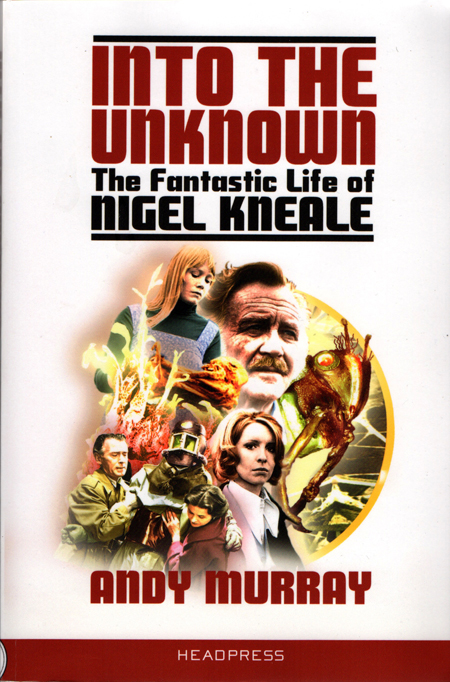
One
of the most important and influential television writers of the twentieth
century, Nigel Kneale has enjoyed something of a resurgence in popularity of
late. Headpress published the biography Into the Unknown by Andy Murray
(not the tennis player) a few years ago, Electric Dreamhouse published a lavish
collection of essays on his legacy called We Are the Martians, Comma
Press reissued his collection of short stories Tomato Cain last year,
and now Headpress again brings us this dense, information-packed study of his
1970s folk horror-inflected (before the term ‘folk horror’ had been invented) anthology
show Beasts. This attention is well deserved: Nigel Kneale wrote the
screenplay for the groundbreaking 1954 BBC production of 1984 before creating
The Quatermass Experiment, a show that was so popular that pubs across
the country would empty as people ran home to watch it. Quickly followed by Quatermass
II and what was arguably the best of the three, Quatermass and the Pit,
these shows were hugely important in the early history of television, and Nigel
Kneale’s name was forever associated with science fiction and horror. The
sixties proved to be a bit more difficult for him after some issues he had with
the BBC, but there was still some amazing work, such as The Year of the Sex
Olympics, which effectively predicted the rise of Big Brother and Survival-type
reality shows.
In
the mid-1970s he was commissioned by ATV, one of the independent commercial
stations that formed part of the ITV network, to write a show loosely connected
by a single theme. There were many such shows in the 1970s, often hung on one
writer’s work and with a horror focus, such as Roald Dahl’s Tales of the Unexpected
or Brian Clemens’ Thriller. The six episodes of Beasts, plus
pilot episode ‘Murrain,’ had some form of animalistic connection and explored
strange and unexplained phenomena; a couple besieged by rats, a ghostly
dolphin, an actor becoming obsessed with the monster he plays in a film, a pet
shop owner conducting werewolf experiments, a shopgirl whose telekinesis
manifests as a destructive rodent, and a family who discover a mummified animal
in the walls of their new home. These were unique, disturbing and memorable
television dramas that undoubtedly made for memorable viewing experiences, and
they have remained influential to this day.
Screen’s
new book on Beasts is a well-researched piece of work. The author has
had access to production records, scripts and other ephemera, and he also
covers the wider social and historical context around the subject of each
episode as well as the critical and public response. It’s an incredibly deep
dive and one which will keep fans of the show, and of strange 1970s British
television in general, thoroughly engrossed. It is not a book to read if you
have yet to see Beasts however, so do seek out the DVD collection, enjoy
its equal levels of nostalgia and creeping dread, and then dig into The Book
of Beasts to discover everything you could ever want to know about this
series and its impact on popular culture.
For
international audiences, the words “Australian comedy” probably conjures up
images of Dame Edna Everage, or the sexual adventures of Alvin Purple. What may
be less familiar is the work of the comedy group Double Take, led by former
child actor Des Mangan, who began performing live in the mid-eighties in
cinemas, screening the schlock horror classic Astro Zombies (Ted V.
Mikels, 1968) whilst lip-syncing an entirely new script. What had begun as a
group of friends throwing funny lines at the TV during late might screenings of
B movies developed into a successful series of live screenings that spread in
popularity throughout the country, and eventually overseas with an appearance
in 1987 at the Edinburgh Fringe. In 1989 they began a new show using the
relatively obscure Italian peplum film Ercole, Sansone, Maciste e Ursus gli
invincibili (Samson and the Mighty Challenge, Giorgio Capitani,
1964). This was coming from the tail end of the sword and sandal boom that had
begun with Le fatiche di Ercole (Hercules, Pietro Francisci,
1958) a few years and hundreds of films earlier, and as such was already almost
spoofing the conventions, particularly in having mythological heroes from
different backgrounds (Greece, Israel and Rome) fight each other. Double Take,
by this time consisting of just Mangan and comedian Sally Patience, took this
already amusing film and drastically rewrote the story so that Hercules, a
Sinatra-style crooner, falls in love with the beautiful Labia, whose mother runs
the Pink Parthenon nightclub in Climidia, and, well, you get the point. It’s
smutty, politically incorrect and hilarious.
The
success of the ‘Double Take Meets Hercules’ live show encouraged an American
business and wannabee film producer to provide funding to turn the whole thing
into a movie, so Mangan wrote a wraparound story about Brad (David Argue), a
disillusioned cinema executive who quits his job with one of the major
distribution franchises to restore and open his own reparatory cinema. With
publicist Lisa (Mary Coustas) and projectionist Sprocket (the legendary Bruce
Spence, a man so tall he probably wouldn’t fit in a real projection booth),
they plan a gala black tie event opening screening featuring the last film to
be screened at the venue before it closed down – Hercules. It is not
until the guests arrive that they realise the print they have been sent is in
Italian, so Brad and the gang must dub the film live, much the great delight of
the audience. This set-up is obviously just the excuse needed to be able to
present large sections of the original Hercules film with the new dubbing, and
it works very well. Unfortunately, despite successful film festival appearances
around the world, Hercules Returns did not stick around in cinemas for
very long and was largely forgotten. The Double Take team went back on the road
with shows based around, among others, Morgan the Pirate, (André De Toth
& Primo Zeglio, 1960) and Starcrash (Luigi Cozzi, 1978), and later
Mangan became a well-known face on Australian television through presenting
film screenings and Eurovision coverage.
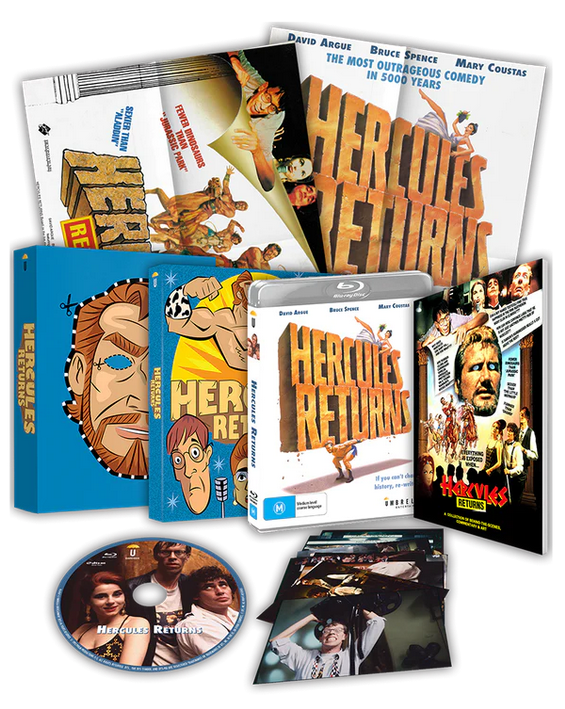
This
new, fantastic blu ray release from Umbrella Entertainment features not only
the restored Hercules Returns, but also the full English-language
version of the original film, Samson and the Mighty Challenge. This is a
very entertaining and funny film in itself; a sort of Italian Carry On
film. However, the jewel in the crown of this release is the full original
recording of ‘Double Take Meets Hercules’. Whilst much of the script was used
in the rerecorded version for Hercules Returns, in my opinion this version
is purer and funnier, uninterrupted by the new narrative segments required to
make the Hercules Returns story work. It is witty and frequently
outrageous, and it’s easy to forget that there are only two people doing all
the voices. There is also a new audio commentary for Hercules Returns
with the cast and crew, which raises the slightly meta prospect of watching the
film, which is mainly a commentary, with another commentary over the top. This
deluxe, limited-edition package also comes a book which tells the complete
story of Double Take, the making of the film and the critical reaction, as well
as a copy of the wraparound story script. Housed in a hardbox with fantastic
new artwork, it also contains a complete set of lobby cards and a reversible
poster.
This
Collector’s Edition of Hercules Returns is only available from the
Umbrella Entertainment webstore, and is highly recommended.
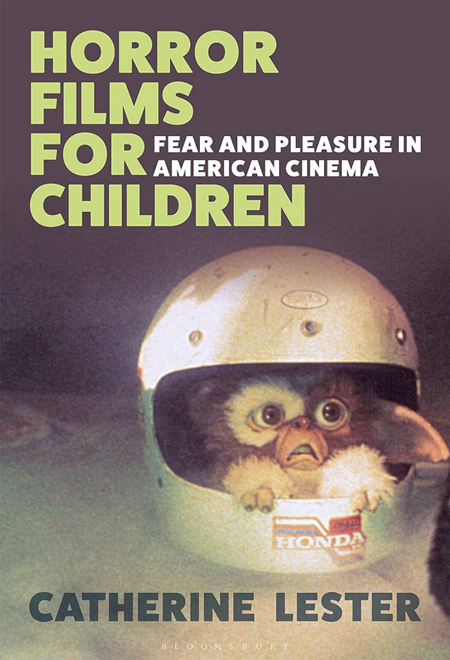
The 1980s was a fun time to be a child. The monster
kids of the 1950s and 1960s may have had Forrest J. Ackerman and his Famous
Monsters of Filmland magazine, but we had full-blown horror content in
films ostensibly made for a young audience, from the melting Nazis in Raiders
of the Lost Ark or the terrifying library apparition in Ghostbusters,
to a melting Stripe in Joe Dante’s equally hilarious and scary Gremlins.
In this new book dedicated to horror films aimed at children, Catherine Lester begins
by drawing on early examples such as Frankenstein’s murder of the little
girl by its titular monster, along with other pre-code horrors that primarily
drew a young crowd, through to its modern, reanimated version, Tim Burton’s Frankenweenie.
The book then takes a deeper look at the ‘horrific’ childlike gremlins who both
commit violent acts and then have violence acted upon them (along with the
aforementioned Stripe, who can forget the gremlin in the microwave?). What
happens to the representation of children in the horror film when children are
the audience? Did the children in the audience take sympathy with the gremlins,
who let’s not forget, just happily sit watching Disney films with childlike
wonder when the adult world just leaves them alone? The violence combined with
the Looney Tunes tone of Gremlins caused some issues for the MPAA,
something which the book also goes into. Ultimately it led to the introduction
of the PG-13, apparently suggested by Steven Spielberg, the film’s producer,
who described the new rating as “PG with a little hot sauce on top.”
Lester also draws on another eighties staple,
The Monster Squad, a sort of The Goonies meets The Lost Boys
via Universal’s horror canon. By introducing the concept of the ‘Crazyspace’, a
space in which child characters are able to be the prime agents in dispatching
evil forces in the complete absence of adult supervision, the book explores the
way in which many films present children as autonomous and often superior to even
the most masculinised models of authority; in this case the kids defeat Dracula
and his fellow monsters before the US Army arrive, something which would have
been very different in the 1950s monster and science fiction movies, where it
was usually the army who saved the day.
Bringing the discussion into the 21st
Century, Lester also looks at the animated children’s horrors ParaNorman (one
of this reviewer’s favourites), Coraline and Monster House, along
with Joe Dante’s return to the children’s horror genre with 2009’s live action The
Hole. By covering almost a century of children's horror films, this book
makes for an insightful and entertaining examination of the horrific child and
the cathartic nature of the genre. For this reviewer, as a child horror was an
escape from the terrors of the real world, and as such it is a rewarding
experience to be able to read this major contribution to the study of these
strange and wonderful films. Horror Films for Children is highly
recommended, both the book and the films themselves!
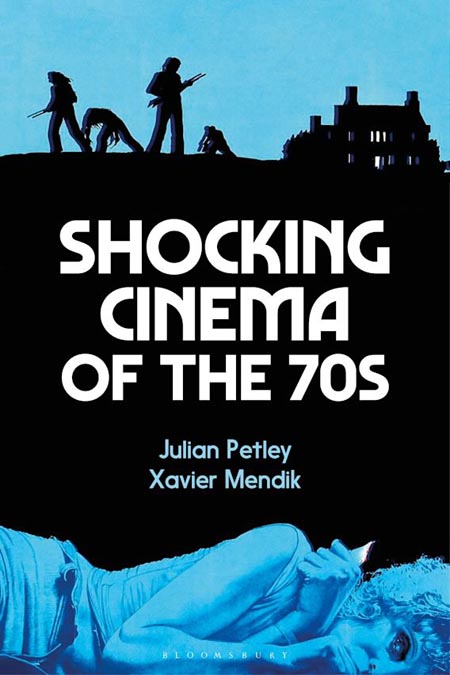
Shocking Cinema of the 70s was
a collection of essays originally published in 2002, and the intention here was
to republish those alongside some new chapters. However, the field has changed so
much in the following twenty years that instead we get an entirely new
collection of essays covering a wide range of fascinating and important topics
related to this influential, shocking decade.
The book tackles films that
have been considered controversial, or that dealt with difficult subject matters.
Whereas the first volume primarily covered horror, which is still represented
here, this new collection also includes chapters on Japanese ‘Pinky Violence’
films, rape-revenge TV films, women in prison, films about the Manson Family
and the hardcore ‘roughie’, porn films with a focus on S&M, kidnapping and
sexual abuse. There is also a broader international approach, with chapters on
Polish auteur Walerian Borowczyk and an in-depth examination of
‘Canuxploitation’, the exploitation cinema of Canada which was in part funded
by taxpayers, of whom David Cronenberg was perhaps its most high-profile filmmaker.
It is not only the films
which caused a stir amongst more conservative audiences which are included here:
Death Wish (Michael Winner, 1974) and Dirty Harry (Don Siegel,
1971) both came across to some liberals as celebrating a form of vigilantism
and outraged the left-wing, and whilst we may appreciate those films now as
classics of the decade, it is fascinating to consider their initial reception.
The book also looks at the murderous child, such as Jodie Foster’s character in
The Little Girl Who Lived Down the Lane (Nicholas Gesner, 1976), who
kill adults because it’s fun; it’s play. Still as disturbing a concept today as
it was in the 1970s.
Shocking Cinema of the 70s offers
a range of opinion and insight on films which caused public outcry, upset the
critics, or troubled governments. Whereas some of these films, looked at almost
fifty years later, might make that seem like an overreaction, others might
still make for uncomfortable viewing today. This collection enables us to
understand what a ‘Shocking’ film is, and what there still is to learn from
them. Highly recommended.
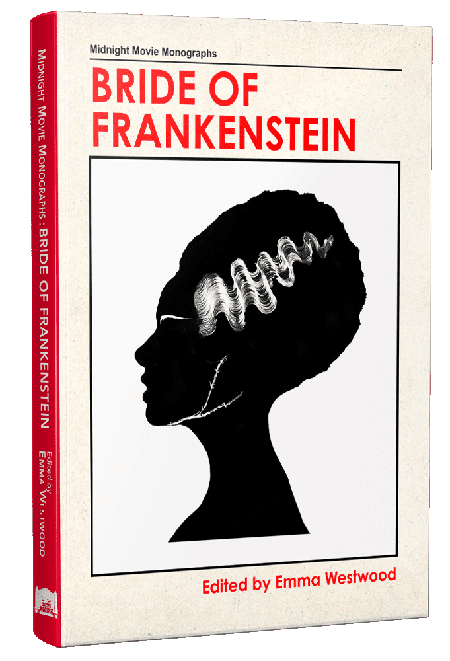
The
Bride of Frankenstein (James Whale, 1935) is
frequently referred to as the greatest horror film ever made, something which
Emma Westwood, the editor of this new collection of essays, would not disagree
with. In building on the incredible work done on the original Frankenstein (1931)
whilst bringing in the dark humour of The Old Dark House (1932), along
with key cast member and fellow Brit Ernest Thesiger, director James Whale
delivered incredible imagery, dark themes and iconic performances. In doing so,
he was establishing the comedy-horror template that would be utilised so
effectively for decades to come (An American Werewolf in London (John
Landis, 1981) owes it a great debt, for one). It also became perhaps the first example
of a sequel being superior to the original, which is still something that does
not happen very often. So how did this happen? What is it about The Bride of
Frankenstein that has ensured its legendary status for almost one hundred
years?
That
question is something that this fascinating collection of new essays addresses
from a number of angles. This new addition to the Midnight Movie Monographs
series from Electric Dreamhouse (previous entries have included books devoted
to Spirits of the Dead (Roger Vadim/ Federico Fellini/ Louis Malle,
1968), Plan 9 from Outer Space (Ed Wood Jr., 1959) and Horror Express
(Eugenio Martín, 1972)) presents twelve different chapters covering the
production, censorship, the astonishing hair, makeup and costume design, the
pioneering use of sound, readings of sexuality, the many films over the years
which draw on elements of Bride of Frankenstein, including my own
personal horror-comedy favourite Bride of Re-Animator (Brian Yuzna,
1990), an examination of star Elsa Lanchester herself, and much more. Who
exactly is ‘the Bride of Frankenstein’? is another question to be mulled over;
after all, shouldn’t the film have been called ‘The Bride of Frankenstein’s
Monster’?
Whether
you have a passing interest in the Universal horrors or if The Bride of
Frankenstein is your favourite film, this new monograph, with a foreword
from Sara Karloff, daughter of Boris, will cause you to think about the film
differently, and brings great wit and insight to this endlessly fascinating
film from Hollywood’s golden age of horror cinema. In hardcover with a wealth
of imagery and a terrific cover design, this is a beautiful book for any
serious cinema lover’s library.
You can order a copy direct
from PB Publishing by clicking here.
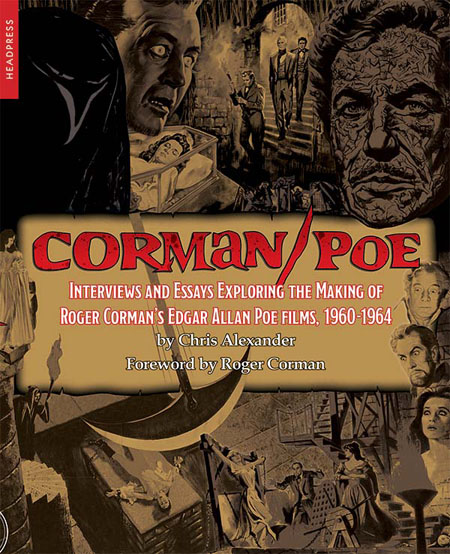
Corman/ Poe: Interviews and Essays
Exploring the Making of Roger Corman’s Edgar Allan Poe Films, 1960-1964
By Chris Alexander
Foreword by Roger
Corman
Headpress paperback
Size: 235mm x 191mm
Pages: 150
105 colour and B&W stills images
ISBN:
978-1-915316-07-3
Retail Price: UK£22.99 / US $27.95
Review by Adrian
Smith
The early 1960s was a
boom time for gothic horror films. Spurred on by the Hammer Films one-two punch
of Curse of Frankenstein (1957) and Dracula (1958), film
companies around the world fell over themselves to produce films set in cobweb-strewn
castles and mist-enshrouded graveyards. Directors such as Mario Bava and
Antonio Margheriti made several Italian gothics, frequently starring
Christopher Lee or Barbara Steele, but no one director had such a successful
run as Roger Corman, who in the space of five years brought us an incredible
series of eight films adapted from the disturbed writing of Edgar Allan Poe: The
Fall of the House of Usher (1960), The Pit and the Pendulum (1961), Premature
Burial, Tales of Terror, (both 1962), The Haunted Palace, The
Raven (both 1963), Masque of the Red Death and The Tomb of Ligeia
(both 1964). All but one starred Vincent Price, and they also featured the
talents of Ray Milland, Boris Karloff, Peter Lorre, Basil Rathbone, Barbara
Steele (again, proving she was a gothic icon on both sides of the Atlantic),
Hazel Court, and even a young Jack Nicholson.
In this new book, the
first dedicated solely to these films, Fangoria's Chris Alexander has interviewed
Roger Corman (a mere 97 years old, with a pin-sharp memory) at length on each one
of these low- budget gems, discussing the themes, the productions, his love-hate
relationship with American International Pictures, the cast and crew, and much
more. He reflects thoughtfully on his collaborative relationship with Vincent
Price, who he rightly describes as a “brilliant actor,” and he is not too proud
of his own achievements to acknowledge the important contribution of others,
including writer Richard Matheson, who he says was, “One of the finest writers
I’ve ever had the chance to work with,” crediting him “for much of the success
of those early Poe pictures.” Also featured
in the book is a critical appraisal for each film and a wealth of archival
material, including a full-colour international poster gallery and censorship
documents related to the most controversial of them all, Masque of the Red
Death.
Roger Corman is one
of the most prolific directors and producers we have ever had, and as such
there is always more to be said about his work. Corman/ Poe is an
essential addition to the growing Corman library.
Richard
Loncraine’s The Haunting of Julia (aka Full Circle, 1977) is a chilling,
emotionally charged ghost story shot in London in 1976 with Canadian funding
which fell into a legal limbo and was destined to remain largely forgotten
until film historian and writer Simon Fitzjohn began researching the film for a
magazine article in 2016. The rabbit hole grew deeper and he became a man on a
mission to bring the film back to the public. The years of struggle paid off
and the film has now been restored and released around the world on Blu-ray and
UHD, so Cinema Retro sat down with him to find out how it all happened.
Cinema
Retro – How does it feel to finally be at the end
of this epic journey?
Simon
Fitzjohn - We had a screening at the BFI in London
recently which was a massive thrill. There was a good audience and we got quite
a few of the crew along as well as Richard Loncraine, the director. It was a
bit of a party, to be perfectly honest with you, a fantastic experience.
CR
– So how did this all start?
SF
- I read a BFI article at Halloween in 2016 called ‘Forgotten British Horror
Films of the 1970s,’ and I thought, “Right, okay, I'm pretty sure I'm just
going to tick everything off this list.” So I went through them all and it was
Pete Walker's Frightmare, things like that. And then there was Full Circle,
or The Haunting of Julia and this picture of Mia Farrow with her arms
out. I thought “I don't think I've seen that one.” I took it as a bit of an
affront really that I hadn't seen it. That was when I then found out that it
wasn't available commercially at all, no DVD release, however, there was a
version of it on YouTube as they'd shown it on the Sony Movie Channel in 2011.
So I watched it and I was floored by it. You know, I remember when it ended and
I just sat there in silence for about 15 minutes trying to sort of process it
and thinking, ‘Oh, my God, this is just such a sad film. How has this film been
allowed to disappear?” You know, why is this not heralded as an amazing British
horror film?
CR
– You would think it would be better known, particularly because it starred Mia
Farrow.
SF
- Originally my idea was just to write about it, so the first person I reached
out to was Peter Fetterman, who was the producer on it, and he said, “Well, I'm
still friends with Richard Loncraine, I'll give him your number.” So I had a
call with Richard, who was quite bewildered, as he always is. When anybody says
they love the film, he hates it! He seems flabbergasted, because he doesn't
think it's a good film. I think a lot of that was down to all the pressures
from the external people when they were making it, certainly the Canadian side
of it, who wanted this Omen-style bloodbath, whereas Richard wanted this
more ambiguous, psychological film. Then he put me in touch with Peter Hannon,
who was the director of cinematography on it, and then we found out that Technicolor
had found the negative, so Richard and I thought, “Right, here we go!” We needed
to get that negative, get it restored and get it rereleased.
CR
- Were there rights issues? Is that one of the reasons why it had fallen out of
circulation?
SF
- Yes. It wasn't that the negative was missing. The last known owner of it was
a guy called Julian Mills who was the exec producer on the film. Technicolor
had documents for Full Circle with Julian Melzack at Albian Films, and he
obviously didn't care about the film because he never bothered to release it
himself, and then he died in early 2016. So we had to somehow jump through all
these hoops to prove that he hadn't passed the film on to anybody else before
he passed away, so that we could prove an ownership chain. It was about six
years of working with Technicolor, Companies House, solicitors, Julian Melzack's
daughter, all these people going round and round trying to find paperwork. It
was just exasperating, to be perfectly honest with you, and there were numerous
times where we just thought it wasn’t going to happen because we would answer a
question and then they would give us another obstacle and we would jump over
that, and then they'd give us another obstacle. There were times when I
flagged, but then I would get people messaging me on the Twitter account I had
(@full_julia), saying, “Keep going, keep going!” Eventually we were able to do
it.
CR
– Who funded the restoration?
SF
- It was Shout! Factory, but there were numerous people that worked together on
this. Shout! Factory sorted the restoration, but the BFI now keep the negative,
that was the deal. It was done at Silver Salt in London. Richard Loncraine was
involved in that as well.
CR
- You've also been heavily involved in the release, with a commentary track
(with the director) and some of the extra features for the BFI release.
SF
- It was great, because I'd always said right from the start that the key for
me was that the film was going to be back out there. It deserves to be talked about,
it deserves to be celebrated. But it was still really nice when the BFI came to
me straight away and said we want you front and centre on this because Richard
said, "Look, if you don't involve Simon, I'm not getting involved.” I was
able to help as well because I was in touch with so many people, so Tom Conti
was interviewed as was Samantha Gates, who plays Olivia in the film. I've been
reading some very positive comments about it in reviews. It was fun, it was a
great thrill.
CR
– There are rumours that something is missing from the film, specifically a
graphic tracheotomy scene, which of course is the tragic event at the beginning
of the film [Julia’s daughter is choking to death, and in a last desperate
attempt to save her she attempts a tracheotomy which fails and the daughter
dies]. What do you know about this?
SF
- There was this guy and he would constantly
message me on Twitter to ask, “Have you found the tracheotomy scene?” And he
was the one that apparently somehow added it to IMDb that this was missing, but
nobody has it because it doesn't exist. Why would they randomly have had this
blood- spurting tracheotomy? That was never the intention for the film. I've
read the BBFC censors report when they classified the film, and they referenced
the fact that there was no blood in it. They gave it an AA certificate because
it was so tame. So there was never anything filmed, but when they were filming
that scene Alfred Pariser, who was the Canadian producer on it, he wanted it to
be bloody so he had a cup of stage blood. When Mia stabbed Sophie Ward with the
knife, he threw the cup of blood over them. Mia Farrow just got up and ran out
screaming because she thought she had cut Sophie Ward's throat! But they
obviously didn't use that footage. They weren't interested in having anything
like that.
CR
– Fantastic. And your commentary track with Richard Loncraine is packed with
stories like that. Congratulations on what must feel like such a tremendous
achievement.
SF
– Thank you. And I ended up somehow randomly getting a Rondo Award too!
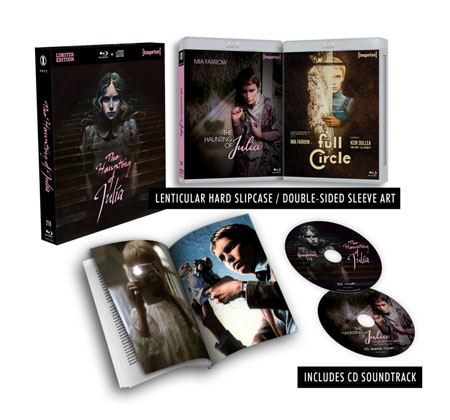
The
Haunting of Julia/ Full Circle is
available on Blu-ray and UHD in the States from Shout! Factory, in Australia
from Imprint, and on Blu-ray and UHD in the UK from the BFI. Each edition
shares some bonus features whilst also having some which are unique. The
Imprint release comes in a beautiful hardbox with a lenticular cover, a book
discussing the adaptation from Peter Straub’s novel Julia, and best of
all a CD with the full remastered Colin Towns soundtrack including some tracks
which were never used or included on the original vinyl release.
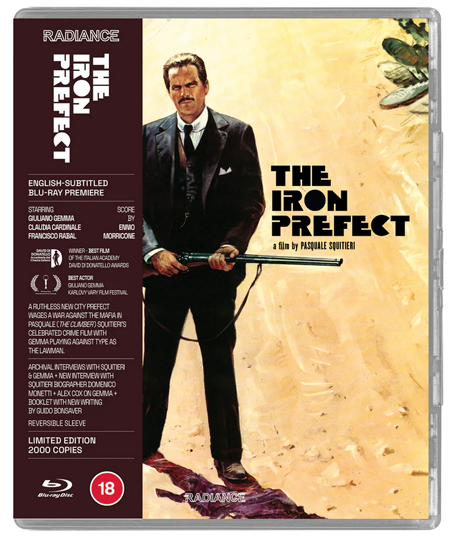
Cesare Mori grew up in an orphanage in the 1870s but
rose to power and influence through the military, then the police, and finally
as a Prefect in Mussolini’s Fascist Party. He was dispatched to Palermo in
Sicily in the mid-1920s with the specific task of destroying the power and
influence of the Mafia, who held a vicious and all-controlling stranglehold on
the island. The Mafia were responsible for hundreds of brutal murders every
year, bribed officials, and were a prime reason why so many lived in poverty.
Mori was a man on a mission, and would stop at nothing to break this criminal
organisation. He was extraordinarily successful. His reasoning was that it was
not enough to simply arrest people: The citizens of Sicily had to see that the
authorities could help them and that they no longer needed the Mafia for
protection.
Following his promotion to the senate, where
ultimately he fell afoul of Mussolini
after expressing concern over Italy’s relationship with Hitler, he wrote his
memoirs about the role he played in breaking the Mafia, and it was this that
inspired the 1977 production of The Iron
Prefect, starring Giuliano Gemma in the title role. Gemma was well-known to
audiences thanks to his role in such Spaghetti Westerns as A Pistol for Ringo (1965, Duccio Tessari) and Day of Anger (Tonino Valerii, 1967) and he would even appear in
Dario Argento’s Tenebrae a few years
later in 1982. Despite being around twenty years younger than the actual Mori,
he creates a believable, authoritative character, and one can see why the
Sicilian police were willing to follow his sometimes-unorthodox methods. The
film features Claudia Cardinale in a supporting role as the struggling mother
of a young boy whose father was an influential leader of the Mafia, but having
had enough, she wants to try and secure a better life for the boy away from
Sicily. It was ably directed on location by Pasquale Squitieri, who was himself
no stranger to the Western, and had also made other films about organised crime
and the Mafia, including Camorra
(1972) and The Climber (1975).
It’s an easy comparison to make, but one can’t help
but think of the Sicilian section of The
Godfather (Francis Ford Coppola, 1972), and this film makes an excellent
companion piece to that: Sicily is hot, dry and crumbling, where peasants are
armed with shotguns and the authorities are powerless to do anything about the
criminal gangs who brazenly murder entire families to maintain control, until Cesare
Mori arrives of course. The Iron Prefect
has been restored in 2K from the original negative and is available here from
new boutique label Radiance Films with new and archival extras. As Squitieri
and Gemma are sadly no longer with us, an archival interview with them both
recorded in 2009 provides fascinating insight, and there is also a new
interview with Squitieri’s biographer Domenico Monetti. My favourite bonus
feature here is an appreciation of Giulliano Gemma by writer, director and
western fan Alex Cox who goes into detail and brings wit and style to the piece.
If Alex Cox, host of the important Moviedrome
series of film screenings on British television in the late nineties, could
shoot videos like this for all of Radiance’s releases, I for one would be very
happy. The limited edition of The Iron
Prefect comes with a booklet featuring new writing by Italian cinema expert
Guido Bonsaver and an original article on the real-life Cesare Mori and his
Mafia raid as depicted within the film.
This is another excellent release from Radiance, who
have rapidly become a popular and collectible label with an eclectic mix of
world classic and cult cinema. Cinema
Retro recently interviewed founder Francesco Simeoni about the label. You can read it here.
You can order The Iron Prefect direct from Radiance by clicking here.
Fran Simeoni has been a
well-known name in the world of classic and cult film releasing for a long time
thanks to his years at Arrow Video, but in 2022 he set out on his own with a
new label called Radiance Films (https://www.radiancefilms.co.uk/).
Cinema Retro caught up with him to talk about his reasons for starting
Radiance and their future plans.
Cinema Retro- Can
you tell us why you started Radiance?
Fran – I worked
for Arrow for 12 years. That's where I really learned the business side, but I
got to the point where I wanted to do things that were more in line with my own
interests. It was also about change of pace and a change of scenery as much as
anything, really. What I wanted to do with Radiance was to have my cake and eat
it, essentially, so I left Arrow on a Friday and started working again on Monday.
I had a big list, because you're constantly looking for titles. There are
always things that I'd like to see that I had previously looked into. These
things are always kind of going round and round, so I had loads I could draw on.
Radiance came out of the gates really, really quick, a little bit faster than I
anticipated.
Cinema Retro - Considering
you've been going for less than a year, you've already got quite an big number
of releases either out or announced.
Fran - I
wasn't starting from scratch. I had a lot of things that I knew I could do and
was drawing on relationships that I've had for years and years, so it was it
was not difficult for me to get titles. The challenge for me is doing
everything that's involved in getting them out. It's all the restoration work,
the authoring, creating the extras and stuff. That's what is time consuming.
Cinema Retro –
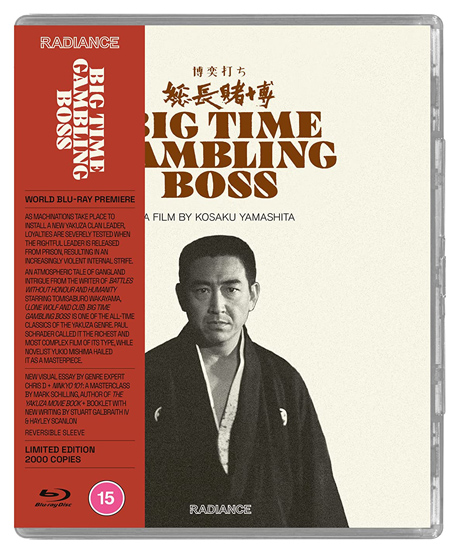
Let's talk about the Japanese film Big Time Gambling Boss (1968): Could
you just talk me through the process of identifying the title, finding out
where the rights are, the restoration, all that kind of thing?
Fran - Before
I started at Arrow I would basically just find out about films by reading about
them. So that really is the basis for finding lots of things even in a
professional capacity. And I think what happens is it's very easy when you're
sort of indoctrinated into the industry, is to do things by just talking to
people who sell films and do it that way. So in a way, you're kind of working
from their agenda in that they have restored something, and they want to push
that. They're showing at a festival or they've got a screening. If they haven't
got an agenda for a film, and Big Time Gambling Boss was on nobody's
agenda, then it's really difficult to find a film like that. So that and many
of the films do really come from my agenda and that is my reading about them. Big
Time Gambling Boss goes back probably about ten years to when I first read
about it when I was working on the Arrow boxset Battles Against Honour and Humanity.
It came up because we reprinted an article about the Yakuza films and it's
mentioned in there and it went to the back of my mind. I never did anything
about it because it was really difficult to see. Eventually I did find a way to
see it and I knew it was owned by Toei so I just went there and asked, “Have
you got this film? Is it in HD when you restored it?” etc. And from there it's
easy.
Cinema Retro - And
then how do you persuade the consumer at the other end that this is a film that
they're going to want to buy?
Fran - Yeah,
that's the big challenge. I want to be as distinctive as possible because the
boutique label market is an incredibly knowledgeable crowd. We’re at a point
now where the market is so mature that you can take bigger risks. We've got all
the classics, so then we're always adding new great directors. I think if
people are already fans with one thing and then you explain it in terms that
they can have a leaping off point: “So this is a Yakuza film.” You've got
things to cling on to. I think if you have those access points, people are
going to go for it. The trick, of course, is to not overplay your hand. You
don't want to go out and say this is a masterpiece and then people watch it and
think “It’s okay!” I do have some Japanese films coming out which aren't
masterpieces, but they're a hell of a good time.
Cinema Retro - The
phrase ‘Big Time Gambling Boss’ could be on your business card.
Fran - Yeah,
it does feel like that sometimes.
Cinema Retro –
Another example is something like Walking the Edge (1985), where you've
partnered up with Fun City Editions. That's kind of a different approach to
doing the whole thing from scratch.
Fran - I
began to license Married to the Mob (1988) and Cutter’s Way (1981)
and I ended up speaking to Fun City because I knew they were doing them and I
said, “There's no point me doing everything you've done. What's the point in me
doing the same extras as you, with just a slightly different cover?” I like their
stuff and I think they're great films. I explained this to Fun City, and some
of the other labels and said, “Why don't we just partner? I can be your conduit
and you can do what you're doing in more than one territory.” It's been
well-received so far. It's still early days, but that's the idea. We're up to
five labels now. I mean, it just remains to be seen how it's going to go but
the signs are good.
Cinema Retro - One
of the things that you've announced that you've got coming up soon is the ‘Cosa
Nostra’ box set, the collection of three Damiano Damiani films. Was that one of
your projects from the beginning?
Fran - Yes,
that's one of mine. That kind of political filmmaking is really fascinating to
me. I love that era of Italian filmmaking.
Cinema Retro - So
what was it about those films that that made you want to create your first box
set?
Fran - I
had acquired a few Damiani films and these three, as I was working on them and
researching them, it just occurred to me that they have this thematic link of
the Mafia and I just thought that was so fascinating because Damiani went back
to this sort of theme over and over again. When you
have them side by side, they become more interesting. Damiani was somebody
who's never really been given his due. No one has looked at Damiani and said, “What
a stylish director.” He didn't do avant-garde, he didn't do arthouse, he was
sort of squarely in the middle, and I think that's what didn't allow anyone to come
around and say this guy should be celebrated. When you look at all his films,
particularly when you have them side by side, you do get a very strong sense of
him being an auteur and his visual sense becomes much more apparent the more
you look at it. His whole inner ethos behind his films, civic investigation
essentially, is really fascinating. The way in which he does some of those
things is as good as someone like Francesco Rosi or Elio Petri. You had Rosi at
the much more political end and then Petri becomes slightly more baroque, and
then Damiani came after that going more towards genre. And then after Damiani
you have all the poliziotteschi that everyone's familiar with. So that
kind of trajectory is fascinating in itself, I think.
Cinema Retro - And
of course, Franco Nero! It helps that you can have him on the box cover because
he's very marketable to cult film fans.
Fran - Yeah,
absolutely. He is a great asset, obviously. My worry always with everything
that I do, because of where my interests lie, is that I don't want to get stuck
in the cracks, because sometimes some of the films I focus on are too arthouse
for genre fans and too genre for arthouse fans, and these films are a bit like
that. They become increasingly genre as you progress through the set, and
Franco Nero is brilliant in it, particularly in The Case is Closed: Forget It
(1971) in which his performance is one of his best. We have a profile of him in
the book and he's had an amazing career.
Cinema Retro –
What have you got coming up for Radiance?
Fran - We've
got The Bride Wore Black (1968), the François Truffaut film, which is a
lot of fun.
Cinema Retro –
That's interesting as, like you said, it’s got that arthouse versus genre idea,
because when people think Truffaut, they think French New Wave, but then at the
same time, it's got the crime thing going on.
Fran - It’s
François Truffaut's Kill Bill (2003). It's a lot of fun as a film and
it's not a film he was very fond of. He basically made it because he needed to
do something commercial but if you look at the biggest hits of the New Wave,
they were very crime influenced or genre influenced. Just look at À bout de
souffle (1960), with its meditation on Bogart and crime films and so on. So
this for me is just an extension of that, essentially, but it's very much its
own thing. It's as close to Hollywood movies as you get from that period in
France. And it's a lot of fun! Jeanne Moreau is good in it, it's got a great
cast and inexplicably it’s never been out on Blu-ray in the U.K. I had a lot of
fun putting together the extras. And then we have Yakuza Graveyard
(1976), which is one of Kinji Fukasaku's best films, I think. This is an
interesting counterpoint to Big Time Gambling Boss, because that is a
much more traditional, more reserved Yakuza film and then Yakuza Graveyard
is the complete opposite! It's frenetic, it's completely bombastic, and its
violence and visuals are just a lot of fun. I do feel like I'm doing a lot of
crime films. I don't actually want to only do crime films! But I do have a
passion for crime films and this is a great one. It's basically about a corrupt
ex-cop and his dealings with the Yakuza and he falls in love with the Yakuza
wife, played by Meiko Kaji. It was really fascinating to dig into this film
because there is a theme going on with Japanese films of the time and their
treatment of Koreans and treatment of Koreans in the films themselves. It's
difficult to understand as an outsider but we were able to dig into that in the
booklet, which is really fascinating. I love the kind of educational aspect of
this work and it's there if people want it as an extra. I think some people
just watch the film and move on, but it is fascinating when you have this throughline
between all the films. I think the tight curation that we have really helps us.
I think if you're constantly going back to Radiance releases, you’d be watching
The Sunday Woman (1975) from us next month. You’d think “Oh, I really like
that actor, he's quite cool,” and then you'll get the ‘Cosa Nostra’ box set and
the same actor pops up in a completely different role. And then you sort of
start to get a sense of these character actors that you might not really know so
that's a lot of fun as well.
Cinema Retro - Boutique
label collectors and fans are probably the most educated of all the film fans
because so much is targeted at them. There are all these books and obviously
all the releases now have booklets and extras and commentary tracks, and people
can become so invested and know absolutely everything.
Fran - Fans
know more than you do and point things out that you've got wrong. I mean, the
fans always know more than me for sure, because it's me versus 3000 people away.
The fans are always going to win out and that does create pressure in the job. You
do have to be really thorough! The way I manage that is by always trying to
hire the absolute best people for the booklets and the commentary tracks. That
can be a challenge at times if it’s a film no one has ever seen before, but
it's a fun one.
Thank you to Fran Simeoni at
Radiance Films. You can find out about all their current and future releases at
https://www.radiancefilms.co.uk/
1972 was a busy year
for the vice squad of the Metropolitan Police. Having only seized 140,000
obscene items from London’s sex shops the previous year, this time they managed
to grab over one million items, raiding sex shops, private cinemas and the
occasional warehouse. Obscenity generally meant pornography, and this could
take the guise of magazines, photos and films. This was the year when America
saw the release of Deep Throat
(Gerard Damiano), but there was no such porno
chic revolution in the UK. Hardcore pornography was illegal and produced secretly
on low budgets by daring, enterprising filmmakers whose work could land them in
jail, much like the American stag film producers of the 1930s and 1940s.
Britain had always been years behind, not only the States but Europe as well.
The early 1970s saw a boom in the production of pornography across the Western
world, with censorship laws either being relaxed or abolished in many
countries, something which the lawmakers and moral guardians of the UK watched
with great unease.
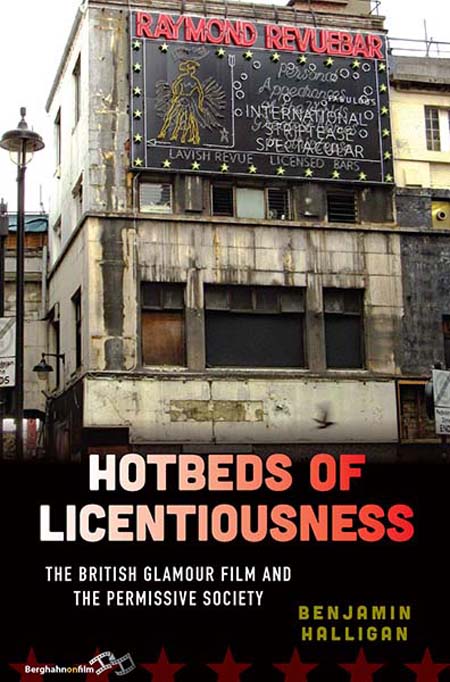
Despite its illegal
status there was still money to be made, and in this new book from academic
Benjamin Halligan we get some fascinating insight into the history of British
pornography and its connection to politics and the campaigning against it of
groups such as the Festival of Light. One filmmaker who seemed to have little
regard for the laws was the Scottish entrepreneur John Lindsay, who was known
for producing films frequently depicting schoolgirls or nuns. The films were
made for European distribution, but also found British customers through mail
order as well as being screened secretly in the sex cinemas of Soho.
As Halligan points
out in this fascinating study, as with many aspects of British culture, the
pornography of this time was often about class, with fantasies being played out
from sophisticated erotica in country houses and gentlemen’s clubs to
frustrated housewives and chambermaids encountering guests in their hotel rooms.
Individual filmmakers developed an almost auteur status in the industry and
became celebrities themselves, publishing autobiographies and documentaries on
the sex film industry. It wasn’t all just hardcore of course, with Britain’s
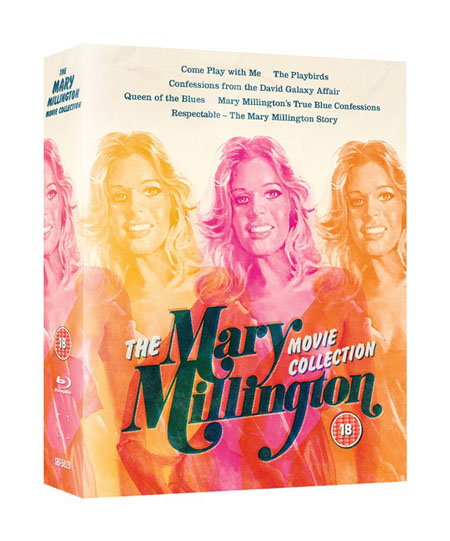
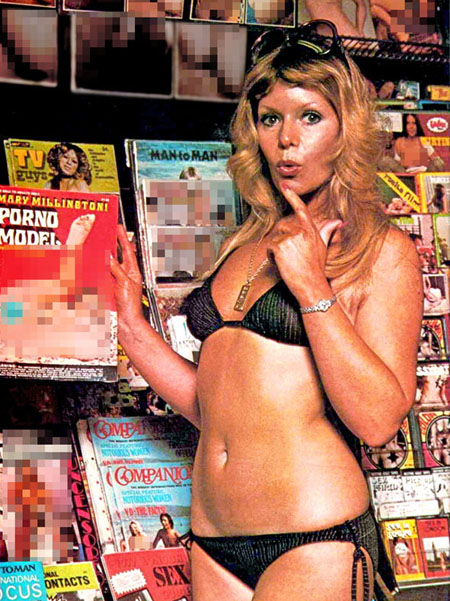
most famous sex film star Mary Millington moving away from hardcore to appear
in softcore sex comedies such as Come
Play With Me (George Harrison Marks, 1977), whose director was a true
pioneer in British glamour film and photography, producing dozens of books, 8mm
loops and feature films from the late 1950s.
Halligan has
uncovered a new canon of British filmmakers who for the most part have been
ignored in previous histories, who played an important role in this secretive,
frequently controversial world. He has watched hundreds of these “joyless
erotic films” which blurred into “one underlit and dingy tale of sexual
frustration… across housing estates, rainy holiday resorts and chintzy hotels”
as part of the research (being a historian is a tough job sometimes!) and as
such is able to give us a great overview of the films, their directors and
producers (generally those in front of the camera are uncredited and anonymous
so it is very difficult to identify who they might be). He explores the
difficulty the British government had in defining precisely what obscenity and
pornography were, which helped to create the grey areas that allowed those
involved to flourish despite the risks.
The book is divided
into three sections, exploring the notion of “The Permissive Society” and the
campaigners both for and against pornography and immoral behaviour, the
hardcore films of John Lindsay, George Harrison Marks and Russell Gay, and the
softcore (and therefore more commercially acceptable) worlds of Derek Ford and
David Hamilton Grant. As a coda, he explores the post-Thatcherite notions of
hardcore pornography, focusing on films set on council estates, which again
brings us back to class. In British film, as pointed out in the introduction
here, everything is really about class.
For anyone interested
in this occasionally murky aspect of British film industry, this is an
essential addition to a library which should also include the work of Simon Sheridan
and David McGillivray. As has been pointed out before, don’t let that high
price for the hardback put you off: this is an academic publication, which
means that a more affordable paperback should be along soon. If you can’t wait
that long, simply request a copy of Hotbeds
of Licentiousness from your local library. Perhaps they can supply it in a
plain brown wrapper.
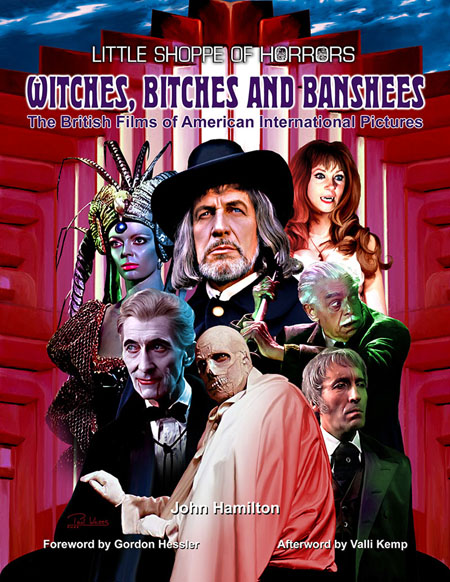
John Hamilton’s 2005
book Beasts in the Cellar: The Exploitation Film Career of Tony Tenser
(FAB Press), is probably the book in my collection that I have referred to the
most in the eighteen years since I bought it. It is an incredible piece of
research and writing and one which has inspired me with my own writing
projects. It was during his time spent with Tony Tenser writing that book that
the idea for this one first emerged, and now almost twenty years later John
Hamilton has given us a book solely dedicated to the films produced in the UK
by one of Tony Tenser’s frequent partners, American International Pictures. AIP
had achieved unheard of levels of success in the states with their teen-themed
drive-in titles such as I Was a Teenage Werewolf (Gene Fowler Jr., 1957)
and Invasion of the Saucer Men (Edward L. Cahn, also 1957) and naturally
as they expanded, they looked to the UK for skilled craftsmen, excellent studio
facilities and perfect locations for their often creepy, gothic-tinged films.
With in-house directors such as Roger Corman delivering fantastic films on low
budgets they could afford to take some risks, and they began by investing in
British projects such as Horrors of the Black Museum (Arthur Crabtree,
1959) before taking a more vested interest in bigger projects such as the giant
ape over London epic Konga (John Lemont, 1961).
After establishing
relationships with UK producers like Tony Tenser they were able to produce an
incredible run of films, many of which are still considered important today.
These include The Masque of the Red Death (Roger Corman, 1964), Witchfinder
General (Michael Reeves, 1968) and The Abominable Dr Phibes (Robert
Fuest, 1971), to name just three. And yes, they all also happen to star Vincent
Price. For more than a decade Price was on the AIP payroll and he loved working
in Europe and the UK for them as it gave him plenty of opportunities to scour the
art galleries and antique shops, as well as being able to dine at all the
finest restaurants and make occasional appearances on radio and television.
AIP’s contribution to
British film production during the 1960s and 1970s was massive and it is terrific
that John Hamilton has produced this equally massive piece of work to reveal
just what they were up to. As is to be expected, the research is exemplary, and
the book is packed with images from behind the scenes and publicity shoots,
posters and other promotional material, and also, where available, images
highlighting the different versions of the films, where occasional ‘hot’ scenes
were shot for the continental or Japanese markets. The writing is thorough,
leaving no stone unturned, and with its use of archival and new interviews, in
many cases the tales are being told by the participants themselves.
With a foreword from
the late Gordon Hessler, who made a few of his most memorable films for AIP,
and an afterword by Phibes co-star Valli Kemp, Witches, Bitches and
Banshees: The British Films of American International Pictures is an
essential read for anyone interested in the cinema of the 1960s. The British
horror film-focused magazine Little Shoppe of Horrors, now in operation
for more than fifty years (and effectively still a one-man operation), is to be
congratulated for finally branching out into book publishing, and we at Cinema
Retro look forward to seeing what they bring us next.
Back in the early 1990s, when I was around seventeen
years-old, a friend and I took a train down to London to see a musical on
Shaftesbury Avenue. It was our first time in the big city. We got there early, so we decided to go for a
walk around the area. This meant that within minutes we found ourselves
wandering the streets of Soho. It was about 10 AM, and we walked down its
streets and alleys slightly goggle-eyed at the sex shops and clubs. As we
walked past one venue a man asked us, “Do you want to see some girls?”, and we
panicked and ran back to the relative safety of Shaftesbury Avenue, deciding we
would get into less trouble whiling away the time in McDonalds.
Soho seems to have always had a reputation for sex and
vice. From the Windmill Theatre to the Raymond Revue Bar, and from private
members cinemas to the phone boxes plastered with calling cards offering
personal services, entering the alleyways of Soho was like stepping into another
world free from the moralising judgment of conventional society. But it wasn’t
just about sex. The film industry had also set up shop, with all the major, and
many minor, film companies establishing their UK base in offices around Soho
Square and on Wardour Street. Even the British Board of Film Classification
(originally the British Board of Film Censors) can be found there. Soho’s pubs,
clubs and restaurants attracted artists, musicians, politicians, journalists
and celebrities, as well as prostitutes, gangsters and corrupt cops. It’s no
wonder that this vibrant, Bohemian and occasionally dangerous atmosphere became
the source of so many stories. The film producers of Soho only had to look out
of their windows for inspiration.
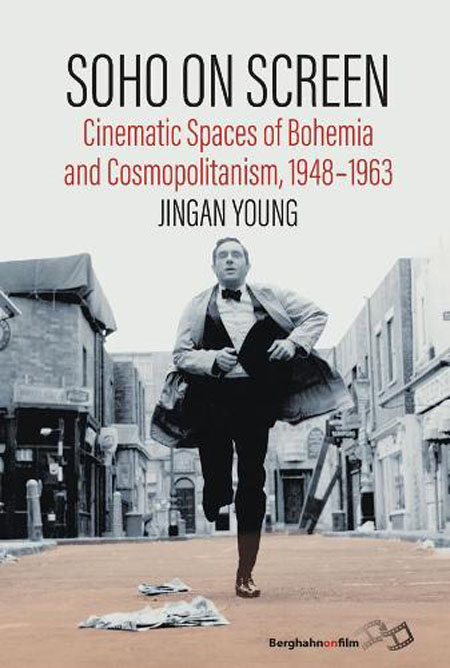
In Soho on Screen, screenwriter and journalist
Jingan Young delves into the origins of Soho and its function as a refuge for
migrants. After the Second World War additional migration saw the rise of coffee
bars and restaurants offering food from a dazzling array of countries,
cementing this notion of a cosmopolitan oasis in the centre of London. There is
interesting discussion on a number of films set in Soho during this designated
time period of 1948-1963, perhaps the golden age before the shine started to
wear off towards the end of the 1960s. Many British films were set in Soho,
from the Val Guest mystery Murder at the Windmill (1949) through to the
new youth-oriented films like Expresso Bongo (1960, also by Val Guest
and starring a young Cliff Richard) and Beat Girl (1960). Sometimes the
streets of Soho themselves were used as locations, but often parts of Soho were
completely recreated in studios, such as the lavish Miracle in Soho
(1957). On the latter film Young explores the way the movie attempted to
reflect the migrant experience in Soho, sadly to a poor box office performance.
Films that played on Soho’s more notorious reputation for sleaze and glamour
tended to be more successful, such as the strip club settings of the Jayne
Mansfield-starring Too Hot to Handle (1960) or The Small World of
Sammy Lee (1963).
Young’s writing is engaging and well-researched, and, as
with many of these types of books, will leave the reader seeking out many of
the films analysed. It’s a fascinating period in British cinema history, and
focusing on films connected to this one square mile of London is a great way to
really dig into that history. Soho on Screen is highly recommended.
During the writing process Jingan Young also started a
podcast called Soho Bites, which is still going (now with a different
presenter) and has a great back catalogue of discussions on all sorts of
interesting films and topics. It can be found here: https://www.sohobitespodcast.com/
Before you roll your
eyes at the thought of yet another film review book, hear me out: Nick Cato,
author, podcaster and columnist, is not simply offering us his opinion on
dozens of forgotten 1970s and 1980s exploitation films including Hitch Hike
to Hell, Goin’ All the Way, Horror Planet (aka Inseminoid),
Lunch Wagon Girls, The Loch Ness Horror and Psychos in Love,
but he is also recalling the experience of watching those films in cinemas in
and around the New York area. This is a series of flashbacks to a time in the
early 1980s when, as a teenage boy, he and his friends were interested primarily
in two things; horror and nudity, and the lengths that they would go to in
order to gain admission to the cinemas where these films were showing. He
discusses the enticing ad campaigns, clearly aimed at him and people like him,
and how frequently they were disappointed by the films themselves. He also
recalls the viewing experience, where often the worse the film got, the louder
and more entertaining the audience became. There was even a time a friend’s
ex-girlfriend dumped a milkshake all over them. These digressions and
descriptions of noisy, howling audiences really paint a vivid picture of that
grindhouse experience that has become so mythologised of late thanks to the
likes of Tarantino. For those of us who never attended such a venue,
recollections like these here are akin to a dispatch from the front line.
Originating as a
column on the Cinema Knife Fight site, Cato wrote about dozens of films
and cinema-going experiences, and he also took the opportunity to occasionally
discuss more recent films and speak to filmmakers and actors. Interviewed in
this book is, amongst others, Peaches Christ, the director of 2010’s All
About Evil, and grindhouse royalty in the form of director Frank
Henenlotter.
Suburban
Grindhouse is a nostalgic and entertaining look back at
the cinema experience in the early 1980s, when a thirteen-year-old boy with a
moustache could gain entrance to R-rated films and be either titillated or
terrified, sometimes by the films and at other times by the audience.
When
the Argentine actress Isabel Sarli passed away in June 2019 the world lost one
of the most beautiful, glamorous, and let’s be honest, sexy women in cinema.
She was a superstar, a goddess, whose twenty-seven films from 1958 to 1984 with
partner-director and frequent co-star Armando Bó caused scandal and outrage in
their home country of Argentina, and yet outside of the Spanish-speaking world
she is relatively unknown. Aside from some films making it to New York’s 42nd
Street grindhouses they did not make much of an impact, which is a great pity,
so one hopes that this book, the first about Sarli to be published in English,
will go some way towards improving the situation.
Isabel
Sarli, nicknamed Coca, a former Miss Argentina who reached the semi-finals for
Miss Universe in 1955, made her film debut swimming nude in Thunder Among
the Leaves (1958), and immediately caused a sensation. The scene is often
said to be the first glimpse of full-frontal nudity in Argentinian cinema. She
immediately became a star and embarked on a remarkable partnership (and
personal relationship) with its director Armando Bó. She was said to be the
cleanest woman in cinema, as so many of the films featured her bathing or
showering. She was also not averse to frolicking naked in snow, on sand or in
the jungle. She was Insatiable (also the name of her last film with Bó
in 1984). In what is probably their most famous film Fuego (1969), she
trysts with her lover, her housemaid and even random workmen she picks up in
the street, whilst in Fever (1972) she memorably pleasures herself
whilst fantasising about horses copulating. With other film titles in their
career like Tropical Lust (1964), Naked Temptation (1966) and Intimacies
of a Prostitute (1972), it is no wonder she was a famous sexual icon whilst
at the same time attracting a vast amount of censorship and distribution issues
at home.
As
Victoria Ruétalo makes clear in this excellent book, Sarli was not only in
front of the camera; she was heavily involved in the production of the films. After
all, it was her body that was frequently the selling point, so it only seems
right that she had an element of power and control over what was going on. The
book explores their filmography in relation to Argentinian politics, in
particular in reference to the Perón era and its emphasis on the power of the
working man. It is surely no coincidence that Sarli’s first nude swim saw her
being watched by a local worker. Frequently Sarli’s sexuality was present in
relation to the working class, juxtaposing leisure with the hard labour they
had to perform. Sometimes, as in Meat (1968) where Sarli’s character is
kidnapped by some of her fellow workforce in the meat-packing factory and
gang-raped, the working man is the enemy. These films could be challenging as well
as titillating.
Ruétalo
also looks at the problems inherent in trying to research a subject when
archives have been destroyed. There was so much government censorship within
Argentina, but sadly the records were disposed of, and the historian is left
trying to find crumbs that still reveal something about what happened.
Thankfully the book is able to present us with what she was able to locate.
Their impact on the Spanish-speaking world is also assessed. Not only did Sarli
and Bó shoot their films around South America, making the most of the
spectacular locations on offer, but they were also seen in many countries as
well as Argentina. In Feugo they even managed a short trip to shoot
scenes in New York, adding further local appeal for those grindhouse audiences.
Violated Frames: Armando Bó and Isabel Sarli's Sexploits is an
essential read for anyone interested in learning more about this fascinating
piece of World Cinema history and the fabulous icon that was Isabel Sarli.
Cinema Memories: A People's History of Cinema-going in
1960s Britain
Melvyn Stokes, Matthew Jones & Emma Pett
Bloomsbury/
British Film Institute
Published:
March 2022
Hardback
237
pages
10
b&w illustrations
ISBN:
9781911239888
RRP:
£76
One evening in June
2016 at the Picturehouse on Piccadilly Circus, cinemagoers were transported
back fifty years, where a uniformed commissionaire made them queue outside for a
screening of One Million Years B.C. Once inside there were usherettes, a
cinema manager chain-smoking and shouting at the staff, dozens of people sporting
the best Sixties fashion, cavemen and cavewomen (cavepeople?) dragging
unwitting participants into some neanderthal roleplay (including this writer),
and even a film producer with a dollybird on his arm. After witnessing a
competition to find the next Hammer glamour star, which was interrupted by
placard-wielding feminists, the public were finally able to enter the cinema
screen. The experience did not end there though: during the film there was
constant disturbance from usherettes with torches and people fighting or
sneaking in and out of the fire exit. Once it was all over the audience stood
for the national anthem (or ran out in mock disgust). This was no ordinary
evening at the cinema, this was a fantastic event organised by Dr. Matthew
Jones of De Montfort University (the cinema manager himself, whose performance
was so convincing that the Picturehouse received complaints from the public
about his behaviour towards the usherettes), with the aim of bringing to life the
fantastic research project ‘Cultural Memory and British Cinema-going of the
1960s’.
Through
questionnaires and interviews with hundreds of people over a three-year period,
the project gathered memories of what it was like to go to the cinema in the
1960s. Given the age of participants this meant that most of the memories were
connected to recollections of childhood and adolescence, of first dates and
first sexual experiences, of happiness and occasional danger, and of community
and political awareness. This of course makes sense. When one considers cinemagoing,
in particular those favourite cinemas of one’s youth, it is the whole
experience that is thought of fondly, not just the film itself; there are the
posters outside and in the foyer, the elaborate décor, the cinema manager, the
box office, the concessions and then the screen itself, where often one came in
after the film had started. There were usherettes in uniforms armed with
torches to make sure no one was getting too carried away on the back row, or to
police single men moving too close to younger audience members. There was a
thick smoky haze, which was not affected by attempts to have a separate
non-smoking section of the auditorium, and some cinemas were art deco palaces whilst
others were literal fleapits.
This terrific book
brings together the results of this research in a non-immersive experience which
is sure to bring back memories of the reader’s own cinema memories. The book is
organised into topics, with the memories of the ‘Swinging Sixties’ both
conforming to established cultural history as well as questioning it. After
all, the Sixties were not swinging for everyone, and it often depended on
whether you lived in the north or the south. Some people do remember the films
of course, and the stars, many of whom were role models and fashion icons. In
the chapter on post-colonial audiences, such as the ‘Windrush Generation’, some
participants recall learning about English culture and behaviour by attending
the cinema. Audience memories of Hollywood are also discussed, as are those who
recalled attending European and world cinema, often in a more arthouse-type
cinema than the usual family cinema or fleapit.
This research is an
excellent reminder of the importance of the cinema experience in that
culturally-significant decade (political changes and their impacts on the
public, such as the legalisation of both abortion and homosexuality in 1967 are
discussed in reference to films such as Alfie and Victim), and it
also serves to point out just how much has changed over the last fifty years:
intermissions are rare, the smoking has thankfully gone, and popcorn has
replaced the choc ice as the snack of choice. Cinema Memories: A People's
History of Cinema-going in 1960s Britain may provoke nostalgia in some
older readers, whilst for younger readers it’s a fascinating window into an
almost lost world. Admittedly it’s not quite the same as that night out at the
cinema in 2016, but at least you are less likely to have to pretend to be a
caveman.
If cinema made us
believe anything back in the mid-twentieth century, it was that those Europeans
were getting far more sex than the rest of us. From Brigitte Bardot to Sophia
Loren, from I – a Woman to I am Curious, films from Europe were
somehow more adult, more daring and sexier. There was an “Ooh La La!” factor when
it came to European cinema, and audiences did not always differentiate between
a challenging black and white French New Wave film or a ‘commedia sexy
all'italiana’. If it came from the continent there was an assumption that you
would get to see far more than in British or Hollywood films. Post-war it was primarily
French and Italian films that dominated this market, but gradually Sweden took
the crown and Stockholm became the sexy film capital of Europe. Whereas the
sophisticated French and Italian women all wore heavy makeup and expensive
lingerie and looked glamorous and unattainable, Swedish girls seemed to be
fresher, down-to-earth and more natural. There was something of the girl next
door about them, perhaps becoming a more realistic prospect for the average man
in the audience.
Although Rickard
Gramfors is keen to point out in this excellent new collection of film posters
that Swedish cinema was not all with angst and existential anxiety, Ingmar
Bergman’s Summer With Monika in 1953 was one of the first to make the
rest of the world aware of this sexy northern European nation. This is perhaps
because it was distributed in America under the title Monika – the Story of
a Bad Girl. Swedish films increased in popularity throughout the fifties
and sixties, although it was a change in censorship law in 1971 that finally
saw Sweden become one of Europe’s most prolific hardcore pornography production
centres. The country became so synonymous
with sex that the word ‘Sweden’ would often be inserted into film titles from
other countries to spice them up, from Bob Hope’s I’ll Take Sweden to
the Italian mondo documentary Sweden Heaven and Hell (now best
remembered for the origin of the ‘Mah-na-Mah-na’ song later used in The
Muppets). This book features many such examples.
Do
You Believe in Swedish Sin? also demonstrates that it
was not all just sex: Sweden’s growing film industry also produced action
films, westerns (known as Lingonberry westerns!), horror, sword-and-sandal,
comedies and even the occasional ninja epic.
As has been remarked
upon before in Cinema Retro, the art of the film poster is not what it
used to be, and this fabulous collection from the archives of Klubb Super 8, a Swedish
vintage distribution company, shows us many great examples of just how good poster
art was. As well as Swedish posters there are also examples from around the
world, from fantastic hand-painted Italian locanda that manage to make
everything look like a gothic masterpiece to eye-catching posters from the
grindhouses of 42nd Street. This is a book that will have you seeking
out many of the fabulous-looking films covered. Fortunately for you, Klubb Super
8 have recently established a new streaming service called Cultpix, where
indeed many of these films can now be viewed at the click of a mouse, from
classics like Anita - Swedish Nymphet to sex education films such as The
Language of Love. Cultpix also has cult films from all over the world in a
range of genres, and it is growing all the time. It is a must-have subscription
for anyone looking for something a bit different from the safer options on
Netflix or Disney +.
With hundreds of
posters and written commentary in English, Do You Believe in Swedish Sin?
is an eclectic and engrossing poster collection for any serious movie buff. This
glossy hardback book will add a touch of colour and Scandinavian glamour to any
top shelf.
RRP: £86 (a more
reasonably-priced paperback will be available soon)
Review by Adrian
Smith
In a world where
every possible sexual proclivity and desire can be sated at the click of a mouse
button, the idea of pornography only being available at an illicit party in a
hired hall, where the gathered men watch black and white amateur footage
projected onto a wall whilst half-expecting to be raided by local law
enforcement, seems difficult to imagine. Yet according to this fascinating
study by historian Dan Erdman, this was indeed the situation for decades, from
the early days of cinema through to the 1950s when home projector ownership
finally meant that people could receive illegal pornography through the mail
and watch it in the privacy of their own homes. As things began to change in
the 1960s, individual film-viewing booths became available, where for a dime a
customer could get access to a few minutes of hardcore pornography. Ultimately
by the 1970s hardcore went mainstream and husbands and wives could go to the cinema
together for screenings of Deep Throat or Behind the Green Door
and the stag film fell out of fashion.
But just what is a
stag film, I hear you cry innocently? Erdman, drawing on his own research as
well as the writing of others, explains that they were short films, often made
by amateurs and usually shot on 8mm or 16mm film, in which hardcore sex acts
took place, they were anonymously made and presented, and undated. One would
have no idea whether the film you were watching was made last year or thirty
years ago. They were effectively “orphaned films”, in that no records were
kept, and no information was provided about who was in the films, who directed
and produced them, and who was even making all the prints. They were screened
at private parties, or “smokers” as they were sometimes described, which would
often be accompanied by live performances, but those in attendance were
constantly in fear of a police bust. As home projection became more
commercially available thousands of copies of stag films criss-crossed America
in the postal service, with enterprising distributors using carefully compiled
mailing lists and anonymous return addresses to target customers whilst
avoiding both the police and the FBI.
Here, in this
US-focused book, Dan Erdman attempts to chart the origins of the stag film, its
growth in popularity, the people behind the production and distribution, and the
many legal attempts to shut it all down. Given that the production,
distribution and screening of these short pornographic films was illegal, and
the films were generally considered ephemeral with no historical or cultural
value, it’s no surprise to learn that the people involved in this underground
world were not really keeping records or even copies of the films. The Kinsey
Institute appears to be the main archive currently available for seeing copies
of stag films but given that even if a film did have credits the names would
inevitably be fake, the job of trying to piece together a history is a
difficult one.
It is a surprise to
discover that the other main archive is the FBI, who kept thousands of seized
films and attempted to keep records of names, dates, and places, but sadly,
again given that the films had no perceived historical value, the films were
all destroyed long ago to save archival space. Luckily the written records
remain, and through drawing on these records, alongside the Kinsey Institute,
the President’s Commission on Obscenity and Pornography (funded in the late
1960s in an attempt to provide legislation, which ultimately concluded that the
constitution’s guarantee of freedom of speech trumped charges of obscenity and
paved the way for porn’s golden age), private archives and newspaper reports,
Erdman has managed to piece together what is surely the definitive history of
this elusive subject. He also provides an excellent case study in how one can
attempt to write a history of a subject when access to both primary and
secondary sources is severely limited, and as such it should be compulsory
reading for any serious historian researching in the margins of popular
culture.
This book gives
fascinating and non-judgemental insight into the secret world of the twentieth
century American male (the audience was always male) and may also provide some
nostalgia for a simpler time before pornography became a global billion-dollar
business, and modern mainstream culture became increasingly pornified.
In the summer of 1975,
a much-anticipated film adapted from a bestselling novel called Jaws,
directed by a little-known newcomer named Steven Spielberg, was unleashed on
the public- and visiting the beach would never be the same again.
The stories about the
making of Jaws have been told many, many times: the shark didn’t work, they
ran over budget and schedule because just a few seconds of usable footage was
shot each day, the studio wanted to fire its young director, etc. The myths and
legends around Jaws have become almost as popular as the film itself,
with dozens of books and documentaries, as well as the three sequels, serving
to keep Jaws firmly lodged in the public consciousness.
So what else can
there possibly be to say about this legendary film? Well as this book’s
subtitle suggests, new perspectives have been found and reveal new ways of
thinking about Jaws and its place in popular culture and film history. The
contributors to the book take several different approaches, questioning myths
(was Jaws really the first summer blockbuster? Cinema Retro’s own
Sheldon Hall tackles that one), analysing themes and looking at its legacy, or
‘cultural footprint’.
Verna Fields rightly
won the Academy Award for Best Film Editing, and one chapter here focuses
specifically on the editing, highlighting technical innovations and analysing
why some of those classic scenes work so well. A similar level of in-depth
analysis is applied to John Williams’ iconic score. It may well be one of the
most well-known scores in cinema history, but musicologist Emilio Audissino
brings his understanding of music theory here to explain exactly why the music
works so well.
Another chapter sees
a consideration of the influence of Steven Spielberg’s Jewishness on Jaws,
whilst Linda Ruth Williams looks at the way children are often used as bait in
his films. Matthew Leggatt focuses specifically on that Indianapolis
speech from Quint, exploring the atomic legacy as evidenced in Jaws. Is
it a coincidence that the shark is killed with a massive explosion?
The ongoing influence
and legacy of Jaws is delved into in the fascinating final section of
the book, which, as well as exploring the sequels, also looks at the many
documentaries about the making of the film, the ‘Sharksploitation’ edit of Jaws
(a strictly unofficial fan-edit which incorporates footage from Jaws and
its sequels as well as from deleted scenes and shark documentaries, and also
replaces the score with contemporary rock songs), and even a discussion of The
Discovery Channel’s annual Shark Week.
This is a terrific
collection of essays that genuinely brings new insight, and with a foreword
provided by Jaws’ screenwriter and supporting actor Carl Gottlieb
himself, The Jaws Book is highly recommended for any fan of Jaws,
or for anyone with even a passing interest in this crucial moment in film
history.
Of
the millions of film books out there, it’s highly likely that horror covers by
far the largest percentage in terms of genre. Just what is it about the genre
that proves to be so endlessly fascinating to readers and audiences,
considering its disreputable reputation? This is something that Barry Keith
Grant addresses in his introduction to this excellent collection of essays on
100 classic (and occasionally forgotten) American horror films. As he points
out, horror has been with us throughout history, with its roots in Medieval
woodcuts, Grand Guignol theatre and the Gothic novel, with the first horror
film being produced by Georges Méliès in 1896. We are endlessly fascinated and
enthralled by the feelings of terror, fear, suspense, and revulsion that horror
inflicts on its willing audience.
The
book covers American horror from over 100 years, going back as far as D.W.
Griffith’s 1914 adaptation of Poe’s ‘The Raven’, The Avenging Conscience, or
‘Thou Shalt Not Kill’, right up to more recent hits such as American
Psycho (2000) Get Out (2017). Grant provides a two-page entry for
each film with an in-depth discussion of the importance of the film and its
place within cinema history, as well as a very useful Further Reading guide for
anyone who wants to dig deeper.
Despite
the relative brevity of each entry, the book provides insightful analysis and can
cause the reader to reassess some of the films under discussion as well as
discovering some for the first time: there are classics here, of course, such
as Carrie (1976), Creature From the Black Lagoon (1954), The
Masque of the Red Death (1964) and The Shining (1980, both
technically American films despite being shot in the UK with mostly British
crews), but it also covers some that one might not immediately think of when
compiling your own list of important American horror films, such as Two
Thousand Maniacs! (1964), Ganja and Hess (1973), Weird Woman
(1944) and John Carpenter’s box office bomb In the Mouth of Madness
(1994).
Writing
something like this must be a thankless task as there will always be people who
disagree with the selection of films, but as it covers such a broad range across
the entire history of American cinema, there ought to be plenty of titles here
for readers to enjoy discovering more about in this immensely readable and
highly recommended collection.
British
author Edgar Wallace, aside from the London pub bearing his name, is now
largely forgotten in his home country, and is perhaps best remembered, if at
all, for his contribution to RKO’s King Kong (1933), although he sadly
died before the film was completed. During his immensely prolific career as a
journalist, author, poet, playwright, historian, film producer and director,
screenwriter and chairman of the British Lion Film Corporation, he published
around two hundred novels, almost a thousand short stories and twenty stage
plays. It was said that at one point around a quarter of all books being read
in the UK were written by Wallace. He was best known for his crime novels,
particularly ‘The Four Just Men’ series and the amateur detective J.G. Reeder,
but he also created the colonial adventurer ‘Sanders of the River’ and wrote
science fiction and comedy stories. His non-fiction often focused on his
experiences in South Africa during the Boer War or on his passion for horse
racing (the latter of which kept him mostly in debt and helped fuel his need to
keep writing).
Many
of his stories and plays were adapted by Hollywood and British filmmakers
during the 1930s and 1940s, and in the 1960s the tiny Merton Park Studios
produced a whopping forty-seven second-feature films under the title The
Edgar Wallace Mysteries. These films were so successful that The Shadows
scored a chart hit with their cover of the theme music ‘Man of Mystery’.
And
yet Edgar Wallace’s work has now mostly fallen out of print in the UK. Perhaps
it is because, as he himself once admitted, “I do not write good books, I write
bestsellers.” In Germany, however, it was a different story; paperback publisher
Goldmanns issued dozens of Wallace novels (and those of his son Bryan Edgar
Wallace) in the 1940s and 1950s under the cheap imprint Taschen-Krimi (krimi
meaning crime), and these novels were very popular in a post-war country still
coming to terms with the relationship it now had with the UK, it’s former enemy
in two world wars. Wallace’s stories, often set in a fog-bound London, were a
fantasy world of terror and crime where the good guys always prevailed.
In
1959 Danish film company Rialto tried their hand at an adaptation and produced The
Mask of the Frog, shot in German language but set in London, and made with
a comedic tone which was often found in the original novels. It was such a huge
success that it launched a series which ran for over a decade and resulted in
thirty-two films, mostly shot in Hamburg or Berlin (with second unit
photography in London) and helped launch the careers of such film stars as
Klaus Kinski, Karin Dor and Joachim Fuchsberger, as well as attracting stars
such as Christopher Lee – he spoke perfect German – who appeared in The
Devil’s Daffodil and Secret of the Red Orchid. Each film would begin
with the message “Hallo, hier spricht Edgar Wallace.” Other popular films in
the series, many of which were dubbed into English and distributed in the UK
and the USA, included The Dead Eyes of London, The Ringer and The
Hunchback of Soho. Towards the end of the cycle, Rialto joined forces with
Italian filmmakers to make Double Face, What Have You Done to
Solange? and Seven Blood-Stained Orchids, generally thought of as
giallo films but released in Germany as part of the Krimi series.
Although
Rialto’s Krimi production ended in the early 1970s, the films lived on through
regular television screenings, and thus the popularity of Edgar Wallace has endured,
and German translations of his novels have remained in print ever since. And
whilst several German volumes have also been published dedicated to this series
of films, until now the main English-language writing on the Krimi phenomenon was
in the magazine Video Watchdog back in the 1990s. Nicholas G. Schlegel’s
new book German Popular Cinema and the Rialto Krimi Phenomenon: Dark Eyes of
London is therefore a very welcome and much- needed addition for anyone
interested in exploring these films in more detail. With an insightful analysis
of each of the films and their reception, alongside a history of the post-war
German film industry and where these films sit within that context, reading
this book will have you eagerly seeking out copies of all of them. Fortunately,
a great deal of the Rialto Krimis are now available on DVD and Blu-ray with
English subtitles, and occasionally with the original English dubs (sometimes
the films were shot in both languages, with different actors), although some
are still only available in German. Perhaps the films are considered to only be
of commercial interest to German-speaking audiences. It can be hoped that the
renewed interest this book will spark amongst English-speaking film fans will
encourage the rights holders to eventually make all these films available.
Although
the idea of 1960s German film adaptations of Edgar Wallace may not be
everyone’s cup of tea (something which is drunk with great regularity in the
films themselves), I would strongly encourage you to at least seek one out.
They are great fun, balancing humour with tales of outlandish criminal
masterminds (the tone often recalls episodes of The Avengers), and the
novelty of seeing people in English police uniforms talking in German about
Scotland Yard adds an additional element of charm to the whole thing. This new
book from Schlegel is an essential read, taking in the films, the industry,
their enduring legacy, and global influence. The hardback is admittedly
something of an eye-watering price, but well worth it for the serious Krimi
fan. For the curious, perhaps wait patiently for the paperback.
In
an isolated theatre, a group of young performers is being drilled by a
tyrannical director with a passion for the dark and twisted. This new
production appears to be an all-dancing musical extravaganza filled with rape, murder,
and saxophone solos. Unknown to everyone involved however, the lead actor under
the giant owl head (don’t ask) has been offed and replaced by an actual crazed
serial killer who then proceeds to pick off the attractive cast and crew one by
one whilst they search helplessly for a way out of the theatre to alert the
police outside. Think the Friday the 13th franchise meets the
kids from Fame .
This
suspenseful, entertaining slasher from Italy (but shot entirely in English and
presented as though this is happening New York) was something of
a staple in the VHS days and now a new audience will be able to discover it
thanks to this 4K director-approved restoration from Shameless Screen Entertainment.
Also
known as Aquarius or Deliera, Stagefright was the feature
directorial debut of Dario Argento acolyte Michele Soavi, who had a run of
spectacular and operatic horror films during the last gasp of the Italian genre
film industry in the tail end of the 1980s. He was seen as something of a
natural successor to Argento. Having worked as an actor and assistant director
on a number of hit Italian genre films like City of the Living Dead
(1980, Lucio Fulci), Phenomena (1985, Dario Argento) and Demons
(1985, Lamberto Bava), as well as on the epic Terry Gilliam production The Adventures
of Baron Munchausen (1988), Soavi was well experienced in putting the
grotesque and the fantastical onto the big screen. The success of Stagefright
enabled him to move onto bigger, weirder and more ambitions films like The
Church (1989), The Sect (1991) and Cemetery Man (1994) [which
are also all available on Blu-ray from Shameless] and he continues to work
today in a very successful television career in Italy.
As
well as a spectacular visual and audio restoration, this new Blu-ray (with an
O-ring and reversible sleeve featuring two kinds of original artwork) also
features a long and insightful interview with Michele Soavi himself, as well as
interviews with Irish star David Brandon, no stranger to Italian genre cinema
during his long career, and Italian supporting actor Giovanni Lombado Radice,
who has possibly had more gory onscreen deaths than any other actor of his
generation. All three of these interviews are as entertaining as Stagefright
itself.
Produced
by Joe D’Amato and written by George Eastman, with a score featuring Guido
Anelli and Stefano Mainetti, this film is Italian through and through yet still
captures something of that 1980s New York off-Broadway spirit in its
pretentious director and young cast’s highs and lows, where the backstage
dramas threaten to overshadow the show itself even before the crazed owl-headed
killer turns up with an attitude and a chainsaw.
Stagefright is available now. Click here to order. (Please note: this is a Region 2, PAL format release.)
A
blind masseur, Zatoichi would wander from village to village in Feudal Japan
hoping for employment to maintain his meagre existence. Hidden within his cane
was a sword which he would frequently be required to use against an assortment
of yakuza, villains, assassins and ronin. Zatoichi was a legendary blind
swordsman whose adventures were charted across an initial run of twenty-six
feature films and a hundred television episodes all starring Shintaro Katsu
between 1962 and 1979, with a return to the character one last time for the
film Zatoichi in 1989. Katsu was
something of a legend in Japan, and he came from a showbusiness family: his
elder brother was TomisaburÅ Wakayama, star of the Lone Wolf and Cub series. This in-depth new book from academic
Jonathan Wroot takes in not only Katsu’s incredible run, but also looks at
other Zatoichi films such as the 2003 reboot directed by and starring Takeshi
Kitano. Known primarily as a comedian and TV presenter in his native Japan
(remember Takeshi’s Castle?),
Kitano’s ZatÅichi won dozens of
awards including the Silver Lion at the Venice Film Festival. Another Zatoichi
film was made as recently as 2010, suggesting that this is a character, so
ingrained in Japanese culture, that we have not seen the last of just yet.
Wroot
charts the influence of Zatoichi across other countries as well, with Taiwanese
and Indonesian cinema both producing variations of the blind swordsman back in
the 1970s, whilst Zatoichi himself occasionally crossed over into other
cultures (Zatoichi Meets the One-Armed
Swordsman in 1971 saw him cross paths with one of Hong Kong cinema’s most
popular disabled fighters, played by Jimmy Wang-Yu). In American cinema, Rutger
Hauer played a variation of the character as a blinded Vietnam vet in 1989’s Blind Fury, a remake of 1967’s Zatoichi Challenged, and in the Star Wars film Rogue One (2016), Hong Kong actor Donnie Yen played a blind warrior
skilled with a staff, which, as Wroot points out, is a further connection
between the Star Wars universe and
Japanese cinema (Akira Kurosawa’s The Hidden Fortress (1958) is often cited as
a key influence). In terms of pop culture, perhaps most significantly, there is
Marvel’s Daredevil, given the Netflix
treatment across three series (2015-2018, plus The Defenders series in 2017), in which a blind lawyer with second
sight fights the criminal underworld using his training in martial arts from
the Samurai-style warrior known as Stick, who was also blind.
Jonathan
Wroot’s has packed The Paths of Zatoichi
with information and analysis of this significant long-running character who goes
across such a huge area of Japanese film history, and the book also has much to
say about franchises, remakes and adaptations within global popular culture.
Highly recommended.
The Evil Dead (1981,
Sam Raimi) is one of those film titles that can still conjure up images of
forbidden horrors, liable to corrupt and deprave anyone who dares to take a
peek at the screen. Its inclusion on the original “Video Nasties†list by the UK’s
Director of Public Prosecution back in the early 1980s brought it an undeserved
infamy and reputation which, despite winning its day in court, it retains to
this day. However, if you are brave enough to watch The Evil Dead, instead of developing homicidal urges, what you will
actually find is an imaginative, breathlessly entertaining ‘Cabin in the Woods’
horror film with deliberately over-the-top performances, stylised camerawork,
comedic timing and bravura special effects, all washed down with gallons of
fake blood.
Much
has been written about The Evil Dead since
its release forty years ago, most of which focuses on the stories around its
production or the furore caused by its release on an unsuspecting public. In
this piece of writing, film journalist Lloyd Haynes gathers the best stories
and weaves them together with his own analysis of the film. He connects it to
gothic literature through the theory of the ‘Bad Place’ motif, offering insight
into its broader cultural significance, and also discusses the way in which the
film’s hero, played by Bruce Campbell, conforms to the now familiar tropes of
the ‘Final Girl’, although surprisingly he fails to note the significance of
the character’s gender-neutral name Ashley in subtly underlining his
suitability to be the only survivor.
This
book also takes a look at the film’s two official sequels, the authorised
reboot in 2013 and the hugely entertaining TV series Ash vs Evil Dead (2015-2018), and considers films inspired by both
the original film and the franchise as a whole.
If you are looking for a
quick yet in-depth dive into the world of The
Evil Dead, this latest volume in the Devil’s Advocate series is the perfect
place to start.
When
film fans hear the name of Italian director Lucio Fulci, it almost inevitably
brings to mind his oft-quoted moniker as the “Godfather of Gore,†thanks to the
films made towards the end of his career that caused so much trouble with the
British film censors; Zombie Flesh Eaters
(1980), The Beyond (1981) New York Ripper (1983) being some of the
most notorious.To view him as such
however is to miss out on what was an extraordinarily prolific career which
also included musicals, comedies, westerns, historical dramas, fantasy films,
science fiction and thrillers. This new Blu-ray and digital release of The Psychic, out now in a 2K restoration
from Shameless Films, is an opportunity to reassess one of his less well known
films, which is only now being released in the UK for the first time.
The Psychic tells the
tale of a woman who has visions of murder and death. These visions cause her to
break through a wall in her rich new husband’s old farmhouse, where she
discovers the skeleton of a woman murdered four years earlier. Naturally her
husband is under suspicion, and with the help of a doctor friend with an
interest in parapsychology she tries to replay the memories of these visons in
her head over and over again, looking for clues that might prove her husband’s
innocence. As pieces of the puzzle fail to add up however, she begins to
realise that some of what she has seen may in fact be a premonition of murders
yet to come, possibly her own.
The
original Italian title was Sette note in
nero, or “Seven Black Notes.†The seven notes in question refer to the tune
that is played each hour on a watch worn by our heroine, gifted to her by the
husband’s sister. This sister has dozens of lovers who give her gifts, and the
watch apparently came from someone in the Vatican. This is just a sly hint
towards illicit goings on in the Catholic Church. In some of Fulci’s other
films, such as Don’t Torture a Duckling
(1972), the criticism would be far more overt.
With
its amateur detective attempting to solve a crime by constantly revisiting
distorted memories, The Psychic sits
squarely within the tradition of the giallo,
the sub-genre of Italian thrillers that often featured bizarre murders,
unreliable witnesses, amateur detectives and red herrings galore. Described as
an “elegantly constructed murder mystery†by historian Stephen Thrower (who
wrote the definitive book on Fulci’s career), this is an entertaining thriller
that leads the audience down dark paths and blind alleys before finally
delivering an exhilarating ending straight out of Edgar Allan Poe.
This
new Shameless Blu-ray edition includes both the original Italian and English
dubs, and a wealth of new interviews. Sadly, Fulci himself is no longer with
us, but his daughter Antonella Fulci appears in two separate interviews, one
focused on the film and the other on her father. Put together, she speaks in
these interviews for almost an hour, and it is fascinating to get insight into
both her personal relationship with her father as well as her own analysis of
his career. Also appearing on the disc is the writer Dardano Sacchetti, who
also speaks for around an hour, and with almost a hundred different credits, he
has had a rich and diverse career and is full of great stories. The final
interview is with the film’s composer Fabio Frizzi, who discusses how he got
started in composing for film as well as his relationship with Lucio Fulci.
Frizzi was a frequent collaborator with Lucio Fulci, and several years ago went
on tour performing music from these films around the world (something this
writer was lucky enough to see one Halloween). And if you are wondering why The Psychic score sounds familiar, that’s
because it is yet another Italian score pinched by Quentin Tarantino for Kill Bill!
The
Shameless Films Blu-ray, in a distinctive yellow case, comes with a collectible
O-ring featuring the iconic American poster art, and also includes a reversible
sleeve which uses the original Italian artwork which made the Edgar Allan Poe
connection even more explicit.
The Psychic deserves
to become better known as a fine example of the 1970s European thriller, and
this new restoration is the perfect way to see it.
(Note: this release is currently available in Region 2 UK format only.)
Collector
and historian John Buss is back again with another fascinating glimpse into the
world of 1960s adventure television series collectibles. Having already brought
us books on The Man From U.N.C.L.E. and
The Avengers and New Avengers, this time we get to see items that fans of Danger Man (known in the U.S. as Secret Agent) and The Prisoner (both starring Patrick McGoohan) could beg their
parents for every Christmas.
Given
Danger Man’s more grounded, often
serious nature, there were not all that many toys or games, but there were
still many different items available, thanks to the show being a major hit
ultimately running to over eighty episodes since it began in 1960. There were
several novels released based on the show, which were translated and available
in several countries including Spain, Portugal, France and Germany. As well as
paperbacks, annuals were also available, and a comic strip was published in the
“TV Crimebusters Annual†in 1962, which also featured stories from The Avengers, Charlie Chan and Dixon of
Dock Green, the latter not the first show you would suggest turning into a
comic strip. Some actual full comics were published as well, firstly in America
and then in Spain, Mexico, Sweden and the Netherlands. Only one full issue was
published in the UK. In this book you will find dozens of photos of every
publication that John Buss has been able to track down, also including TV
listings magazines featuring John Drake on the cover.
There
was also a Danger Man board game
issued in 1961, where some players committed acts of sabotage whilst another
player took on the role of John Drake. Fabulous stuff, and just one of the many
items in this book that will have you heading straight to eBay to see if you
can get one for yourself. The book even covers the many different soundtrack
releases on vinyl that have featured one of the versions of the Danger Man theme, including the
unexpected revelation that Bruce Willis recorded one in 1987.
The Prisoner was a
much bigger, glossier, high-concept show than Danger Man, and the available collectibles reflects that. As a result,
one might have expected a vast swathe of toys and other tie-ins. Perhaps its
more esoteric, nay confusing nature and its appeal towards a more grown-up
audience may be the reason that, aside from one Dinky toy car (of the Mini Moke
too, not even Number Six’s own car), what we mainly have here are novelisations
and comics. The Prisoner had its own
strips in TV Tornado and Smash, but no comic of its own. The Prisoner also featured in a set of
collectible trading cards, but that was about it during its original run. Only
years later when the show had firmly secured cult credentials would far more
items be created: one only has to visit the gift shop in Portmerion to see the
difference between The Prisoner’s
commercial potential now and in 1967.
Once
again, John Buss has created a fascinating publication that will appeal to
collectors and fans of 1960s television alike, and provides more evidence that
the author needs to be given the opportunity to curate his own museum.
Wynne Kinch (Jenny Agutter) was adopted. She had been
raised by her mother, but at some stage prior to seven, still old enough to
know about what was happening, she was put up for adoption and taken into a
loving family with two considerably older brothers. Of the brothers, George
(Bryan Marshall) is her favourite, and now, at the age of fourteen, Wynne's
familial love is turning into lust and obsession. Denying that it is incest
because she was adopted, Wynne feels completely justified in having these
unrequited feelings towards her thirty-two year old brother.
The family live in a new high-rise block in Bracknell, Berkshire. Everything
around her is either white or concrete, and all of it new, yet she still yearns
to spend time in their old home: a large, crumbling farmhouse on the other side
of the park. It is condemned and marked for demolition, like all of the other
Victorian property we see in the area. Anything not brand new, it seems, is
unwanted. Wynne’s mother exclaims to her husband, “This place is a palace
compared to where we used to live.†“Oh yes?†he replies, “and you name me a
palace where the doorknobs keep falling off!†There is something rotten at the
heart of this new brutalist utopia.
This crumbling facade not only represents the forbidden
love at the centre of the family, but the possibility that George may be a
killer of young women. Bodies have been found in the park, and the police are
seemingly without a lead. When Wynne spots scratch marks on George's back, and
finds his jumper covered in blood, she begins to suspect that maybe he is the
culprit. Far from putting her off, this causes her love for him to grow
stronger, feeling a need to protect him. Only she truly understands him and can
help him. She fantasises about George kissing her, or walking in on her in the
bath. Wynne confesses her sinful thoughts to a Catholic priest during the day,
and caresses herself in bed at night.
I Start Counting! is adapted from Audrey Erskine Lindop's
novel from 1966, and the plot feels similar to the popular, although far more
graphic, schoolgirl-based Italian crime films of Massimo Dallamano: What
Have You Done to Solange? (1972, Italy/ West Germany) and What Have
They Done to Your Daughters? (1974, Italy). Perhaps Dallamano was familiar
with this film, as What Have You Done to Solange? is also set in
Britain, and features the murder of a schoolgirl in a park. There are also
similarities to the British thriller Assault (1971, Sidney Hayers,
UK), which again features schoolgirls being murdered in parks. This was clearly
a theme which needed exploring in the early 1970s.
I Start Counting! was directed by David Greene, who
had previously directed, amongst others, The Shuttered Room (1967,
UK) and The Strange Affair (1968, UK), the latter also featuring an
underage relationship, this time between a schoolgirl and a policeman. David
Greene had a varied and fascinating career, working in both film and TV between
Hollywood and the UK. Monthly Film Bulletin praised his direction of
this film, stating it was, “a coherent and accomplished piece of filmmaking.â€
Thankfully I Start Counting! has been rescued from its
ill-deserved obscurity by the new boutique Blu-ray label Fun City Editions, who
have presented a new restoration of the film in both a limited-edition version
with embossed slip cover and a standard edition. Alongside the restored film is
a fascinating interview with Jenny Agutter herself who is full of praise for
David Greene and the cast that she worked with. Only being sixteen at the time,
and with no professional acting training (her background was in ballet), she
felt very comfortable and supported throughout the film. She also discusses the
significance of the film in this early part of her career, coming as it did
just before The Railway Children (1970, Lionel Jeffries, UK) and Walkabout
(1971, Nic Roeg, UK/ Australia). Also included on the disc are a fascinating
feature commentary from film historian Samm Deighan and a well-written video
essay on the coming of age themes explored in I Start Counting!
If you have any interest in British cinema of the
1960s, I Start Counting! is well worth your attention and this new
release has been long in demand by film fans. And just what is it that Wynne
Kinch is counting? Watch the film and see if you can work it out for yourself.
Fun City Editions are clearly a Blu-ray label to watch,
and we at Cinema Retro await news of future releases with anticipation.
The Mary Millington Movie Collection Limited Edition
Blu-Ray Box-Set (UK, Region 2 release).
An interview with
historian and documentary filmmaker Simon Sheridan
BY ADRIAN SMITH
In
June 2020 Screenbound are releasing a limited edition Blu-ray box set in the
U.K. dedicated to the films of one of Britain’s most celebrated and tragic erotic
film stars, Mary Millington. Historian Simon Sheridan has spent years
researching her life (his book Come Play with
Me: The Life and Films of Mary Millington was published in 1999) and has
overseen this new collection.
Cinema Retro: How did you begin this lifelong quest to tell Mary Millington’s
story? When did you first discover her?
Simon Sheridan: I’m not sure I can tell you this story! I was a curious
schoolboy. I happened upon some porn mags when I was a young boy. It wasn’t in
a bush, but someone I knew had these porn mags. I’m not going to reveal who!
She was in copies of Playbirds and Whitehouse throughout the
1980s so I saw this beautiful woman, but they were talking about her in the
past tense, and the articles next to these very explicit photographs said she
had died at the age of 33. These kind of things just stayed with me throughout
my life, that this woman who posed in the post explicit manner and was prepared
to pretty much do anything on camera had died so young. She has always
fascinated me, and the more I research and learn about her life, I just think,
“What a great human being she was.†She really fought for people’s rights to
enjoy pornography. People ask me what Mary was like: she was this 4’11"
ex-veterinary nurse from Surrey who took on the force of the Establishment at a
time when society was not mature enough to believe that people could be happy and work in the sex industry. What a
brave woman she was. She was a pioneer, there was nobody like her at the time.
When I went to university I wrote my dissertation on her, and then I wrote my
book, then I worked on her film releases, then made my movie, and now this box
set. So this was how I came upon Mary, so to speak.
CR:
Could you tell us more about what the boxed set features? Is it every film she
ever appeared in?
SS:It is all the films she made for publisher David
Sullivan. When Come Play with Me came out in April 1977 it was promoted
as Mary Millington’s first film, but of course it wasn’t her first. She had
made quite a few before she went on to become a big star through Come Play with
Me (1977). The other films
are The Playbirds (1978), Confessions from the David Galaxy Affair
(1979), Queen of the Blues (1979), Mary Millington’s True Blue Confessions
(1980) and Mary Millington’s World
Striptease Extravaganza (1981), along with my feature documentary Respectable: The Mary Millington Story
(2015).
CR:True Blue Confessions is such an
interesting and unusual film.
SS:I’ve known David Sullivan for over twenty years, and
when I first met him one of the films I really wanted to talk about was True
Blue Confessions. I was astonished when I first saw it. It’s so visceral.
It’s so brutal. In 1980 you didn’t really know what went on in celebrities’
lives. When Mary died it was in the newspapers, but all the stuff about drugs
and prostitution wasn’t really reported, but it’s all in True Blue
Confessions. It’s a very honest look at her life, quite unlike anything
else that had been made in this country, or anything to do with the porn world.
It probably shocked a lot of people, but it was a huge hit. It played for weeks
and weeks. People were fascinated to see what the truth was behind Mary,
although of course most of that film isn’t true! There’s a lot of elaboration,
but at the heart of it there is some truth to her story. It’s always fascinated
me. I’ve probably watched that one more than any of her other films. David will
argue until the end of time that that was not an exploitation film. It was not
there to make money. When Mary died it was completely sudden, the general
public had no idea this was going to happen. She was the sex superstar who was
going to go on and on. David was inundated with tens of thousands of letters. She
was like the pornographic Princess Diana. Fans were just bereft and couldn’t
believe it, so he brought out these tribute magazines which had her
autobiography in it. She wrote an autobiography in 1978 that is half true, half
faked, which was written with her probation officer, and those tribute
magazines sold by the shedload. I think David did about thirteen or fourteen
different ones. They kept being reprinted, so David felt compelled to also do
something for the cinema about her life. He always says he was trying to make
Mary more famous in death than when she was alive.
CR:
How has it been possible for these films to be restored? Where were the
original elements all these years?
SS:I had been nagging David for ages about where the
original film negatives and reels were, and he had a warehouse in Barking,
where he stored all the products for his U.K. sex shops. I went there with him
and it was filled with racks of magazines and boxes of sex toys. There in the
corner of this warehouse were these wooden pallets piled high with these huge
tin reels with scrappy labels. They were rusting on these pallets. It was very
exciting for me to see them. I said he should have them stored somewhere
better, instead of in the corner of a warehouse full of rubber sex toys. These were
worth preserving. He said, “Are they really, Simon?†Yes they are! A deal was
done with the BFI and they took them and stored them in their archive in
Berkhamsted, where they were frozen at a certain temperature. They’ve been there
for about ten years. They were used to make DVDs, and it’s now taken a long
time to make the Blu-rays. Initially, I was told British sex films would not
sell on Blu-ray, but then a couple of years ago Screenbound told me they wanted
to bring the Mary Millington films out on Blu-ray. I was beside myself with
joy! This was the dream project. We got them restored in London by Final Frame.
Come Play with Me and The Playbirds were not shot on the best
film stock. These were David’s first films, and they were using little scraps
of films, offcuts, to shoot these things. The later films were shot on much
better quality film. But I’ve seen them now and they do look really good.
One
of the greatest and most commercially successful fantasy series of the 1960s, The Avengers actually started out in
1961 as a gritty crime drama focused on Doctor Keel, played by Ian Hendry, one
of British television’s biggest stars at that time. In the first episode his
wife is killed by drug dealers, and a mysterious undercover agent named John
Steed, played of course by Patrick Macnee, helps him to avenge her death. The
two end up working together on a number of other crime cases, thus forming the
basis for a series that would ultimately outgrow its noir origins and become an outrageous Technicolor riot of science
fiction, martial arts, sexy fashion and comedy. Once Doctor Keel was out of the
picture, the playful ‘will they? – won’t they?’ (or even ‘have they? – haven’t
they?’) nature of John Steed’s relationship with his female partners – Cathy
Gale (Honor Blackman), Emma Peel (Diana Rigg) and Tara King (Linda Thorson) –provided
a frisson of excitement and the occasional wink towards the adults in the
audience of what was essentially a family show. After coming to an end in 1969,
John Steed was soon back in 1976 with The
New Avengers, as a mentor to his new younger companions Purdey (Joanna
Lumley) and Mike Gambit (Gareth Hunt).
Of
course, where there is success merchandising is never far behind, and The Avengers and The New Avengers was no exception. This new volume by John Buss,
following closely on the heels of his volume on The Man from U.N.C.L.E., features global examples of original
books, toys, magazines, records, clothing and promotional items, many from the
author’s own personal archive. One might expect novelisations and collectible
annuals to have been standard in the 1960s, but Honor Blackman’s Book of Self-Defence, in which she demonstrates a
number of techniques, is perhaps a little more surprising. As was common at the
time, most of the cast at some point released singles or albums, with the only
exception being Diana Rigg, who was far too serious for that kind of thing.
Macnee and Blackman released that notorious novelty record ‘Kinky Boots’
(recorded after a long session in the pub according to Honor Blackman), but
Linda Thorson had some success as well with her single ‘Here I am’, which was
released all over Europe. Blackman also released an entire solo album in 1964,
‘Everything I’ve Got’, capitalising on her popularity from both The Avengers and Goldfinger.
With
well over 100 items discussed in this full-colour volume, John Buss is clearly
Britain’s leading 1960s TV memorabilia collector and historian. This is an
essential purchase for anyone who remembers the thrill of owning an annual,
plastic gun, board game or jigsaw from your favourite show.
The
first question you are probably asking is “Do we need another book about Hammer
films?†Speaking as someone whose Hammer shelf is already groaning with the
weight of so many volumes on the company, the answer, as far as Hammer Complete
is concerned, is “Absolutely.†This book, coming in at nearly 1000 pages, is a
lifetime achievement for journalist Howard Maxford, and one that deserves
immense praise. Unlike other books which might focus specifically on the horror
films, or the posters, or the ups and downs of the company itself, here Maxford
has attempted to provide a complete encyclopedia of everything and everyone
connected to Hammer. From Temple Abady (who appeared in Never Look Back in
1952) and The Abominable Snowman (1957) to Murial Zillah (Danger List, 1957)
and Marc Zuber (The Satanic Rites of Dracula, 1974), no Hammer stone has been
left unturned or contributor ignored.
Unlike
many books of this type which are little more than a collection of facts
cribbed from Wikipedia and the Internet Movie Database, Maxford has conducted
many interviews over the years with Hammer stars including Christopher Lee
himself, which means there is plenty of new and insightful material here
alongside his primary research and original reviews of the films themselves.
The entry on Lee is spread over six pages, where his career is discussed at
length including his well-known frustration with the decline in quality of the
Dracula films; of Scars of Dracula (1970) he complained, “I was a pantomime
villain. Everything was over the top, especially the giant bat whose
electrically motored wings flapped with slow deliberation as if it were doing
morning exercises.†Likewise, his frequent co-star Peter Cushing gets a
similarly lengthy entry, as do many of the other key players such as regular
character actor Michael Ripper, director Terence Fisher, producer James
Carreras, writer-director Jimmy Sangster and script supervisor Renee Glynne,
who first worked for the company in 1947 and was still present when they went to
Hong Kong to make The Legend of the 7 Golden Vampires and Shatter (both 1974).
Maxford
is fair in his assessment of the films themselves, discussing at length those
which have become legendary - the triumvirate of The Curse of
Frankenstein (1957) Dracula (1958) and The Mummy (1959) in particular - as well
as being fair to those films often derided or ignored, including my personal
favourite; Slave Girls (also known as Prehistoric Women, 1968), made primarily
to reuse all those fur bikinis left over from One Million Years B.C. (1966).
It
may have a high price tag, but Hammer Complete is a huge, well-researched
reference book that no Hammer aficionado should be without.
Born in 1896, as a teenager Barbara La
Marr, then Reatha Watson, lead something of an adventurous life. Her father
worked in the newspaper business, and the family moved home constantly, almost
inevitably contributing towards the turbulence and seeming inability to settle
down that plagued her life. At the age of sixteen, now living in California,
her elder sister and her husband kidnapped Reatha, causing a minor scandal,
with some accounts stating that Reatha had helped plot the kidnaping herself in
a desire to flee her oppressive parents. Reatha was already an incredibly
luminous and attractive young woman, and she was regularly spotted in the
nightclubs of Los Angeles dancing, drinking, and generally behaving in such a
way that soon brought the wrong kind of attention. For her own protection a
court declared that she was “too beautiful†to be on her own in the city and
was ordered to leave Los Angeles.
This did nothing to assuage her
ambitions however, and she attempted to turn this publicity into a Hollywood
career. Having had stage experience as a child, she appeared as an extra in
several films within the still developing Hollywood studio system. Being
somewhat disappointed by her perceived lack of success, she went on to develop
a career as a dancer, and performed in nightclubs around the country, attracting
men wherever she went, until the strain on her health proved too great and she
headed back home to California. Reatha Watson was incessantly creative and
decided to try her hand as a writer. Her first attempt at a novel found its way
into the right hands, and in 1920 the Fox Film Corporation produced The Mother of His Children (Edward J. Le
Saint), the success of which lead to her becoming a staff writer for Fox.
Aware of the negative publicity
attached to Reatha Watson, it was around this time that she changed her name to
Barbara La Marr, and she was overjoyed to back in Hollywood, even if it was on
the other side of the camera. However, that state of affairs did not last long,
and she was soon invited to screen test and began appearing in small roles again.
Her friendships with A-list stars soon lead to bigger roles, and within just
three years she was playing major roles in The
Three Musketeers (1921, Fred Niblo) alongside Douglas Fairbanks, in The Prisoner of Zenda (1922, Rex Ingram)
with her good friend Ramon Novarro, and in Hollywood satire Souls for Sale (1923, Rupert Hughes),
the cast-list of which reads like a Who’s
Who of the silent era. La Marr often found herself cast as a ‘vamp,’ a Hollywood
type popular in the pre-code films, and as such she was often dressed in
amazing jewelled costumes and over-the-top headwear whilst tempting men to
their fate, often being punished for such licentiousness by the end of the
film. Despite being kind, overly generous and unselfish towards everyone she
knew in her real life, this Hollywood ‘vamp’ image began to follow her wherever
she went, and the Hollywood gossip press loved to tell tales of her somewhat
scandalous personal life, the truth of which is laid out in this meticulously
researched biography by Sherri Snyder.
Shameless has released the UK video debut of the 1978 cult film The Mountain of the Cannibal God as a Blu-ray special edition. (The film is also known as The Slave of the Cannibal God.) The plot is as follows: Susan Stevenson (Ursula Andress) and
her brother Manolo (Claudio Cassinelli), unable to get help from the New Guinea
authorities, hire former explorer Edward Foster (Stacy Keach) to help them find
her husband. He went missing months ago in the jungle whist on a quest to reach
the sacred mountain of Ra Ra Me. Susan clearly loves her husband and would do
anything to get him back. Foster agrees to take them, despite the obvious
difficulties ahead, not only from the dangerous animals, but also from the
legendary cannibal tribe said to be lurking within the darkness of the jungle canopy.
Along the way they find a cult-like village of local tribespeople watched over
by Father Moses (Franco Fantasia) and Arthur Weisser (Antonio Marsina), who is
also a jungle explorer. An affection seems to develop between Susan and Arthur,
despite her supposed devotion to her lost husband, and after some trouble in
the village when two locals are murdered by mysterious masked figures, they all
set off together to find the mountain. Along the way they experience Herzogian
levels of physical punishment as the game cast scramble down mountains, face an
eight-metre-long snake, and, in one astonishing sequence, attempt to climb up a
clearly deadly waterfall. It is a miracle that none of the cast were
hospitalised.
Of course, the title of the film giving
it away somewhat, the exhausted group eventually run into cannibals and all
hell breaks loose. Susan discovers the fate of her husband and is stripped,
tied up and oiled by the cannibals who then indulge in a frenzied orgy that
would have made Caligula blush; even the livestock are not left out of the sexually-charged
proceedings. This energetic display is just the primer however for a darker
appetite which will soon be satisfied…
With Ursula Andress being surrounded by
sex, nudity, graphic violence, real snakes and a devious dwarf, it is no wonder
The Mountain of the Cannibal God has
developed something of a reputation over the last forty years. The 1970s Italian
cannibal films are notorious for their use of real onscreen animal killings,
something which became popular as a result of Mondo Cane (1962) and its many sequels and rip-offs over the
preceding decade. The directors have always claimed that these scenes were
added at the insistence of financially-minded producers, and debates continue
to rage amongst fans and scholars as to whether new releases of the films
should still include the footage, or whether it should now be removed. In the
UK this decision tends to be in the hands of the BBFC, where all films released
have to conform to The Cinematograph Act of 1937. The Mountain of the Cannibal God originally included a scene of a
monkey fighting a losing battle with a snake, as well as another snake fighting
a bird of prey, and other assorted real-life animal slaughter, all of which no
doubt contributed to its inclusion on the Video Nasties list in 1984. Two
minutes of these scenes have now been removed for this new Blu-ray restoration,
although not all animals get through the film unscathed; we still see a
tarantula get impaled on a knife, a large lizard is gutted, skinned and eaten
alive, and in one frenzied scene, dozens of green water snakes are grabbed and
eaten by hungry cannibal tribesmen.
James Bawden was a TV
columnist for the Toronto Star, and
Ron Miller was TV editor at the San Jose
Mercury News and is a former president of the Television Critics
Association. During their respective careers stretching back some fifty years the
list of stars they have interviewed reads like a Who’s Who of Hollywood. These two volumes bring together an
incredible assortment of interviews from almost the birth of cinema itself,
with Buster Keaton, Jackie Coogan and Gloria Swanson representing the silent
era. The great leading men are all here, including James Stewart, Henry Fonda,
Kirk Douglas, Victor Mature and Cary Grant, and of course classic leading
ladies like Bette Davis, Janet Leigh, Fay Wray and Joan Fontaine. Along the way
they also met character actors and horror stars like Ernest Borgnine, Victor
Buono, John Carradine, and Lon Chaney Jr., and even singing cowboys Gene Autry
and Roy Rogers make an appearance. With each book containing over thirty
interviews, this is an opportunity to revisit the golden era of Hollywood. Many
of the interviews, generally to publicise their latest film, were conducted on
sets, in theatre dressing rooms, or if they were lucky, the star’s home, and
the authors preface each interview with their own recollection of the moment,
giving us a little more insight into how these stars were when the cameras were
switched off. Ron Miller has even written an entire chapter titled “My seven
minutes alone with Elizabeth Taylor,†recalling the lengths he was required to
go to in order to interview with star whilst she was filming the TV miniseries North and South (1985). The effort that
went into securing those seven minutes is possibly more entertaining than the
interview itself, and secures some sympathy for those dogged TV and film
journalists who have to jump through sometimes dozens of hoops before getting
their moment.
Miller has helpfully
also provided a chapter titled “How to Talk to a Movie Star,†which provides
invaluable advice for anyone considering taking this up as a career, including
a recollection of the time James Bawden interviewed Julie Harris. “I hate star
interviews!†she exclaimed, so Bawden quickly told her that he had never
understood Shakespeare until the time he saw her in a production of Romeo and Juliet. “You’ve convinced me!â€
she replied and spent an hour answering his questions. The lesson? Flattery
frequently gets you somewhere.
From nervously
interviewing stars like Boris Karloff when barely out of their teens to
developing personal friendships with stars such as Bob Hope, Bawden and
Miller’s collection is a feast of nostalgia and insight into a
never-to-be-repeated era of Hollywood history, and these two books are a must
for the bookshelf of any respecting film fan or potential Hollywood journalist. (Both books are published by University Press of Kentucky.)
CLICK HERE TO ORDER "CONVERSATIONS WITH CLASSIC FILMS STARS" FROM AMAZON USA
CLICK HERE TO ORDER "CONVERSATIONS WITH CLASSIC FILMS STARS" FROM AMAZON UK
CLICK HERE TO ORDER "YOU AIN'T HEARD NOTHIN' YET" FROM AMAZON USA
CLICK HERE TO ORDER "YOU AIN'T HEARD NOTHIN' YET" FROM AMAZON USA
Jonathan Rigby’s American Gothic (Signum publishing) is a fascinating and idiosyncratic exploration of the American horror film, a genre which has inspired filmmakers to create some of the most memorable moments in cinema history. More than a simple encyclopaedia, the book charts the historical development of the genre through not only the classics such as Phantom of the Opera, Dracula and The Cat and the Canary, but also through the hundreds of cheaper independent films and supporting features which are often forgotten but are no less enjoyable. Each chapter, written in his inimitable prose style, covers a specific period and discusses in detail not only the films but the filmmakers, actors and studios involved. Rigby is not afraid to criticise films which many hold sacred, as well as finding positive aspects amongst the failures. Boris Karloff and Bela Lugosi loom large of course, their enduring appeal spanning at least half of the period covered here. Having slipped almost inevitably from their 1930s heights into B-movie lows, Karloff still managed to maintain some level of dignity despite the cheapness of the material, whereas the same could not be said for Lugosi, who suffered the ultimate indignity of finishing his career in the Z-grade films of Edward D. Wood Jr.
Out of print for more than ten years, American Gothic has now been revised and expanded by Jonathan Rigby, completing his horror trilogy alongside English Gothic and Euro Gothic. What this book confirms is that American cinema has been the world’s leading producer of the horrific and terrifying, in sheer number if not always in quality. Whereas those other two books cover the entire history of film in their respective countries and continents, Rigby has had to curtail American Gothic’s coverage at 1959, arguably when things were about to get really interesting. This was perhaps as much for his own sanity as well as for the length of the book. With dozens of rare and exceptional film stills and publicity materials, American Gothic is an essential read for any serious enthusiast of horror or cinema history. Here’s hoping that Rigby will eventually pluck up the courage to tackle the next sixty years.
As well as being an
accomplished novelist and historian, Kim Newman has written a regular column in
Empire magazine for almost twenty
years covering the video (then DVD and eventually Blu-ray) releases no one else
wanted to watch. Rather than serve as an encyclopaedia, Kim Newman’s Video Dungeon: The Collected Reviews is organised, in
a somewhat idiosyncratic style, into thematic rather chapters than simply an
alphabetic or chronological presentation. His identification of recurring
genres or styles has allowed for chapters on “Confinements and Dangerous
games,†“Cryptids and Critters,†“Serial Killers and Cops†and “Weird Hippie
Sh*t,†amongst more recognisable genre descriptions such as “Found Footage,â€
“Famous Monsters†and “Secret Agent Men (and Women)†and others.
Spanning almost the
entire breadth of film history and encompassing productions from around the
globe, the reader is presented with hundreds of obscure titles alongside the
occasional classic. From silent film to spoofs and pornography, Kim Newman has
sat through over thirty films featuring Frankenstein and a similar amount
featuring Dracula. The trend for sharksploitation films, which still shows no
sign of abating, is particularly noticeable here as Kim Newman patiently
reviews dozens of films such as Sharkenstein
(2016), SharkExorcist (2015) and the infamous Sharknado series (2013-2016 so far). Refusing to fall into the film
historian’s trap of sneering at anything cheap or new, Kim Newman is fair to
each film he reviews, finding positive elements even in some found footage
films, despite having had to sit through so many.
Being a collection of
reviews of home video releases, there is also the occasional vintage gem in
here, such as Curse of Bigfoot (1975),
LasVampiras (1969) and Confessions
of anOpium Eater (1962). Indeed,
most of the films in the “Weird Hippie Sh*t†section, including Drive, He Said (1971), Toomorrow (1970), Wonderwall (1968) and Permissive
(1970) date from the hippie heyday itself.
Kim Newman’s writing
is distinctive and authoritative, with a gleeful sense of humour for the
absurd, which means that even when the films sound terrible, which they
occasionally do, the reviews are still entertaining to read. It is this skill
which has made his Video Dungeon
column in Empire so enjoyable over
the years, with trusted recommendations as to what to seek out, and what to
avoid. Kim Newman’s Video Dungeon: The
Collected Reviews is highly recommended, particularly for those who think
they have seen a lot of weird films over the years. The chances are high that
Kim Newman has seen more.
Julie Wardh (Edwige
Fenech) is a woman who needs some time off men: she attempts to escape her
sado-masochistic relationship with Jean (Ivan Rassimov) by marrying Neil Wardh
(Alberto de Mendoza), an ambassador at the Italian embassy in Austria. But
things are not that simple. Julie suffers from erotic nightmares, wherein she
makes love to Jean whilst being showered in broken glass, but continues to
proclaim her hatred for him to anyone that will listen, including jean himself.
At a friend’s party, where women tear paper dresses from each other and wrestle
naked, Julie meets the cool George (George Hilton) a man determined to seduce
Mrs Wardh, regardless of her husband or complicated romantic history. He seems
kind and he rides a motorbike, so it does not take Mrs Wardh long to fall for
him.
Of course, this being
a giallo, in the middle of this menage au quattro there is a psychosexual
killer stalking Vienna, murdering prostitutes and other beautiful women at
random. Could the murderer be the vicious Jean, who seems determined to destroy
Julie’s marriage, if not her life? Or is her sanity in question?
The
Strange Vice of Mrs Wardh is an interesting blend of Hitchcock’s Frenzy (1972) and Clouzot’s LesDiaboliques
(1955), with more red herrings and plot twists than an M. Night Shyamalan film.
Things become even more confusing if you watch this back to back with All the Colours of the Dark (1972, Sergio
Martino), a film made the following year with Fenech, Hilton and Rassimov whose
plot is similarly constructed, right down to the intense dream sequences with
Ivan Rassimov making violent love to Edwige Fenech. Following the rough
template laid out in Mario Bava’s Blood
and Black Lace (1964), where a faceless black-gloved killer murders his way
through a swath of beautiful young women, this film works hard to keep the
audience guessing as to the identity of the sex maniac. Any sense of logic in
the plot is however secondary to the amount of time spent looking at a naked
Edwige Fenech. When she is not baring all for the various men in her life she
is running around looking scared or confused, seemingly to pad out the running
time, the thin script probably only filling fifteen pages.
This is an
entertaining thriller which continues to enthral and fascinate fans. It’s
importance to Italian cinema was confirmed in 2015 when a three-day academic
conference was held at the Austrian Institute in Rome to celebrate the film,
with director Sergio Martino, screenwriter Ernesto Gastaldi, composer Nora
Orlandi star George Hilton and this CinemaRetro contributor in attendance.
Although dismissed by serious film critics in the 1970s, the giallo is now seen
as a vital element of Italian film, its influence seen in the slasher films
that Hollywood produced in earnest in the 1980s.
This new Shameless Blu-ray
is an excellent upgrade from their earlier DVD release, and is a great addition
to their burgeoning range of cult Italian film releases. Bonus features
include interviews with both Sergio Martino and Edwige Fenech as well as a fact
track from genre expert Justin Harris.
UK READERS: Click here to order a
copy of The Strange Vice of Mrs Wardh
on Blu-ray, and check out their other giallo releases whilst you are there.
CLICK HERE TO ORDER REGION-FREE IMPORT FROM AMAZON USA
“Only one thing counts: either you have money and
you’re someone, or you don’t have any and you’re a doormat.†So states Giulio
Sacchi (Tomas Milian), as he plans to kidnap the beautiful young daughter of a wealthy
business-owner. Together with two small-time hoods, who are more accustomed to
snatching purses than snatching rich girls, Sacchi hopes to take 500 million
lira, enough never to have to work again. Having grown up on the streets with
no parents or opportunity, Sacchi constantly rails against the system. He
believes he is a genius and can commit crime because the world owes him a
living; in reality he is short-tempered, dangerous and cowardly, as he proves
when he guns down a traffic officer whilst acting as getaway driver for a bank
robbery. This hasty murder brings swift police attention and the gang are
nearly caught, leading them to beat Sacchi and reject him from their organised
crime ring. This spurs him on to plan his perfect big score, but his short
temper causes him to leave a string of dead bodies in his wake, which soon
brings tough cop Walter Grandi (Henry Silva) hot on his trail.
Almost
Human may be derivative of the American cop thriller,
but it is also an exciting and shocking political critique of Italian society,
where women and children can be gunned down in cold blood and the police are
powerless to stop it unless they step outside the law they are sworn to
protect.
Director Umberto Lenzi is a legend of Italian
cinema. Like many who worked outside the arthouse or neo-realist traditions of
Visconti or Fellini, Lenzi made films within every popular genre from
sword-and-sandal to giallo, from sex comedies to cannibal horror. Like his
contemporaries he made whatever was popular, whether for the local or
international audiences, so his name can even be found on spy films like 008: Operation Exterminate (1965),
spaghetti westerns such as Pistol for a
Hundred Coffins (1968) and zombie splatterthons like the deliriously
ridiculous Nightmare City (1980). Shameless sat him down for an exclusive
interview for this new Blu-ray, which features an HD restoration from the
original negative. He is a fascinating figure whose career spans over fifty
years and he has plenty of stories to tell about his time in the film industry.
Also included are some archival interviews with Lenzi, co-star Ray Lovelock and
writer Ernesto Gastaldi, himself legendary in the Italy with over 100 film
credits. Tomas Milian, a Cuban-American who had a tremendous career both in
Europe and in the U.S, and who passed away earlier in 2017, is also interviewed
and proved himself to be equally entertaining as he was in his movies.
The Blu-ray comes in the traditional Shameless
yellow case with both original and alternative artwork. With a terrific
heavy-rock score from none other than Ennio Morricone, Almost Human is an exciting film from the golden period of Italian
exploitation cinema and is not to be missed.
Nigel
Kneale, who passed away in 2006 at the age of eighty-four, was responsible for
some of early British television’s seminal moments, and is best remembered by
popular audiences for scaring the population half to death in 1953 with The Quatermass Experiment, followed over
the next few years by Quatermass II (1955)
and Quatermass and the Pit (1958). In
1954 he was responsible for adapting George Orwell’s 1984 into a television play starring Peter Cushing and Donald
Pleasence, a production that was considered so shocking that questions were
asked in Parliament. The repeat performance the following week was only allowed
to go ahead once word came through that the Queen had liked it.
Despite
Kneale’s success at the BBC he had a difficult relationship with the
corporation and eventually became an independent writer, spending most of the
next few decades writing television dramas and film scripts, as well adapting
novels for films. Some of this work was relatively pedestrian, but when he
wrote scripts like The Stone Tape (1972),
depicting the scientific exploration of a haunted house, or the dystopian
nightmare The Year of the Sex Olympics
(1968), a world in which television serves up a constant diet of violence and
pornography, his legacy as one of the most important writers of horror and
science fiction was assured.
Ironically
he hated being associated with science fiction and horror, constantly rejecting
requests to write for shows like Doctor
Who, (1963 – 1989, 2005 –), which he thought was too frightening for
children, and in the 1990s he rudely turned down an invitation to contribute to
The X-Files (1993 – 2002, 2016 –), stating
“This is the worst kind of science fiction,†before going on to denigrate the
main cast. This no doubt disappointed the show’s creator Chris Carter who was a
big fan. His influence on a new generation of filmmakers and TV producers from
the late 1970s onwards meant that Kneale was constantly being offered work,
including from Hollywood, where he worked with John Landis on an unrealised
remake of The Creature From the Black
Lagoon (1954) before scripting Halloween
III: Season of the Witch (1982) for John Carpenter. Upon seeing the
finished film and how, in his opinion, it had veered drastically from his
script, Nigel Kneale was so furious he had his name removed from the credits.
First
published in 2006, this vastly updated and expanded edition of Andy Murray’s
excellent biography of Kneale is a fascinating insight into one of television’s
most influential, important and occasionally belligerent writers. From his
childhood on the Isle of Man to his final moments, no aspect of his life has
been neglected. The book is built around a series of interviews with the Kneale
and his wife, successful children’s author Judith Kerr, as well as with dozens
of people who have either worked with Kneale or are fans, including John
Carpenter, Russell T. Davies and Mark Gatiss. Andy Murray has also identified
many of the references and homages to Kneale’s work in film and television,
including, ironically, Doctor Who,
the show which Kneale despised so vehemently. Most notably the 1970s stories
featuring Jon Pertwee battling alien invasions of Earth alongside UNIT were
effectively Quatermass stories under a different name.
Into the Unknown: The
Fantastic Life of Nigel Kneale is a thorough and well-researched read
for anyone interested in television history, science fiction, or who might have
spent Saturday nights as a child hiding behind the sofa during Quatermass and the Pit, and is highly
recommended.
Cinema Retro recently caught up
with the editor of this fantastic new film poster book to talk movies and
poster collections.
CR: Where did you find all
these posters? Are they from several collections, are they yours, or are they
sourced from online collections?
Adam Newell: There are just over
1,000 posters in the book, and boy, do I wish they were all mine! That would be
an amazing collection to own. Alas, only a handful of them are mine, some are
from my co-authors, and many are from online collections (with a special tip of
the hat going to Mikhail Ilyin).
CR: Regarding the originals,
how does one go about finding posters like these, and how do you store and
protect them?
AN: Back in the day, hunting
down vintage movie posters was a question of going to specialist shops down
dusty back alleys, being on the (snail) mailing list of the right dealers, or
attending movie ephemera fairs. I remember the first time I visited the US, in
1992, finding a shop down a back street in Hollywood, which was stuffed to the
gills with amazing US one-sheets for movies going back decades. It was a real
kid/candy store moment, and I spent hours in there looking at posters I'd never
seen before, mostly for films I'd never heard of! (As a complete aside, I also
remember that day earwigging a long conversation
between the shop
owner and a customer who was agonising over whether to buy a piece of TV
history the shop had for sale: an original Batgirl cowl, as worn by Yvonne
Craig. The price tag was $3,000, and I think he ended up not buying it. I
daren't think what that thing might be worth today...)
These days of course,
the internet has changed all that. At any one time, tens of thousands of
original movie posters are for sale online, along with countless repros, if
it's just the art you want. Need a repro of the one-sheet for Devil's Express, starring the amazing
Warhawk Tanzania in a pair of yellow dungarees? eBay will oblige. When I looked
a few weeks back, there was even an original one-sheet from that movie, for a
mere twenty bucks! I wish I'd bought it now. Specialist shops and dealers are
still around of course, and are always worth checking with if you're after
something in particular, and then there are auction houses for the really
high-end stuff. If you have several million dollars to spare, you could build
up a nice collection of original 1930s horror movie posters: in recent years
there have been quite a few sales of 'the only known surviving copy' of
particular posters, from the Karloff Frankenstein,
for example.
As for storage and
protection, it's the same as for any paper-based collectable: avoid damp,
cigarette smoke, and too much direct sunlight. I always think the best way to
store a poster collection is to have one of those floor-standing
display/portfolios you can flip through, so they can at be at least partially
'on display' at all times. If you've got the wall space, then put as many up as
you can! Decent clip frames will allow you to easily 'rotate' what you have on
the wall at any one time. Otherwise, it's best if they can be stored flat or
rolled, rather than folded, even if they came folded in the first place.
CR: What advice would you have
for someone who wants to become a film poster collector?
AN: If you don't mind having a
repro, then even those million dollar posters can be found inexpensively
(though you should always beware of the quality: one of those semi-automated
eBay sellers will happily sell you a full size repro of a poster, taken from a
scan which is not nearly up to the task...). If you're looking to buy original
posters, then whenever you can, simply buy what you like, not what you think
you 'should' be buying as an investment or whatever. Certain genres, artists
and series (James Bond, for example) will always attract a premium price, and
are way out of reach for most collectors, but that
doesn't mean there
aren't plenty of other posters to go around. Foreign language posters can be
cheaper than their US/UK equivalent, and often have cooler art!
William
Blood (Kenneth More) is a man with an incredible immune system and without worries.
He spends most of his time working as a human guinea pig for government departments
such as the Common Cold and Flu Research Agency. There he frustrates the men in
white coats by stubbornly refusing to catch a cold. He never gets ill, and his
secret is that he has no emotional attachments. “The minute you get into a
relationship with a woman, your guard is down and the coughing will start!â€
News of this remarkable constitution gets to the scientists at N.A.A.R.S.T.I.,
the National Atomic Research Station and Technological Institute, who are
preparing to send the first maned rocket to the moon. They have previously sent
up dogs and monkeys, but owing to public complaints about cruelty to animals,
they have decided it would be far better to send a human. However, it is far
too risky to send one of their trained astronauts. After all, training is
expensive. Far better to send William Blood instead in the first rocket, and
provided he gets there in one piece, they will then send up the real
astronauts. This sounds like a fool-proof plan, but what is not accounted for
is a distraction, in the shapely form of stripper Polly (Shirley Anne Field),
who has fallen in love with him.
Once
Blood begins his astronaut training he has to face the other jealous astronauts
lead by a young Charles Gray, who are furious that they won’t be the first on
the moon after all their preparations. However, he does have the project leader
Dr. Davidson (Michael Horden) on his side, and he goes through a rigorous
raining regime featuring extreme temperatures and G-force simulators to prepare
him for the adventure ahead.
Man in the Moon is a
delightful film with a sparkling and witty script written by Bryan Forbes and
Michael Relph. Basil Dearden’s direction is inventive and makes use of some
excellent location work at RAF Denham alongside impressive sets built at
Pinewood Studios. It is a perfect encapsulation of an England on the cusp of
great change. Blood, whizzing around in an open-topped Messerschmitt
bubble-car, is the epitome of modern man, whilst those in charge at
N.A.A.R.S.T.I. he meets are still wearing tweed and smoking pipes. His thinking
is progressive, as he has no qualms about seducing a beautiful woman whilst still
actively berating the institution of marriage. The Britain of Man in the Moon has one foot in the war
years, the other in the Atomic Age, with an endearing performance by Kenneth
More at the centre of it all.
In
his forty-year career, Basil Dearden made dozens of film, many of which are now
considered classics. With notable hits including Violent Playground (1958), The
Blue Lamp (1950) and The League of
Gentlemen (1960), he clearly had an affinity for film noir-style crime
dramas, and it is perhaps easy to forget that one of his early hits was
actually the early Ealing comedy The
Goose Steps Out (1942) starring Will Hay. Dearden made many films for
Ealing Studios, even contributing to the classic supernatural portmanteau Dead of Night (1945). His last film was the
supernatural mystery The Man Who Haunted
Himself (1970), frequently cited by Roger Moore as the best film he ever
made. Sadly, Dearden died in a car crash shortly after completing the film, the
accident occurring in the very spot where months earlier they had shot Roger
Moore’s character’s car crash for that film.
Man in the Moon is another release in Network Distributing’s ‘The British Film’
collection, and as such comes with little bonus material, limited to an
original trailer, image gallery and press book. Despite this reservation it is
still a superb release. The main reason for watching is to see an excellent
transfer from original elements, and like all the films in their collection, Man in the Moon is a forgotten
but entertaining gem.
From 1978 Taxi, one of the most beloved sitcoms in
TV history, ran for five seasons and featured a hugely talented collection of
character actors. This was the show that made its’ stars household names, and
now that you can look back on the series nearly forty years later, it is easy
to see why. Unlike some classic television from the 1970s, Taxi is still funny.
Taxi focused on several taxi drivers and
other staff who worked for Danny de Vito, who sat safely in his dispatcher’s
cage barking orders at all around him. On the surface an unlikeable character,
there were occasional chinks in his armour revealing a softer side. Doing their
best to get by, surviving life near the bottom in New York City, were Judd
Hirsch, Tony Danza, Marilu Henner, Jeff Conaway, Christopher Lloyd and Andy
Kaufman, amongst others. The latter played Eastern European idiot-savant Latka,
the mechanic who quickly became everyone’s favourite character, as evidenced by
the studio audience cheering whenever he walks on to the scene.
This new box
set, carrying every single episode, enables you to see how these great
performers grew into their characters, developing quirks and catchphrases as
the interplay of their personal relationships became the main reason audiences
came back every week. Sure, it was a funny show, but these were people you
could believe in. You could switch on your TV and spend time with a group of working
stiffs whose lives, loves and daily struggles were a lot like your own, and the
fact that they faced their challenges with a smile and a (mostly) positive
outlook gave you hope for your own sometimes difficult existence. The set
itself is thin on extras however: original series promos are on here which are
a slab of nostalgia in themselves. The only other bonus feature is a one-hour
compilation of the best of Taxi,
which given the fact that you now hold all 114 episodes in your hands seems a
little redundant.
It is no
surprise that Taxi only survived one
more season after the show’s main writers Glen Charles and Les Charles, along
with director James Burrows, left to create Cheers.
Taxi’s final season shows the hole
they left, but still contains a lot of entertainment nonetheless. And looking
back at Taxi now, a sitcom repeated
less often than Cheers, one can see
how the two are connected. Both take a comical look at the American working
man, but are not afraid to turn down the jokes for emotional moments when the
time is right. Taxi will bring back
waves of nostalgia for anyone over a certain age who remembers watching
television in the late 1970s and early 1980s. All that is missing from this box
set to make the experience complete are some vintage commercials and a few TV
dinners.
When I Love Lucy debuted on American television in 1951, nobody could
have suspected that it would become one of the most beloved shows of all time.
Across six seasons Lucille Ball and her real-life husband, Cuban band leader
Desi Arnaz, shared their lives with millions. At the time it was the most
watched show in the United States, and undoubtedly helped fuel TV set sales
during the decade. It has also been repeated constantly since, and sold around
the world. Now, almost sixty years since the final episode, it is possible to
go back and view it all from the beginning.
Keeping their own names helped further
blur the line between the show and reality in the minds of the audience, and
watching Desi and Lucy every week felt like you were spending time with real
friends. For the most part the situations played out in I Love Lucy were relatable (despite the occasional flights of
fancy, such as a visit from Superman to her son’s birthday party), and
reflected the new booming post-war economy in the States, when homes were new
and filled with the latest labour-saving devices. Lucy was the perfect
housewife and foil to Desi’s rather serious-minded band leader. She was always
involved in schemes to manipulate or get around him, but would always end up
being put back in her place. In many ways Lucille Ball was a proto-feminist,
becoming one of the first powerful women in Hollywood, but the message of the
show was not always quite so advanced. Despite this she was adored by both male
and female viewers.
I Love Lucy
was, in part, an attempt to hold their marriage together. Lucille had insisted
Desi play her husband in the show to enable them to spend more time together,
but it clearly didn’t work. She filed for divorce in 1960, one day after
filming the final episode, claiming their marriage had not been like it was on
TV. She bought out ownership of their production company Desilu Productions and
became important and powerful force in Hollywood at the time. The Twilight Zone had first aired as an
unofficial pilot show as part of the Westinghouse Desilu Playhouse in 1958, and
Desilu went on to produce Star Trek, Mission Impossible and many more.
If you have watched a lot of early
television, particularly that made in the UK, the first thing to strike you
when viewing I Love Lucy on DVD is
the quality of the production. Eschewing early, cheaper video formats, the show
pioneered the technique of using a multi-camera studio arrangement and recorded
straight onto 35mm film. Therefore, watching it now I Love Lucy looks as good, most likely better, than it did at the
time. This image quality occasionally works to I Love Lucy’s detriment now, as it is easy to spot the occasional
painted backdrops and hastily-created sets, something which would have been
lost in the low resolution broadcasts of the 1950s. The high production value
is owed almost entirely to Karl Freund, director of the Peter Lorre-starring Mad Love (1935) and one of the most
important cinematographers to come out of Germany: The Golem (1920) and Metropolis
(1927) are amongst his credits, and one of the first Hollywod movies he shot
was Tod Browning’s Dracula (1931). He
was invited to be the Director of Photography on I Love Lucy and effectively invented the multi-camera format that
is still used for studio sitcoms and dramas today.
This box set includes dozens of bonus
features alongside the hours and hours of actual episodes. They have found
original openings and trails from the archives, which provide an interesting
glimpse into early 1950s television viewing. Also included are episodes of
Lucille Ball’s earlier radio sitcom My
Favourite Husband, the show that inspired I Love Lucy, deleted footage, home movie footage from the set, interviews
and much more.
If you Love Lucy, pick up this box set from 30th May.
In
1960 a young Michael Winner began a collaboration with the British producer and
distributor E.J. Fancey which would enable him to break into the world of
feature films. Fancey had been in the industry for over twenty years, and
specialised in "quota quickies": cheap, forgettable films which could
play as supporting features and qualify for government tax breaks. The average
Fancey production usually combined low-rent comedians, stock footage, long
tedious amounts of travelling and a confused crossover between documentary and
narrative film. As a distributor of European exploitation cinema he was
prolific, being responsible for bringing thousands of equally cheap and forgettable
films into British cinemas in the hope of making a fast buck. Into this
cut-throat world stepped Michael Winner, who prior to directing had been
working in some of the smaller film studios around London as well as at the
BBC. The film in question is Climb Up the Wall, a piece of entertainment
so peculiar and grating it has even been missed off Winner's filmography on
Wikipedia.
Climb Up the Wall begins with
typically cheap hand-drawn title cards and some jazzy music before introducing
us to our host Jack Johnson, a popular cardigan-wearing comedian of the day.
Speaking to camera he explains his latest invention, which is basically a large
computer with a television screen. In 1960 this was still somewhat fantastical,
but which now looks laughable. Along with his amiable son Malcolm we are
bombarded with sketches and music, held together with the vague storyline of
Jack Johnson showing us what his computer can do. We are treated to footage of
Elvis as a GI, comedians, popular singer Mike Preston, clips from the Goon
Show film Down Among the Z Men (1952, also produced by E.J. Fancey)
and even footage from old westerns. Before long Jack and Malcolm get bored of
this, like the audience, and head into London for a night out. This is an
excuse to show us some naked models and exotic nightclub dancing, as well as
more singing and an odd sequence in a kitchen where they all decide to do some
cooking. The film feels like it was being made up as they went along, which
perhaps it was.
Clearly
Winner was told to make something out of a load of old stock footage, including
some of the Fancey back-catalogue, with the specific mention of making it
appeal to the rock and roll crowd. Fancey had recently made one of Britain's
first rock and roll films (Rock You Sinners, 1958) so clearly felt like
he had his finger on the pulse. For a sixty-three minute film Climb Up the
Wall packs in a lot of music by long-forgotten singers and groups, and even
manages to reference Cliff Richard. They seem to be targeting a younger audience,
yet the focus on an older generation of comedians suggests they did not really
know what teenagers would be into in 1960. Climb Up the Wall is
something of a curiosity, and is well worth seeking out, not because it is a
good film, which it isn't, but because of its authentic shots of London life.
It was also an important milestone in the development of one of the most
prolific and influential directors to come out of Britain in the 1960s.
Accompanying
the film on this DVD are two other E.J. Fancey productions. The first, London
Entertains (1951) tries to pass itself off as a documentary, although it is
effectively a feature film. Popular television presenter Eamonn Andrews tells
us the story of a group of girls from a Swiss Finishing School who come to
London to start their own escort agency. The girls, who all look around
twenty-five, believe that visiting tourists and dignitaries will want to be
escorted around the Festival of Britain, as well as the nightclubs of London.
This allows Fancey, who directed it himself, to cram in loads of stock footage,
including skiing, synchronised swimming and film star Gloria Swanson inspecting
the Festival of Britain building site. We are also treated to the attractions
of London, including the Windmill Theatre and an open-air performance at
Battersea of Canadian former child-star Bobby Breen. Meanwhile Eamonn has
fallen in love with one of the girls, whilst they have to fight off the
attentions of a brash American, played by character actor Joe Baker. One of the
highlights of the film is the visit to the BBC Radio Theatre for a recording of
The Goon Show. This is rare early footage when Michael Bentine was still
performing alongside Peter Sellers, Spike Milligan and Harry Secombe, and we
even get to meet producer Dennis Main-Wilson and original presenter Andrew
Timothy. Moments like this make London Entertains worth seeing for
anyone with an interest in the history of comedy.
The
final film on the DVD is Calling All Cars (1954), another combination of
stock footage and low-rent comedy. Cardew Robinson, better known in those days
as Cardew the Cad, plays a hopeless romantic in love with the unattainable
blonde across the road. When he finds out she is planning to drive to the
continent he conspires with a friend to buy a car and follow them as they head
off to the newly-built Dover car terminal. This means we are treated to stock
footage of how the terminal was built, accompanied by a relatively unfunny
commentary. Cardew's comedy has sadly dated, along with his car. The film
mainly consists of shots of driving, and for some bizarre reason Fancey decided
to give Cardew's car an internal monologue, voiced by Spike Milligan. The
highlight of Calling All Cars is when
Cardew pulls into a service station for petrol. The attendant claps his hands
and before he knows it they are surrounded by beautiful women in short skirts
and stockings who give the car a quick once-over.
This
DVD is a reminder that everyone back then smoked, and if you have recently quit
it may be a struggle to get through all three movies in one sitting. Renown
Pictures have found good quality prints and the sound is clear, given that
these films would have looked and sounded cheap back then and were never
intended to be seen sixty years later. Whilst worth picking up for Climb Up
the Wall alone, the fact that there are three films here makes this disc a
must-have for anyone interested in the forgotten corners of British film
history.
Renown
have also recently launched a free TV channel in the UK called Talking
Pictures, where more obscure British films from the 1930s through to the 1970s
can be found and enjoyed. You can find more information at
www.talkingpicturestv.co.uk.
London
Entertains/ Climb Up the Wall/ Calling All Cars is released by Renown Pictures
on R0 DVD. CLICK HERE TO ORDER
Ursula
(Barbara Magnolfi) and Dagmar (Stefania D'Amario) are sisters looking for their
mother, a once successful actress who left them in a boarding school when they
were children and disappeared. Their father has recently died, leaving them a
substantial sum that they feel duty-bound to share with the absent mother.
Their search leads them to a hotel on the outstanding Amalfi Coast near Naples
where they meet a motley collection of people who have secrets to hide: Filippo
(Marc Porel) is a heroin addict, Roberto (Vanni Materassi), the hotel manager,
is having an affair with the resident singer, the amusingly-monikered Stella
Shining (Yvonne Harlow, who claimed to be the great grand-daughter of Jean
Harlow), who is herself smuggling drugs in lipstick tubes, and Roberto's wife
Vanessa (Anna Zinnemann), a lesbian who is having a passionate affair with one
of the hotel guests.
If
things weren't already complicated enough Ursula has psychic abilities that
allow her to see the future. As explained by a conveniently-placed psychiatrist
in the hotel, these powers could have been induced by some unexplained
childhood trauma. Ursula is plagued by bad dreams of gruesome murders, and
visions of her recently-deceased father in bed with other women. Dagmar may be
falling in love with Filippo, who Ursula claims will be responsible for her own
death, but Filippo is obsessed with Stella Shining. Into this already
convoluted setup stalks a black-gloved murderer, a familiar figure from Italian
giallo movies, who watches people have sex and then kills them with a
giant phallus. This provides director Enzo Miloni with endless opportunities to
show as much nudity as he could get away with, which was quite a lot.
Apparently when The Sister of Ursula was released, it was shown in some
cinemas with hardcore inserts. Even with those removed it is still quite strong
stuff.
With
a title that makes one expect a film about nuns, this was Enzo Miloni's
directorial debut. Primarily known as a writer, he made this film at the
request of the producer in order to get his own pet project, which was to start
Dirk Bogarde, off the ground. Despite all the sleaze and murder, the film is
mainly a melodrama and feels like something you would find when flicking
through the channels one morning on your hotel TV whilst on holiday. It is shot
with very little verve or creativity. The camera was mainly set on a tripod and
then just left at that height for the rest of the movie. Occasionally we see
close-ups of a sinister pair of eyes in the shadows, but otherwise there is
very little distinctiveness visually. The plots and sub-plots become confusing,
with enough to provide narrative ideas for at least three movies. This is
perhaps a symptom of Miloni's first love of writing for the theatre.
Anyone
familiar with the Italian giallo will have seen most of what is here in other,
better movies. What perhaps sets this one apart is the stronger focus on sex,
with Shameless selling it as a "proto porno giallo". The image
quality is what one would expect from a film shot on location using cheap film
stock, that is to say flat and not particularly sharp. The blood still looks
bright red however. The DVD features a half-hour interview with the director
from 2008, and watching it may make you feel warmer towards the film than you
did before. He clearly enjoyed the experience and remained friends with the
cast, and expresses his intentions and frustrations with the project well. He
reveals that Marc Porel was a drug addict in real life, and explains how they
dealt with this this during the shoot. The star of one of Italy's greatest
crime thrillers, Live Like a Cop, Die Like a Man (1976, Ruggero
Deodato), Porel sadly died at the age of just 34 from a drug overdose whilst
shooting commercials in Morocco.
Shameless
have released this DVD in a limited edition of just 2000 numbered copies.
Featuring new artwork from genre specialist Graham Humphries (with a reversible
sleeve featuring the original Italian artwork), the aforementioned interview,
the theatrical trailer (revealing that some scenes were shot for an alternate
version where clothes remained on) and lots of trailers for other Shameless DVD
releases. Shameless are specialists when it comes to releasing trashy European
cinema that other companies would steer well clear of, and for that they are to
be congratulated.
Previously
only available on a R1 DVD from Serverin Films, you can now buy The Sister of
Ursula on Amazon UK by clicking here.
Just
one night after the world had enjoyed the astronomical spectacle of a real
Blood Moon, Cinema Retro were invited to attend the cast and crew screening of
a new British-made western about the mythical Skinwalkers, native Americans
with the power to shape-shift during this rare lunar activity. A stagecoach
full of passengers, a mysterious gunslinger and two outlaw brothers find
themselves trapped in a ghost town and under attack from an eight feet tall
werewolf. The screening, held at the glorious Genesis Cinema in Whitechapel,
was packed out and everyone was having a great time. It was, of course, the
first time this writer has seen an entire audience stay in their seats until
the end of the credits.
Blood Moon is set in Colorado, but was
actually shot in the "real" western town of Laredo, built by western
enthusiasts in a field in Kent, England, and has the muddy, lived-in look of
spaghetti-westerns like Django (1966). This is the director Jeremy
Wooding's third feature film, and he has years of experience in television
comedy and drama. The screenplay was written by Alan Wightman, who we've been told is a regular Cinema Retro reader, which explains his affection for classic film genres. His affection for Hammer horror and
westerns is very clear, with the lead character Calhoun, played brilliantly by
Shaun Dooley, coming across as a hybrid of Clint Eastwood's Man With No Name
and Horst Janson's Captain Kronos.
The
film has now been released on DVD and digital download by Studio Canal, and is
available in the United States and the UK with loads of extra features. Blood
Moon is a loud and joyous celebration of the western genre, and one can
only hope that we get to see the further adventures of Calhoun as he heads west
in search of demons, vampires and other beasts to vanquish.