Comic books are American as apple pie and Uncle Sam… aren’t they? Visit
The Cartoon Museum this Spring to discover how British artists and writers
invaded America and made their mark on iconic superheroes and more!
HEROES: The British Invasion of American Comics tells the story of
early American comics such as Buster Brown, Miss Fury and Superman, how they
influenced British artists and culture, and how the British took that influence
and sold it back to America through legendary comics such as Watchmen and V For
Vendetta.
The exhibition also celebrates The Mighty
World of Marvel which brought Marvel’s heroes and heroines to newsagents
across Britain every week.
In 1972, Stan Lee launched
Marvel UK with an event at The Bung Hole wine bar in Holborn, London. Up until
then, UK distribution of American comics had been patchy at best, and fans
often had to make do with poorer-quality black and white imitations. The Mighty
World of Marvel brought Marvel’s heroes and heroines to newsagents across
Britain every week, establishing a new fan base and influencing an upcoming
generation of comic creators.
We are thrilled to be able to
display a rare original press kit given out at the launch event, which has
never been on show before.
The exhibition also shines a
light on the many British creators who provided art for iconic superheroes
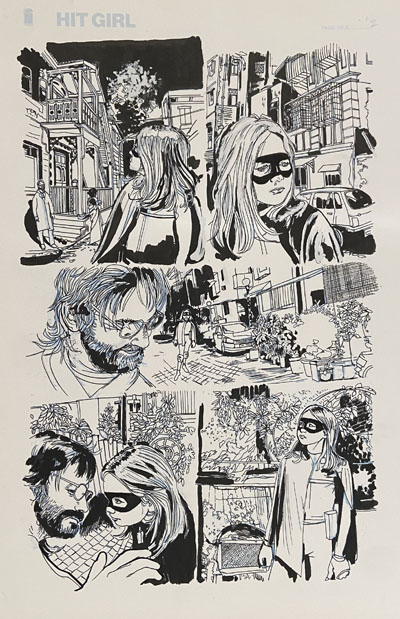
including Batman, Spider-Man, Hellboy and Hit-Girl, including works by Brian
Bolland, David Lloyd, Doug Braithwaite and Alison Sampson. On the way you’ll
discover British attempts to imitate American strips in the 1940s, find out the
story behind the 1972 launch of Marvel UK, and enjoy stunning artwork by key
figures from DC Comics and the British Invasion. You’ll even get to see the
costume of a real-life British superhero!
The exhibition features an
incredible collection of original Sunday Paper Strips and artworks from the
early 1900s and wonderful British and American comic art from the 1950s to the
modern day. Among these are works by legendary names such as Jack Kirby, Jack
Davis and Tarpe Mills.
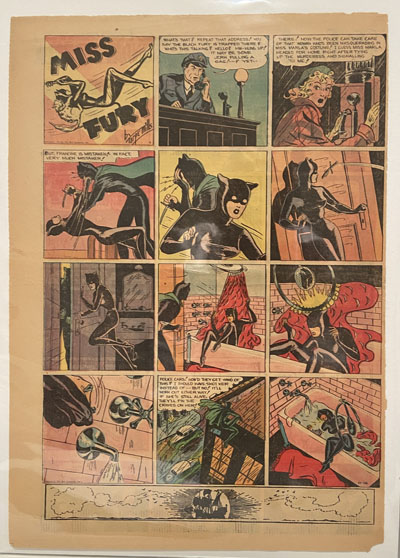
(Miss Fury, by Tarpe Mills.)
Since the 1938 publication of
Action Comics #1 the world has fallen more and more in love with American comic
books, right up to the box office success of the Marvel Cinematic Universe.
Drawing inspiration from popular characters of the 1940s, such as Popeye and
Aquaman, the Brits took no time proving they could do it just as well as the
Americans, leading to decades of collaboration and competition across the
Atlantic. Through this exhibition you will be able to step back in time and see
just how right they were.
“We love our superheroes
because they refuse to give up on us. We can analyze them out of existence,
kill them, ban them, mock them, and still they return, patiently reminding us
of who we are and what we wish we could be.”
- Grant Morrison, Supergods
The Cartoon
Museum can be found at 63 Wells Street, Fitzrovia, London, W1A 3AE. Click here to visit web site.
The late, legendary New York City sports columnist Jimmy Cannon was known to quip, "Nobody asked me, but..." and then provide his thoughts about whatever was on his mind. In that spirit, nobody asked me but I'll weigh in on the 96th Annual Academy Awards broadcast from last evening. Reviewing the Oscar ceremonies is like shooting fish in a barrel in that there are always aspects of a production of this size that will inevitably be justly criticized. However, no matter how in vogue it is to bash the Oscars, regular readers of Cinema Retro know that I've tried to maintain objectivity. Here are my random observations:
Host Jimmy Kimmel did a decent job, as he had in the past. The Academy long ago abandoned ensuring that the host of the ceremonies has a background in the film industry. That went out the window when long-time host Bob Hope was replaced by Johnny Carson, whose brilliant timing resulted in higher ratings. Carson had the gig for quite some time and a variety of hosts followed, with Billy Crystal being the most popular. Kimmel is probably not well known in certain areas of the globe but his late night chat show is very popular in the U.S. That makes for both good and bad news. The good is that Kimmel is quick-witted and can improvise cleverly. The bad news is that he keeps shoehorning comedy bits into the broadcast that would be suitable for his TV show but still seem out of place on the Oscar presentations. There were mercifully fewer of these transgressions this year and the same can be said with the atrocious "spontaneous" banter between presenters, which was kept to a minimum.
I confess that I never watch the red carpet pre-show simply because of the vacuous banter ("Who are you wearing tonight?") but in general, outrageous attention-getting outfits were not on display. The ladies all looked very glamorous and most of the male stars were nattily attired in traditional black tuxes, although a number of them chose to wear open collar shirts and no ties. I guess that was to show non-conformity but some of them looked like the guys I used to see in the late 1970s queueing outside of Studio 54. (Full disclosure: I'm not a slave to fashion myself and as I write this, I am sporting a T shirt with an image of Shemp Howard imprinted on it.)
The event had its share of big names in attendance but for many years it has been noted that some of the diminishing ranks of living legends rarely attend the ceremonies unless they are nominated. Yes, we had Steven Spielberg there to present the Best Director award and Arnold Schwarzenegger was reunited with his "twin", Danny DeVito, for some amusing moments. Al Pacino attended to announce the Best Picture award but he did so in a cursory and confusing manner that undercut the impact of his appearance. There were no signs of the likes of Meryl Streep, Anthony Hopkins, Tom Hanks, Barbra Streisand, Harrison Ford or Denzel Washington. Robert De Niro and Jodie Foster were in attendance, as was Martin Scorsese, as they were all up for awards, though none won. It was astutely pointed out that De Niro and Foster had been in the auditorium before on the same night back in 1977 when they were both nominated for Scorsese's "Taxi Driver". Regarding Scorsese's "Killers of the Flower Moon", his acclaimed film was shut out of any wins, the momentum having switched to "Oppenheimer". Similarly, last year's most popular movie, "Barbie", only won for Best Song. I must admit that while I thought the film's concept and execution were clever, I was not swept up by enthusiasm for the film. But then again, I doubt that men in the late late sixties were the demographic target for the marketing campaign.
It was an innovative idea to have previous winners introduce the nominated actors in their respective categories. Another nice touch was the homage paid to union members who work behind the scenes on film productions. We also learned that there were finally be Oscar recognition for casting directors, though the process might be a challenge in terms of deciding who exactly was the responsible party for casting certain actors, given that producers and studio executives have a say in the process. There was also a good video segment that paid tribute to the importance of stunt people throughout movie history. Acceptance speeches were fine, and the pace was brisk. The show had started earlier this year and, amazingly, ended up finishing on time.
The "In Memoriam" segment was the worst ever. This ritual and the controversies about it had inspired a major Washington Post article that ran a couple of days before the ceremonies. I gave up trying to figure out all the notable people were not mentioned and the staging was awful. The cameras concentrated on the elaborate settings and musicians, with photos of the dearly departed shown on a screen in the background. Most of the images were pretty pretty small even on today's giant-sized TVs and people who were not instantly recognizable had their credits line too tiny to read. Why can't the Academy get this right? TCM certainly does with its annual in memoriam video. They ought to just buy the rights to that.
The songs were all pleasant enough, but none of them particularly memorable.
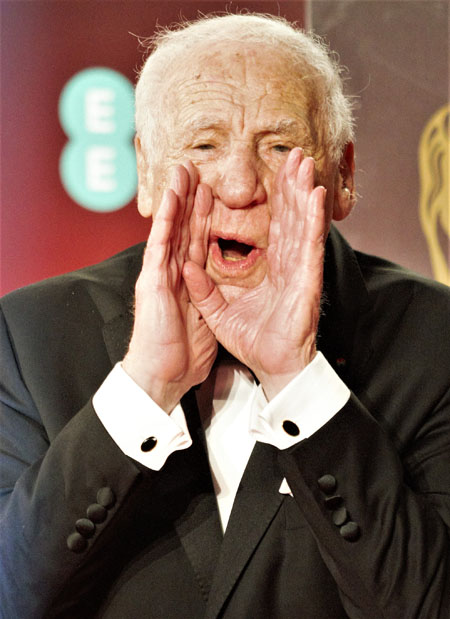
A highlight of Oscar ceremonies used to be the presentation of honorary Oscars to legendary figures in the industry. The Academy decided with was all too superfluous and years ago relegated the honorees to brief film clips from a separate ceremony. This year, even that cursory effort was no longer included. Instead, we were told to scan a code on the TV screen in order to watch these honorees receive their Oscars. What a wasted opportunity. Mel Brooks was among those honored and the mind reels at how wonderful it would have been to see him receive the award on live TV. As a public service, we are presenting his speech below.
Politics were present, as usual, but kept somewhat restrained. There were references to the Israel/Gaza crisis and a moving and heartfelt speech by Ukrainian director Mstyslav Chernov in which he pleaded that peace might finally come to his beleaguered country. It earned a standing ovation, but unfortunately these people can't move the aid package through Congress. At the end of the show, Jimmy Kimmel read a social media posting by Donald Trump in which he eviscerated the host's performance on the show. Kimmel's reply may have been witty but if he really wanted to one-up the former president, he wouldn't have mentioned him at all. It would be nice if politics didn't play a part in these ceremonies, but that hasn't been the case in decades and with political tensions higher than they have been in the U.S. since the late 1960s, it's doubtful the Oscars will ever again be a telecast that brings people together in a common love of movies.
It was nice to see a Godzilla movie get Oscar recognition and I thought I could hear the cheering in Tokyo in my living room.
In my opinion, this was one of the better Oscar telecasts of recent years, even without Will Smith on hand to provide some spontaneous action.
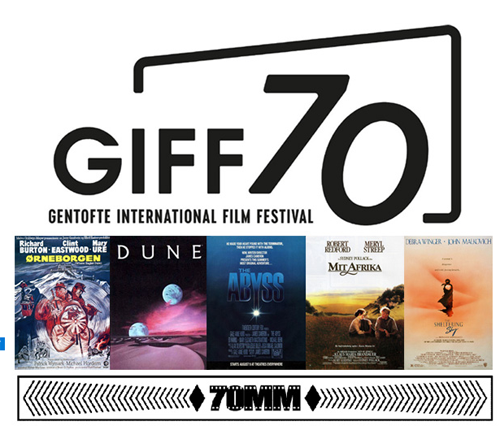
Gentofte
Kino is located just out side the city center of Copenhagen, and is
easy to reach by the S-trains. 17 minutes by train, and then a short
walk in lovely suburb of Gentofte.
Gentofte Kino Gentoftegade 39 2820 Gentofte Denmark
The Barrymore Film Center and Museum in Fort Lee, New Jersey, will present a rare big screen showing of director Michael Cimino's epic 1980 Western, "Heaven's Gate". The film was drenched in controversy when it first opened and reviews were so bad that United Artists withdrew the movie from the few prestigious theaters it had opened in. The studio ordered Cimino to re-cut the film and a new, slimmed-down edition was released months later to disastrous financial results. Not helping matters was the fact that Cimino had crafted his over-schedule and over-budgeted film in a manner that was highly critical of the American government. The film is loosely based on The Johnson County War, a dispute between struggling farmers and cattle barons who wanted their land. The U.S. government did not stop the cattlemen from hiring paid assassins to terrorize and kill settlers who would not cede their land, based on the accusation that they were rustlers. In fact, President Benjamin Harrison authorized U.S. troops to intervene on behalf of the cattle barons when a wide range of conflicts broke out between them and the men they had targeted. America was in no mood for such a message, having just been through turbulent times relating to the Vietnam War, assassinations of high profile leaders and the the resignation of a once-popular president amidst the seemingly endless crimes revealed by the Watergate investigations. The nation wanted to feel good about itself once more and a few weeks after"Heaven's Gate" premiered, Ronald Reagan was elected President in a landslide. Reagan's "Morning in America" agenda sought to shake off the country's missteps and concentrate on the positive aspects. There wasn't much enthusiasm for Cimino's downbeat reminder of another American scandal, even if it was in the distant past. In the ensuing years, however, the film has gained acclaim in some circles and Cimino's full-length version has occasionally been presented in theaters to appreciative audiences. If you attend the screening, leave time to explore the Barrymore's displays of vintage movie memorabilia and rare original posters dating back to the silent era. (Lee Pfeiffer)
Here is a special treat: Turner Classic Movies host Ben Mankiewicz interviews director John Boorman and cast members Jon Voight, Burt Reynolds and Ned Beatty about the making of the 1972 classic "Deliverance"
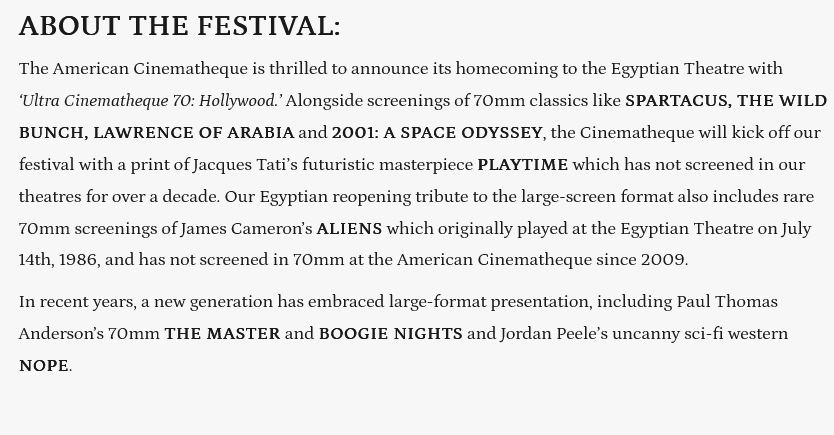
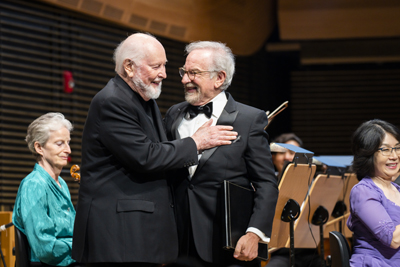
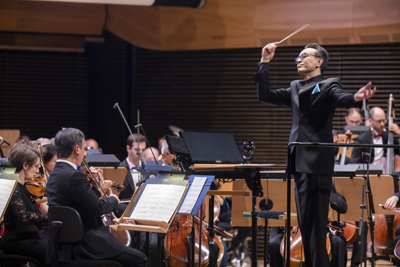
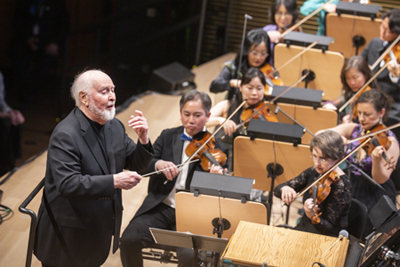
On Tuesday, April 25, it was a balmy and pleasant New York evening as ticket holders and the press lined up at Lincoln Center to attend the New York Philharmonic's special concert in honor of five-time Oscar winning composter John Williams. Attendees walked past the famous circular fountain in the main concourse area where Zero Mostel and Gene Wilder had rejoiced in Mel Brooks' "The Producers". The movie reference is appropriate because Williams is best known for his contributions to cinema over the course of the last six decades. Inside the Wu Tsai Theater in David Geffen Hall, nary a free seat could be found. The event had sold out quickly, with even standing room only places quickly snapped up by eager admirers of Williams. Cinema Retro has been invited to cover many of the NY Phil's film-oriented concerts over the years and each one is a very memorable occasion. However, at the risk of appearing to engage in some hyperbole, the Williams concert was not only memorable but the most impressive film concert this reviewer has ever seen. Conductor Ken-David Masur, son of NY Phil's Music Director Emeritus Kurt Masur, made his debut with the orchestra with this performance. If Masur had any trepidation of performing with John Williams in the audience, it was not evident. He was simply brilliant, as was the full orchestra.
(Photo: Chris Lee)
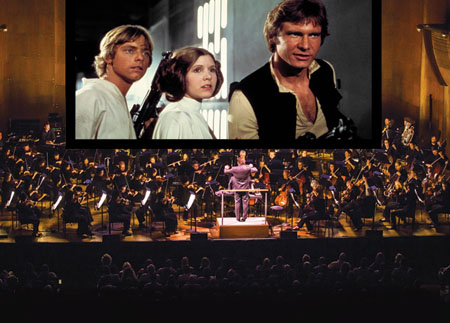
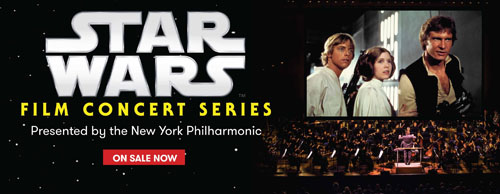
The concert began in dramatic fashion with the NY Phil's magnificent rendering of Williams' main theme for the 1978 film "Superman". The choice of musical selections was inspired and sidestepped predictability. There were selections from "Close Encounters of the Third Kind" that had hints of the famous main title theme. This was followed by a presentation of Williams' track from a chase scene in "Indiana Jones and the Last Crusade". An unusual inclusion was the animated Oscar-winning 2017 short film "Dear Basketball" narrated by Kobe Bryant that chronicled the late, legendary basketball player's lifelong fascination with the sport. Williams provided the score the production, illustrating once again the sheer diversity of his achievements. Then, to the delight of the audience, The NY Phil played selections from "Star Wars: A New Hope", which predictably brought down the house. But there were plenty more thrills in store.
(Photo: Chris Lee)
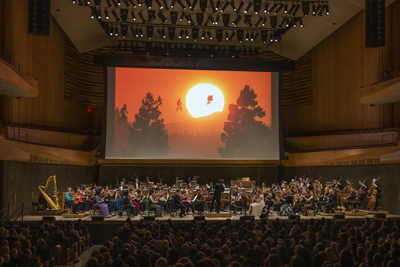
To the accompaniment of Williams' main theme from "Jaws", Steven Spielberg took to the stage, eschewing his usual casual look for black tie. Commenting upon his musical introduction, Spielberg quipped that "I've made 3,300 hundred movies and all anyone wants to talk about is 'Jaws'!" He elaborated by saying that even among autograph hunters, it's "Jaws" more than any of his other films that elicits the most comments. Spielberg spoke warmly about his longtime friendship with John Williams, reminding the audience that they have collaborated on 51 films over a period of 29 years. It's clear that Spielberg still regards him as a treasured mentor as well as an essential collaborator. Spielberg then showed the opening sequence of "Raiders of the Lost Ark" sans any musical score. He wanted to emphasize how valuable a composer's contribution to a film is. We're all familiar with the scene, as Indy appears to have successfully snatched a golden relic only to find he has triggered the activation of many death traps. Spielberg remembered that, upon seeing the unscored sequence back in the day, George Lucas said "We need Johnny!" Indeed, "Johnny" did contribute his magic, as evidenced when Spielberg replayed the scene with Williams' score intact. I came to realize that his genius was not only in providing a suspenseful score, but for making musical notes appear to be special sound effects that further enhanced the scene. The tribute continued with the NY Phil providing musical tributes to "Raiders of the Lost Ark", "Jurassic Park" and "E.T.: The Extraterrestrial", accompanied by extensive film clips.
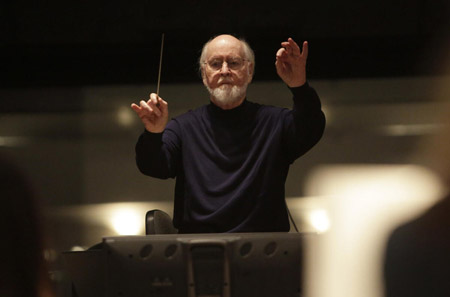
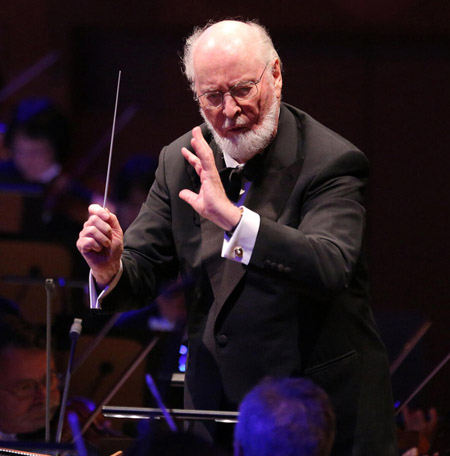
The event concluded with Spielberg paying tribute to Williams' haunting score for "Schindler's List". He then invited Williams to take to the podium and conduct the orchestra for this pivotal work. Predictably, the audience responded with thunderous applause. The somber, heart-wrenching score brought back all the memories of the brilliant film and the disturbing images that have led me to be unable to watch it since I saw it upon its initial release. Williams left the stage to a standing ovation that wouldn't stop. He then reemerged to conduct the orchestra for the iconic theme song from the Indiana Jones films. He left the stage once more but the audience wouldn't relent in its applause so Williams came out again. This time, the energetic 91-year old concluded the proceedings by conducting the "Imperial March and Finale" from "Star Wars: A New Hope". I doubt there was a dry eye in the house.
(Photo: Chris Lee)
New York City has taken it on the chin in recent years with reports of all the things that had gone wrong during the time of the pandemic. But Gotham was back in full glory thanks to the remarkable talents that provided the audience with a historic and unforgettable evening. We are unlikely to see a film composer with the career accomplishments of John Williams ever again. Anyone who was privileged to witness this extraordinary event would understand why.
Orchestra
Performs Collection of His Most Memorable Works
With
Select Scores Accompanied by Film Clips
Ken-David
Masur Conducts in His NY Phil Debut
Williams
Himself To Take the Podium
Special
Appearance by Steven Spielberg
Wu Tsai Theater, David Geffen Hall, April 25, 2023
The New York
Philharmonic celebrates the career of John Williams in its Spring Gala: Celebrating
John Williams, April 25, 2023,at the Wu Tsai Theater, David
Geffen Hall. Conductor Ken-David Masur, the son of the late NY Phil Music
Director Emeritus Kurt Masur, makes his debut with the Orchestra leading a
selection of Williams’s most memorable compositions. Williams himself conducts a
portion of the concert, and special guest Steven Spielberg, the director with
whom Williams has collaborated on 29 feature films, introduces some of these
selections, some of them performed live as film clips are projected above the
stage.
Gala events
include a cocktail reception from 6:00 p.m. to 7:00 p.m. on the Leon and Norma
Hess Grand Promenade; premium seating for the concert, which begins at 7:30
p.m.; and a seated dinner immediately following the performance, attended by
the artists, also on the Hess Grand Promenade. Gala dress will be cocktail
attire. The Honorary Gala Chair is Steven Spielberg. The Gala Co-Chairs are
Kristen and Alexander Klabin, Harold Mitchell AC, James L. and Margo M.
Nederlander, and Carol and Chuck Schaefer.
Tickets Tickets
to New York Philharmonic performances may be purchased online at nyphil.org or by calling (212)
875-5656, 10:00 a.m. to 6:00 p.m. Monday through Friday; 1:00 p.m. to 6:00
p.m. Saturday; and noon to 5:00 p.m. Sunday. Tickets may also be purchased at the
Welcome Center at David Geffen Hall. The Welcome Center opens at 10:00
a.m. Monday through Saturday, and at noon on Sunday. On performance evenings,
the Welcome Center closes one-half hour after performance time; other evenings
it closes at 6:00 p.m.
Availability for the Spring Gala: Celebrating
John Williams is limited.
For
more information about the entire Gala evening, which includes a cocktail
reception, the 7:30 p.m. concert, and a post-concert dinner, please call the
Office of Special Events at (646) 661-2471, or email specialevents@nyphil.org.
For
press tickets, contact Lanore Carr at (212) 875-5714 or carrl@nyphil.org.
Event Listing
SPRING GALA: CELEBRATING JOHN
WILLIAMS
Wu Tsai
Theater, David Geffen Hall at Lincoln Center
Tuesday,
April 25, 2023, 7:30 p.m.
Ken-David Masur, Conductor (New
York Philharmonic debut)
John Williams, conductor
Steven Spielberg, special guest
The
New York Philharmonic performs a selection of Williams’s most memorable
compositions, including selections from the scores to Raiders of the Lost
Ark, E.T. the Extra-Terrestrial, and Jurassic Park, along
with other works.
ALL PROGRAMS SUBJECT TO CHANGE
Programs
are made possible, in part, by the New
York State Council on the Arts with the
support
of the Office of the Governor and the New York State Legislature.
When this year's Oscar nominations were announced last month, there was a discussion of the choices on the popular A.M. chat show "Morning Joe". Veteran columnist Mike Barnicle seemed to sum up the feelings of the panelists when he griped that the choices for Best Picture had too many quirky films that most movie-goers would not have seen. This is a common complaint but those who make it are flat-out wrong. You see, the Oscar awards are not supposed to be obligated to reflect popular taste. They are not The People's Choice Awards. Rather, they are supposed to reflect the feelings of industry professionals in regard to who among their peers should be honored. However, the awards have largely been defined by the TV broadcast, which has grown to C.B. DeMille proportions over the decades. Thus, the Academy is partly to blame for the perception that populism should play a role in the nominations and who is declared a winner. The Academy also made a blatant attempt to reverse declining ratings some years ago by artificially inflating the number of Best Picture nominees from the traditional five to ten. There was no reason to do this other than to try to goose up audience interest by including films that would appeal to viewers but which would probably not stand much of a chance in terms of winning.
Last night's telecast seemed to revert back to the Academy's main mission: to honor films based on their artistic merits, not popularity. Thus, quirky was "in", as evidenced by the seven awards accorded to "Everything Everywhere All at Once", a film that people find hard to even describe. One friend of mine has seen it nine times while others have made repeated attempts to get through it only to throw in the towel before reaching the conclusion. The film has already grossed over $100 million and the Oscar haul will boost it into the stratosphere.
Here are some random observations about last night's telecast on ABC-TV.:
Overall, the show was one of the better ceremonies in recent years. No major flubs or time-wasting episodes. Host Jimmy Kimmel was very funny and delivered the bon mots in a low-key manner. He addressed the elephant in the room early in the broadcast, taking a swipe at Will Smith and last year's "Slap heard 'round the world". Kimmel quipped that anyone in the auditorium who provokes violence this year would be awarded the Best Actor Oscar and be allowed to give a 19-minute speech. Smith has been banned from the ceremonies for ten years but there had been consternation that his much-hyped 2022 release, "Emancipation", would make him a front runner for another Best Actor Oscar. What would the Academy do if a nominee was not allowed to attend the ceremony? The crisis was averted when "Emancipation" didn't live up to expectations and vanished from theaters quickly.
There was an abundance of old style high style. Men seem to have forsaken those dreadful "new, improved" tuxedo designs from some years ago and gone back to the traditional look, perhaps influenced by the fact that early films of Cary Grant and Sean Connery still epitomize what classic black tie look can do for any guy. For the women, plunging necklines and cleavage were the order of the day. Most of the gowns looked great with only a few coming close to being over-the-top. Helping in this regard was the fact that Cher was not present, although Academy president Janet Yang showcased a gown that looked like a costume for the next Marvel superhero.
The auditorium featured some wonderful production designs for the various segments orchestra was presented in a retro-chic manner.
Bending to industry outrage after the Academy had relegated some of last year's technical awards to an off-camera ceremony, all of the traditional categories were reinstated. Jimmy Kimmel warned that this would result in an extended running time for the broadcast, but who cares? This is the culmination of many talented people's careers and they should be afforded public recognition. The show did run over 3 1/2 hours but the pace was lively and there was thankfully very little of that awful "spontaneous" banter between presenters that causes viewers to groan every year.
There were some nice tributes to elder statesmen of the industry including the seemingly immortal actor James Hong and fellow immortal John Williams, who was up for his latest Oscar for scoring "The Fabelmans". Kimmel quipped that Williams has been nominated over 50 times and won five Oscars, therefore making his percentage of wins very unimpressive. Williams, looking fit and chipper at 91 years-old, appreciated the joke.
There were some truly touching acceptance speeches and some poignant pleas for a better world. Brandon Fraser was so moved by his Best Actor award for "The Whale" that he appeared to be on the verge of hyper-ventilating. In accepting his Best Supporting Actor Award, Ke Huy Quan reflected that in his youth, he had spent a year in a refugee camp and was now representing the America Dream. Equally moving was Michele Yeoh's acceptance speech for Best Actress. It was great to see older actresses honored, reinforced by Jamie Lee Curtis's Best Supporting Actress win. Maybe we're reaching a time when fine actresses aren't relegated to grandmotherly roles by the time they hit 40.
There was a dearth of political references and jokes, which was rather shocking and refreshing, though Kimmel did get off a funny jibe about Tucker Carlson qualifying for Best Editor. He also made a joke at the expense of America's own Baron Munchhausen by taking a swipe at embattled Congressman George Santos. However, it's not likely to ruffle any feathers because Santos has brought about true bi-partisanship: his colleagues in both parties want him out of congress ASAP.
The Best Song nominees were all very well presented and performed and the category represented one of the few upsets of the night with the viral sensation "Naatu Naatu" winning from the Indian film "RRR". The song's accompanying on-stage group dance presentation was sensational.
The year's biggest financial blockbusters, "Top Gun: Maverick" and "Avatar: The Way of Water" were relegated to receiving technical awards. Both Tom Cruise and James Cameron were absent from the ceremony, causing Jimmy Kimmel to joke that the men responsible for so many people returning to movie theaters could not be persuaded to be at this theater.
There were some misfires in terms of content. To buy time while sets were changed on stage, someone thought it would be funny to have Kimmel approach celebrities in the audience and read them questions that were allegedly sent in by viewers. The stars looked bewildered and offended by the intrusion and you could almost see the flop sweat breaking out on Kimmel's forehead before the misguided scenario was saved by the clock. Memo to Oscar: never send the host into the audience. It never ends well for anyone. There was also a ill-fated attempt to capitalize on the latest cult flick "Cocaine Bear" that barely registered on the laugh meter.
Video tribute segments include the usual memorial to prominent people in the industry who we lost in the last year. This year's segment was introduced by a bald, bearded John Travolta who was brought to tears by the inclusion of his dear friend and co-star Olivia Newton-John. As for the presentation, it's always beautifully presented but also controversial because it excludes any number of people who should arguably have been acknowledged. The Academy should just buy the rights to Turner Classic Movies' annual tribute to lost artists, which is far more inclusive, since the Oscars producers can't seem to get this important ritual right. Similarly, the justified video tribute to the 100th anniversary of Warner Brothers was compromised by the fact that classic movies from other studios were included. Why? Because over the years, Warners bought the rights to them- but that doesn't make them WB productions and they should not have been included. Doesn't the studio have enough bragging rights to their own films without trying to take credit for MGM's "North by Northwest"?
James Bond fans could relish the unique sight of one of the franchise's actresses (Michelle Yeoh) receiving a Best Actress Oscar from a previous Best Actress recipient who also was a Bond leading lady (Halle Berry) while another nominee for Best Actress who was a Bond star, Ana de Armas watched from the audience.
The Best Picture is usually announced by a mega star and this year was no exception, with Harrison Ford doing the honors. If you watched the closing credits, you could see him reunited with Ke Huy Quan, who had appeared with him as a child star in "Indiana Jones and the Temple of Doom".
In all, one of the better Oscar presentations of recent years, but that's just my humble opinion.
Cinema Retro has received
the following press release. Since our magazine is edited in New Jersey, we look
forward to seeing this ultimate “Jersey Guy” documentary.
Banded Together:
The Boys From Glen Rock High
Reunite on Hometown New Jersey High School Stage
50 Years Later
You Never Know
What Those Crazy Kids May Grow Up to Be!
Feature Documentary Makes World Premiere Oct. 29th
& 30th at Montclair Film Festival;
Featuring: Lee Shapiro, Jimmy Vivino, John Feeney, Jerry Vivino, Frank
Pagano, Uncle Floyd Vivino, Doug Romoff, Jeff Venho, Joe Sielski & Conan
O'Brien.
LOS ANGELES — Oct. 21, 2022 — For Immediate Release: Having
all established high-profile careers in the music industry, eight men reunite
50 years later to jam on their high school auditorium stage in idyllic Glen
Rock, NJ, and look back on what a strange ride it’s been in Banded Together: The Boys From Glen
Rock High.
Directed, produced and edited by Academy Award-nominated
and Emmy Award-winning documentarian Barry Rubinow (Red Grooms: Sunflower in a
Hothouse, Beakman’s World), this full-length documentary is an official
selection of the Montclair Film Festival (Oct. 21-30). Moved to a bigger
theater to accommodate demand, the film will make its world premiere Saturday,
Oct. 29 at 6:30 p.m. and Sunday Oct. 30 at noon.
About Banded Together: The Boys From Glen Rock High ...
Once upon a time, in the small, Mayberry-esque town of
Glen Rock, NJ, 25 miles and a world away from New York City, a group of friends
from high school joined the music department—some commanded to do so by their
parents or in lieu of receiving detention—with adolescent dreams of making it
in “the
biz.”
From the launch pad of their garage band gatherings and
unassuming high school auditorium, each of them today—Lee Shapiro, Jimmy Vivino,
John Feeney, Jerry Vivino, Frank Pagano, Uncle Floyd Vivino, Doug Romoff and Jeff
Venho—perform at the highest levels of the music industry ... from the main
stage of the Tonight Show With Conan O’Brien (who appears in the film) to hosting
their own show to writing some of the industry’s most successful songs to performing in
arenas with such iconic artists as Frankie Valli & the Four Seasons, The
Allman Brothers, Bon Jovi, Bruce Springsteen, Donald Fagen and Jimmy Buffet, to
name a few. [short bios, pg. 2]
The remarkable story of a true band of brothers, a group
of close friends who bonded through music, reuniting for a concert in the same
auditorium where they wowed their teachers and fellow students 50 years ago.
Along the way, we learn about their individual journeys and their remarkable
successes, all heavily influenced by their time at Glen Rock High School, under
the tutelage of their beloved music teacher and bandleader, Joe Sielski.
The film explores the importance of music and arts
education for all students and is a touching testament to the value of teaching
and promoting the arts. The love and respect that these musicians have for one
another and their teachers is on full display, as well as their drive,
discipline, humor and sheer talent. Though their careers have taken them
all around the world, performing in front of thousands, there is no greater joy
than returning to the hometown stage that defined them.
Documentary, Music / Running Time: 77 Minutes / Not Rated
Featuring Lee Shapiro, Jimmy Vivino, John Feeney, Jerry
Vivino, Frank Pagano, Uncle Floyd Vivino, Doug Romoff, Jeff Venho, Joe Sielski
and Conan O’Brien.
Directed by Barry Rubinow. Produced by Barry Rubinow and Doug Romoff. Editor
Barry Rubinow. Director of Photography Patrick Cone. Production Designer Richard
Gardner.
About the Musicians ...
JIMMY VIVINO is a guitarist, keyboard player, singer,
producer and music director. He began playing in NYC clubs in the early 1980s
and started producing and arranging music for such artists as Phoebe Snow,
Laura Nyro, John Sebastian, and Donald Fagen. Blues legend Al Kooper considers
Jimmy one of his “discoveries”
and he worked as Kooper’s
musical director for 15 years. Jimmy performed with the house bands for The
Tonight Show with Conan O’Brien
as well as Late Night with Conan O’Brien.
Jimmy led the house band for the late-night program Conan called Jimmy Vivino
and the Basic Cable Band. Jimmy has recorded and played live with renowned
musicians Johnnie Johnson, Hubert Sumlin and Levon Helm.
LEE SHAPIRO is a keyboardist, arranger and music
director. He was studying at the Manhattan School of Music when he was
discovered playing at a club in New Jersey by the manager of the band, Frankie
Valli & The Four Seasons. Lee was age 19 at the time he was asked to join.
He was the arranger on the hit songs, “Who Loves You” and “Oh What a Night.” Lee also worked with Barry
Manilow on Copacabana, The Musical before starting Lee Shapiro Music, a company
that created music for the media and advertising. He also created the “must have” toys of 2000, ‘Rock N Roll Elmo’ and ‘Rock N Roll Ernie’ for Fisher-Price. Lee formed the classic rock
band The Hit Men with former Four Seasons bandmates Gerry Polci and Don
Ciccone. The band has evolved over the past 12 years and is touring with band
members who perform with the legends of classic rock.
JOHN FEENEY, principal double bass of the Orchestra of
St. Luke’s,
the American Classical Orchestra and Opera Lafayette, is a chamber musician and
soloist of international renown. John has performed as a guest bassist with the
Vienna Philharmonic. An avid Viennese violinist, in 2010 he co-founded The
Serenade Orchestra and the Serenade Quartet, performing many dozens of concerts
featuring the music of 18th and 19th century Vienna. John has recorded
extensively for most major record labels and holds bachelor and master degrees
from the Juilliard School where he was a scholarship student of David Walter.
He began his bass studies with Linda McKnight.
UNCLE FLOYD VIVINO is a legendary comedian, musician and
entertainer. He created and starred in The Uncle Floyd Show, a comedic variety
show that can be equally read as a children’s program or a parody of a children’s program. The show aired
for over two decades and featured character comedy, puppetry, audience
participation, Floyd’s
vaudevillian piano playing and a puppet sidekick named Oogie. The Uncle Floyd
Show had musical guests including such renowned performers as The Ramones, Bon
Jovi, Blue Öyster Cult, Joe Jackson and Cyndi Lauper. Uncle Floyd continues to
perform his one-of-a-kind act around various northern New Jersey venues. Check
out his
radio show every Sunday at 9 a.m. EST on WFDU-FM 89.1 and
WFDU-FM.
FRANK PAGANO is a drums and percussion musician and
teacher. He graduated from the Manhattan School of Music to go on to work with
Phoebe Snow and Concord Jazz recording artists Jackie and Roy. Frank has played
music in Broadway shows since 1985. His performing and recording credits range
from Smokey Joe’s
Cafe and Escape to Margaritaville, to Darlene Love and Bruce Springsteen and
the E Street Band. Frank is currently recording drums, percussion and vocals
with prog-rock band Renaissance. He also performs with theJon Herington Band and The Harmonious Five.
JERRY VIVINO is a multi-talented reed player who attributes
his mastering of seven woodwinds to his high school band director Joe Sielski.
After graduating in 1972 he attended Manhattan School of Music aspiring to
become a full-time musician. For 25 years he was the featured saxophonist for
Conan O’Brien
on NBC’S
Late Night, The Tonight Show and the TBS cable TV show Conan. As a sideman,
Jerry has shared the stage or recorded with the likes of Tony Bennett, Donald
Fagen, Johnny Mathis, Darlene Love, Dion DiMucci, Stanley Clark, Franki Valli,
Keely Smith, The Allman Brothers, Bon Jovi and Bruce Springsteen to name a few.
Jerry also performs with his brother Floyd’s The Uncle Floyd Show, brother Jimmy’s Blues Revue and as a
leader with his own jazz quartet.
DOUG ROMOFF is a professional bassist, entrepreneur and
film producer. He performed music in many Broadway shows as well as movie
scores and commercial jingles. Doug founded Harmony 534, a full-service music
production and video editing facility with clients such as Sesame Street and
Criterion Films. Doug also founded the Paradiso Group, an advertising agency
that creates multi-media presentations, live television broadcasts and classic
TV, radio and print advertising. Doug was the executive producer and creator of
Beyond the Crush, a docu-series about wine owners in Napa Valley. He is the
co-owner and creative director for
Adrenaline Films, a creative services company with clients such as
Universal Studios and Xfinity.
JEFF VENHO attended the Juilliard School as a scholarship
trumpet performance major, graduating with a master’s degree. Jeff has performed with the NYC
Opera, the American Symphony, the Paragon Ragtime Orchestra and numerous
Broadway Shows. In addition to his freelance activities, Jeff is currently
employed as Trumpet Professor at Hofstra University and is the Winds Department
Chair at the Rudolf Steiner School in Manhattan.
About the Mentor ...
JOE SIELSKI was the music teacher and band leader at Glen
Rock High School from 1963 to 2003. In 1968, he started the orchestra program
at the school, and served on the Middle Atlantic States High School Evaluation
Committee. In 1976, Joe got his M.A. degree in conducting from Columbia
University TC. He also served as Glen Rock High School Fine Arts Department
Chairperson. Joe has been married to his wife, Carolyn, for more than 50 years.
They hosted the reunion of the Boys From Glen Rock High and Joe played/ conducted
at the reunion concert at Glen Rock High School.
About the Filmmaker ...
BARRY RUBINOW grew up in Glen Rock, New Jersey, and made
his first film in eighth grade at Glen Rock Junior/Senior High School. With
early aspirations to be a filmmaker, he moved to Los Angeles and attended the
University of Southern California’s
acclaimed school of cinema. The first documentary he edited, Red Grooms:
Sunflower in a Hothouse, was nominated for an Academy Award for Best
Documentary Short Subject. His career as a producer, director, editor and indie
filmmaker has included winning an Emmy Award for editing the CBS science show, Beakman’s World. He was also a
founding member of the Documentary Channel, which was in 25 million homes on
Dish Network and DirecTV, and ran all creative endeavors of the channel,
overseeing the branding and on-air IDs and promos. He produced over 100
episodes of the channel’s
flagship original show, DocTalk, interviewing acclaimed documentary filmmakers
from Werner Herzog to Alex Gibney to Errol Morris. Rubinow brings his unique
background and experience and love of his hometown, to this powerful project.
Scholars have long debated whether it was Mark Twain or newspaper editor Charles Dudley Warner who came up with the oft-quoted quip "Everybody complains about the weather but nobody does anything about it." Regardless, the sentiments of the quotation can easily be applied to the annual Academy Awards ceremony. Dwindling ratings, lack of enthusiasm among young movie-goers, an industry bereft of the legendary personalities audiences used to tune in to see- all of these factors have put the Oscars on pop culture life support in recent years. Who knew all it would take was one superstar in meltdown mode to make last night's ceremonies "must-see" TV? Unfortunately, the entire ceremony will always be remembered for Will Smith's act of inexcusable violence against presenter Chris Rock, who remained cool and dignified under very strained circumstances. There's no point in going into details because by now you know what happened. Smith's temper tantrum marginalized everything that followed as the attendees and viewers around the world tried to make sense of what they just saw. Forty minutes later, Smith received the Best Actor Oscar in front of an audience of boot lickers who couldn't resist giving him a standing ovation. In a bizarre speech, Smith did apologize to the Academy and the nominees, but not the man he assaulted. He then delivered a seemingly endless, self-pitying and self-indulgent, teary-eyed acceptance speech in which he insinuated that his actions were in defense of his wife, much as the character he played in the film was defensive of his family. Talk about taking Method Acting to an extreme...Somewhere along the line, Smith became almost incoherent and began to sound like Brando's Colonel Walter E. Kurtz. The Academy considered having him escorted from the auditorium, as they certainly would have if he were a mere mortal. However, they balked and allowed him to stay and enjoy the moment of his Oscar win. Tonight, top brass are meeting to consider ejecting him from the Academy because he clearly violated their ethics policies. More realistically, they are probably meeting to discuss how to justify not ejecting him from the Academy. Perhaps not coincidentally, Smith has issued a formal written statement of apology to all concerned, including Chris Rock. It reads:
“Violence
in all of its forms is poisonous and destructive. My behavior at last night’s
Academy Awards was unacceptable and inexcusable. Jokes at my expense are a part
of the job, but a joke about Jada’s medical condition was too much for me to
bear and I reacted emotionally.
I would
like to publicly apologize to you, Chris. I was out of line and I was wrong. I
am embarrassed and my actions were not indicative of the man I want to be.
There is no place for violence in a world of love and kindness.
I would
also like to apologize to the Academy, the producers of the show, all the
attendees and everyone watching around the world. I would like to apologize to
the Williams Family and my King Richard Family. I deeply regret that my
behavior has stained what has been an otherwise gorgeous journey for all of us.
I am a
work in progress.
Sincerely,
Will”
Well, better late than never. Believe it or not, there was a lot more to the evening than this surrealistic incident. Here are some random observations:
I thought the premise of having a trio hosting the show-Amy Schumer, Regina Hall and Wanda Sykes- sounded like a fairly ill-conceived idea. I was wrong. It was very ill-conceived.Their entire shtick could have been eliminated without much loss to the ceremonies. Keep in mind, ABC-TV demanded that numerous category of awards be presented prior to the show in a separate ceremony, thus setting off a firestorm by insulting and marginalizing those who were affected. They ended up deceiving the audience by using clever editing techniques to imply the acceptance speeches of these winners were taking place live. Why was all this necessary? Because the network had plunked down $100 million for broadcast rights and wanted to ensure there was plenty of time for the hosts to display their comedic talents. Aside from a few good one-liners, the most impressive aspect of their contributions was the ability of potty-mouthed Amy Schumer to keep things relatively clean throughout the show.
There were erratic elements to the program. Beyonce performed one of the nominated songs but she wasn't in the building, as the Academy had her in an elaborate musical extravaganza that had been pre-taped outside of the auditorium. Isn't it traditional to have the songs all performed in front of the audience? She might just as well have been in London. Then there was the pathetic pandering to youth in the quixotic hope that young people will once again make tuning into the Oscars a tradition. Good luck. Many of the people they are trying to reach don't even feel obliged to own a television. Nevertheless, there were bizarre attempts to appeal to youth including the introduction of a celebrity DJ (!) who made a brief appearance before thankfully seeming to fade into oblivion.
I usually gripe about the annual tribute to artists and industry types who passed
away in the last year because inevitably they leave out plenty of
notable people who deserved inclusion. This year, I didn't even attempt
to make a list of the omissions, preferring to use Turner Classic
Movies' annual memorial video as the gold standard of remembering the
dearly departed. The Academy
obviously left out a number of people because they provided a web site
address you can visit to find tributes to the folks they intentionally
snubbed. Oh, and keep in mind that the only reason they refuse to extend
this segment is because they feel it's more important to have more jokes
and comedy skits during the broadcast. I should point out that even the
memorial presentation was strange. It was shown on a big screen in front of a
large group of people singing and dancing as though we were in a Busby
Berkeley musical. Then, Jamie Lee Curtis stopped the proceedings to pay
special tribute to Betty White and later Billy Murray did the same to
remember his friend, director Ivan Reitman. Two observations: I respect
Betty White as much as anyone, but she was not known for her work in
feature films, as she was a television icon. Also, selecting two
people out of all those who passed away to receive special treatment
made everyone else being honored look like chopped liver.
As for fashion, elegance was happily in style and so was cleavage. Many of the ladies were clad in outfits with plunging necklines that would have looked at home on the cover of one of those bodice-ripper romance novels, but no problem in this corner because it provided some old style high fashion. However, it came as a surprise that the most cleavage to be revealed was courtesy of Timothee Chalamet, who was wearing a glittery woman's jacket by Louis Vuitton- minus anything under it. At least he could rest easy that no other guy was going to show up in the same outfit.
There were the usual unwelcome political jokes but they were thankfully in short supply. Schumer, Sykes and Hall decided to stage a comedy bit involving people testing positive for Covid-19. Considering we're losing 800 people a day in America (the equivalent of a 9/11 or Pearl Harbor attack every three days), it's understandable why the premise fell as flat as a pancake.
The Academy chose to use the telecast to promote it's new $400 million museum in L.A., which has been widely panned for favoring politically correct exhibitions over those that would have mainstream appeal for movie lovers. So how did they use this precious telecast time to induce people to visit the museum? By having Wanda Sykes engage in a comedic tour of the premises that was so poorly done that the segment probably persuaded anyone who intended to visit the place to reconsider their plans.
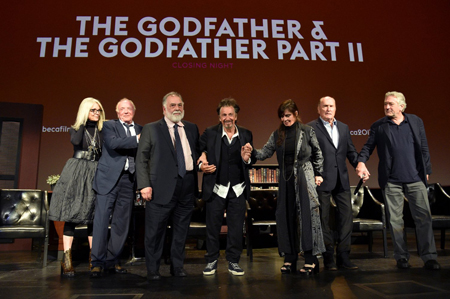
Reunions were the order of the day: Samuel L. Jackson, Uma Thurman and a bald and bearded John Travolta from Pulp Fiction, Woody Harrelson, Wesley Snipes and Rosie Perez from "White Men Can't Jump" and Francis Ford Coppola, Al Pacino and Robert De Niro to honor "The Godfather". Coppola, newly trimmed-down, looked very healthy and happy but he was the only one who spoke in the brief segment, that also included an uninspired film clip compilation that for some reason was set to a hip-hop song! Coppola made some sentimental remarks but Pacino and De Niro said nothing at all...so what was the point of bringing them to the ceremony only to have them stand there silently? Also, Coppola should have explained that De Niro was there because of his contributions to the franchise through his Oscar-winning performance in "The Godfather Part II", as he did not appear in the original film.
James Bond got plenty of justifiable attention for the series' 60th anniversary, even if the Academy shattered fans' hopes that "No Time to Die" would land a Best Picture nomination and Daniel Craig would be nominated for Best Actor in his swansong appearance as 007. Instead, there was a nice but rather perfunctory film clip segment of highlights from the series. In a weird decision, the segment was introduced by three hunky guys who didn't even look vaguely familiar to me. They apparently are "extreme athletes", whatever that means. Presumably, internet "influencers" were not available.) Surely, given the number of illustrious people associated with the Bond series, someone of some stature could have introduced the segment. Also, the trio of "extreme athletes" name-checked each of the Bond actors- except George Lazenby, who at least was seen in the video compilation. (Can this guy ever catch a break?) Billy Eilish and her brother Finneas gave a fine live performance of their haunting title theme to "No Time to Die", which was the best of the songs nominated. It won, too, thus making this the third Bond song to win in a row. At least the Academy is atoning for not nominating so many great ones from the past.
Troy Kotsur's win for Supporting Actor in "Coda" made for a moving segment, as he is only the second deaf actor to be honored with an award.
Kudos to Kevin Costner who recalled the splendor of seeing "How the West Was Won" in Cinerama at age seven and extolled the majesty of the presentation and impact it had on him.
The inclusion of "fan favorite" films was a pathetic attempt to put salve on the wounds of younger movie fans who constantly gripe about their favorite films (i.e superhero flicks) not being nominated in the major categories. Instead of explaining that the nominees are decided by industry professionals in the respective trades and that the ceremony is not a popularity contest, AMPAS decided to allow fans to vote for their favorite films and scenes from movie history. If the winners were any indication of prevailing taste, we'll be giving Pauly Shore a lifetime achievement Oscar in a few years. For the record, the "winners" of these polls were mostly of relatively recent vintage. If you expected to see the likes of "Schindler's List" or "Citizen Kane", you had to settle for "Army of the Dead". Meanwhile, more precious minutes of air time were wasted on showing meaningless clips from these action movies.
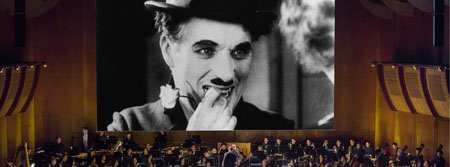
Years ago, the Academy decided to stop telecasting the honorary awards to distinguished industry veterans. Fans were outraged. These were often the highlights of the ceremony, but the Academy wanted more time for dumb comedy bits and the network wanted more time for overpriced sponsor advertisements. There was a time they would at least air snippets of the honorees accepting their awards at a separate ceremony, but even that was asking too much. Thus, we got to see this years honorees: Liv Ullmann, Elaine May and Samuel L. Jackson sitting like mannequins as they were acknowledged for a few seconds. If you wonder why some of us pine away for these awards to be an integral part of the ceremonies once again, just watch this segment from the 1972 telecast when Charles Chaplin returned to America from exile in Europe after he had been blacklisted by Hollywood in the 1950s. We're never likely to see anything like this again because the Academy and ABC simply need to have more kitsch.
The show wrapped up with announcement for Best Picture but things went awry. In an admirable sentimental gesture, Lady Gaga accompanied a wheelchair-bound Liza Minnelli to the stage to commemorate the 50th anniversary of "Cabaret" and to have Minnelli read the title of the winning film. Unfortunately, Minnelli was not up to the task. She was clearly feeble and disoriented. Seeing her in such an undignified light was a painful experience, despite Lady Gaga's good intentions.
Believe it or not, I do not enjoy trashing the Oscars. It's a thankless task to bring this lumbering giant to TV every year and countless talented people work endless hours to achieve that task. Even the worst Oscar ceremonies have plenty of entertainment value and this one was no exception. The worst aspect of it- Will Smith's behavior- was beyond the producer's control as it occurred spontaneously. Although in some bizarre fashion, Smith might well have provided a reason for the Oscars to become "must-see" TV once again.
By now, you know about the bizarre incident between Will Smith and Chris Rock at last night's Oscar Awards ceremony. At first, the audience wondered if it wasn't some kind of Three Stooges-style sight gag but it quickly became apparent that the physical assault was for real. As of now, Chris Rock has chosen not to file a criminal complaint against Smith, who later in the broadcast was awarded the Best Actor Oscar. If Rock changes his mind, he won't have a problem providing evidence. Click here for Hollywood Reporter analysis of the show.
The 2021 Oscar nominations have been announced. Because of the pandemic, films that premiered on streaming services were eligible for the nominations as long as the productions had originally been intended for theatrical release.
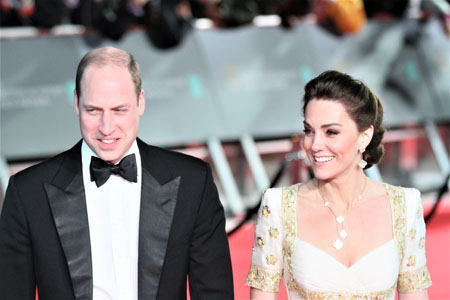
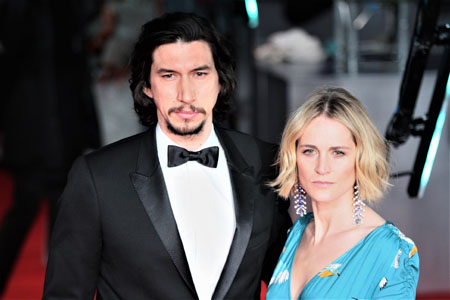
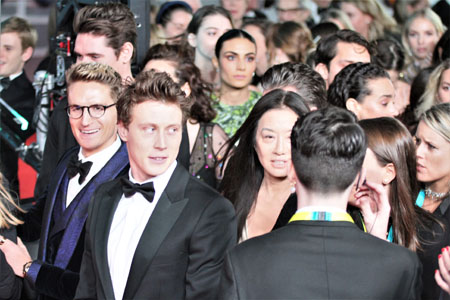
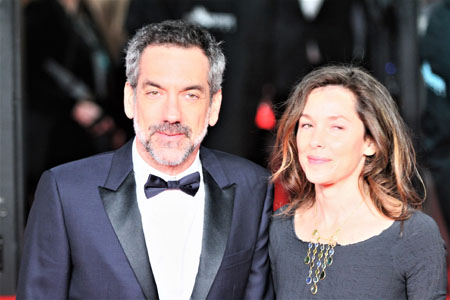
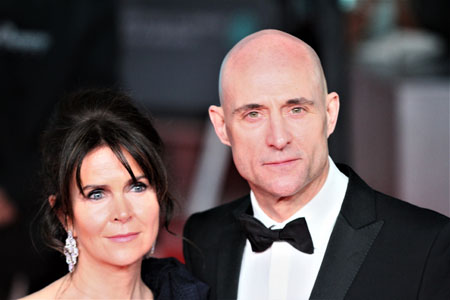
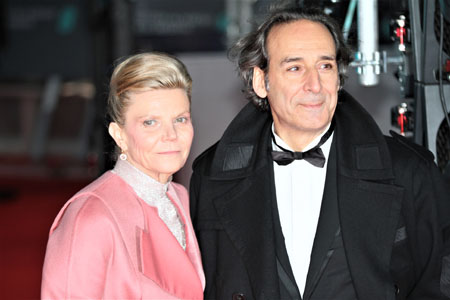
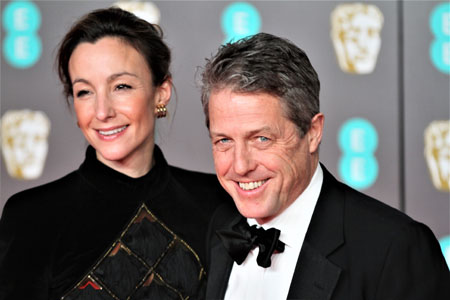
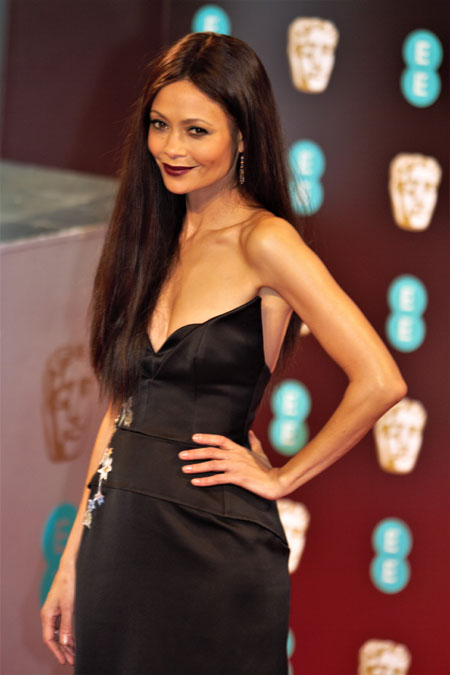
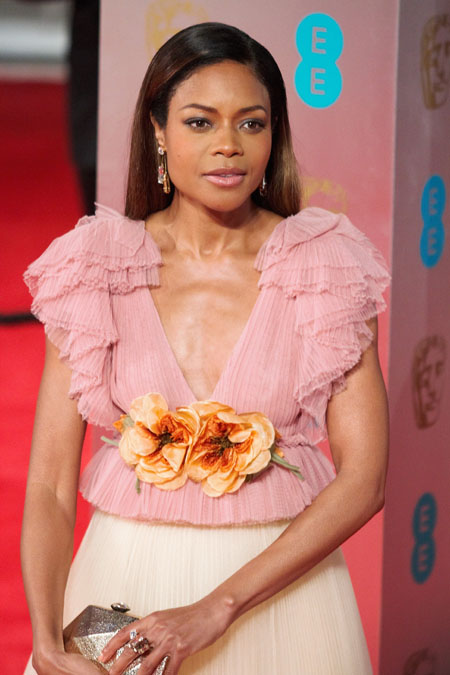
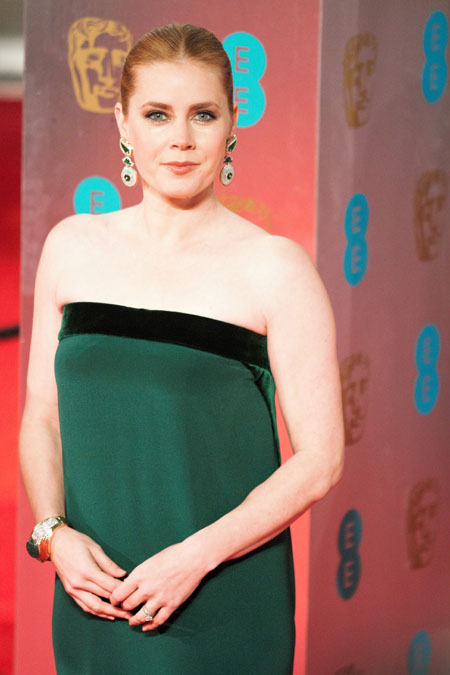
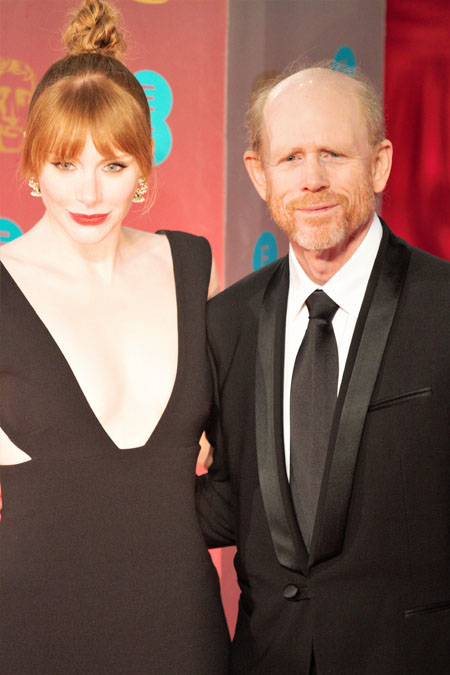
Cinema Retro's Mark Mawston takes you on the red carpet for the
2020 BAFTA Awards at the Royal Albert Hall in London with some up close
and personal photos of the celebs. (All photos copyright Mark Mawston.
All rights reserved).
(Photos copyright Bill Duelly. All rights reserved.)
Phil
Lapp remembers being 6 years old and coping with a tinge of disappointment.You see, to be an extra in the movie filming
in his hometown of Strasburg, PA, he had to be 7.So he was relegated to ‘keeping Lukas
occupied’.The movie was Witness.Lukas was Lukas Haas, who was the young boy
that witnessed a murder.It was a big
event for this small Lancaster County community.Han Solo/Indiana Jones (Harrison Ford) was in
it, so he would be around as well.Phil’s
dad was an extra, most notably he’s the one in silhouette, after the funeral
scene, driving the cart that Kelly and Lukas are lifting bales of hay
onto.His does cherish those memories of
playing a lot of card games with Lukas while Kelly McGillis looked on and would
occasionally join in.
34
years later, many locals fondly recall the time Hollywood came to Lancaster
County and how many were involved in some peripheral way.The phenomenon has certainly died down, but
for many years, was credited with an unprecedented increase in tourism in the area.Some locations, such as Zimmermans General
Store in Intercourse (yes the actual name of the town) and the surrounding
streets saw frequent tourists, but the farm’s location was usually a closely
guarded secret amongst the natives as deference to the owners who were
initially Mennonite and later Amish (Mennonite allow photos, Amish do not).In fact the Amish community was rather upset
at the time that Hollywood, the well of corrupting influences, would come to
their community to make a movie.They urged
their members not to cooperate with the film in anyway.In fact any Amish in the film are portrayed most
likely by Mennonites (close to Amish but not quite).
Phil
was one such local who is now running a specialized tour service called Lokal Experience.The focus is on small groups and unique
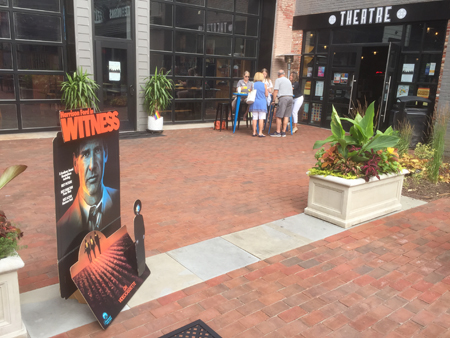
specialized experiences in Lancaster County.On June 15, 2019, Phil and his group hosted a WITNESS Experience, which
was a chance to spend the day, first viewing the movie and then heading off to
the farm for tours and a meal.
The
day started early in the morning at the Zoetropolis Cinema (https://zoetropolis.com/)
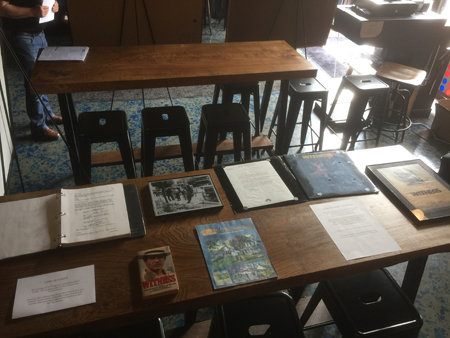
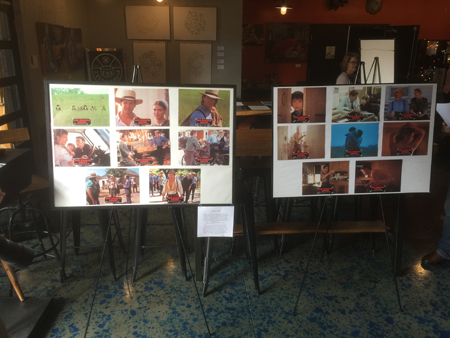
located in downtown Lancaster, with a screening of the movie.This writer supplied some artifacts from his
WITNESS collection to be displayed at the theater.Items included: video store display; one
sheet; British and German lobby cards; copy of Co-Producers David Bombyck’s
script; paperback tie-in novel and Academy Award promotional materials such as
screening invites and free soundtracks.The 100 or so participants were treated to the behind the scenes
documentary prior to the screening.
Then
it was off to the farm for filming location tours and lunch. The farm to many
is sacred ground and I could tell that many were in awe at just being
there.The farm is not viewable from the
street, and can only be seen by cresting a long driveway.At end of production Paramount repaved the
road, but the past 34 years have taken their toll on it with various rough
patches but it is still a sight to behold as one crested the hill.Paradoxically, it was the same, but different
as well. The house itself is distinctly different, as it has a stone façade now
and not the white shingles.The birdhouse that Harrison Ford’s car crashes
into, is a replacement, as the screen-used one was stolen from the farm during
the year of the film’s first release.
Director Peter Jackson has long been a historical expert on WWI and to commemorate the 100th anniversary of the end of "The War to End all Wars", he has debuted a remarkable feature film, "They Shall Not Grow Old". In collaboration with Britain's Imperial War Museum, Jackson converted elements of 100 hours of silent film footage of the conflict into a vibrant new production that brings the war alive so that modern audiences can relate to the anonymous soldiers in a new, personal way- especially knowing that many of them would be casualties of the war. The movie will be shown in U.S. movie theaters on December 17 and December 27. For New York Times story about the making of the film, click here. For theaters showing the movie, click here.
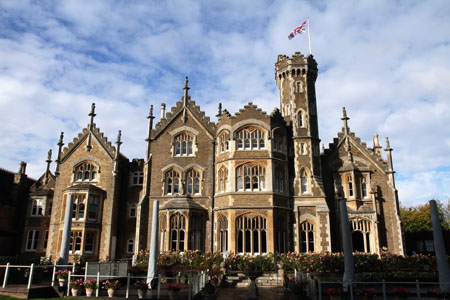
(The impressive and Gothic Oakley Court, star of many horror pics.)
BY MARK MAWSTON
Cinema Retro’s Mark
Mawston was invited to cover a rather special event being held at the wonderful
Oakley Court near Windsor, just across the river and virtually facing Hammers old
studios at Bray. Oakley, the setting for many a Hammer and Amicus film, was
utilized for its Gothic look and proximity from Bray, starting way back in 1949
when Hammer were still under their Exclusive Films moniker. Film fans will
immediately recognize Oakley as the home of Tim Curry’s Dr. Frankenfurter in the 1975 cult classic The Rocky Horror Picture Show, so a more apt
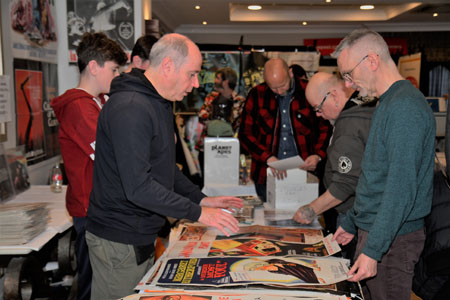
location for a memorabilia fair would be hard to find. The timing was also
perfect as it was held just before Halloween. Collectors and dealers from
all over the country (and further afield) met to exchange stories as well as merchandise
at the event which was expertly organized by Harry Malcolm and Mark Hochman of
Vintage Movie posters.
(Organizers Harry Malcolm and Mark Hockman.)
(Mark & Harry at the Hotel entrance which featured in the movie shown later that day, Brides Of Dracula. It seemed unchanged.)
Hopefully this will be the first of many such events, as
those gathered, including legendary poster artist Graham Humphreys and Bond optical effects designer Alan Church, all agreed that this was a resounding success and
the perfect venue in which to celebrate classic film at this spookiest time of
year. The day was rounded off by a Venture Films screening of the 1960 Hammer classic Brides
Of Dracula starring Peter Cushing, just one of the many classics filmed at
Oakley, the entrance of which featured several times in the film. The spot hasn't changed since filming and the imposing towers were inspiration on the DVD releases of
the Hammer House of Horror series. All
in all, this was a wonderful day for all as the fans and indeed the fangs were
out in force. Though no one offered to recreate The Time Warp, this was a
celebration of one of UK cinema’s most creative periods when Hammer films were
as Gothic as Oakley.
(All photos copyright Mark Mawston. All rights reserved.)
Photos all copyright 2018 by Mark Mawston. All rights reserved.
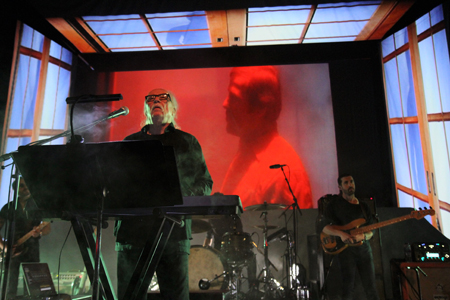
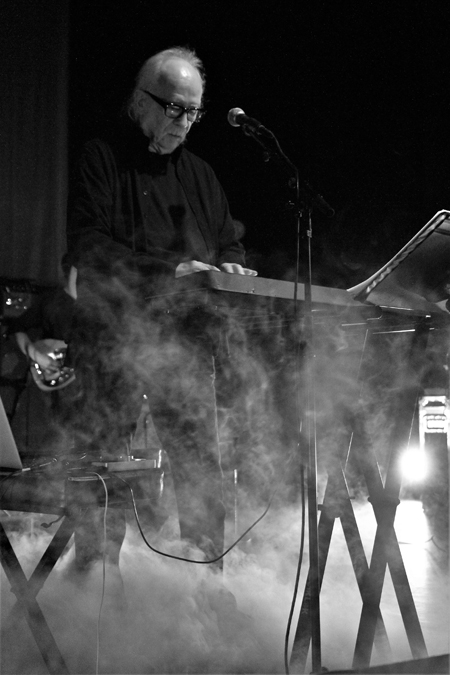
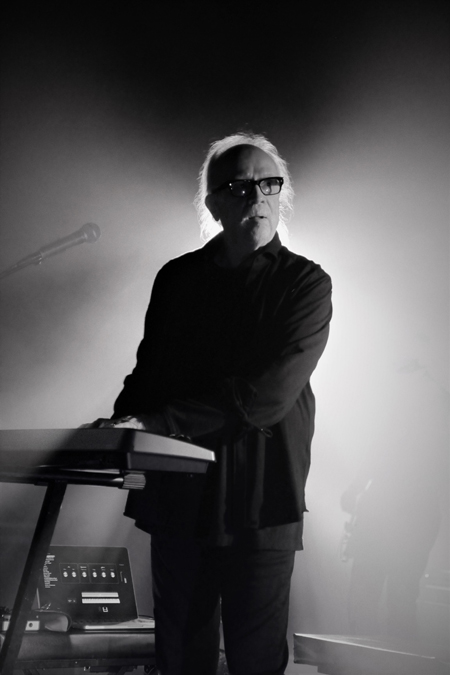
BY MARK MAWSTON
Three days before the
launch of the new Halloween film and
40 years since the original was released, Cinema Retro’s Mark Mawston was
invited to photograph the London leg of the new tour by the original films
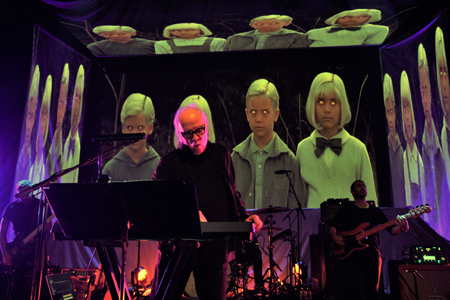
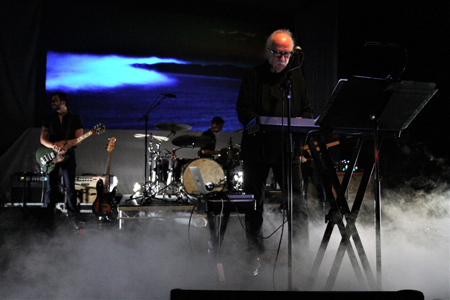
director John Carpenter. As with his concert
here two years ago, John’s set was littered with some of his finest moments;
themes that have transcended their mere film score monikers to become rock music
synth classics in their own right. Tunes such as The Fog, accompanied as it was by dry ice and clips from the film itself,
projected onto screens around the stage, were nirvana for those many fans gathered
to witnesses the maverick director’s other great contribution to cinema: his music,
played live on stage.
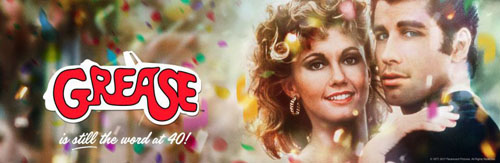
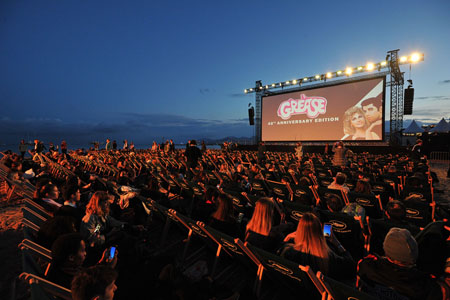
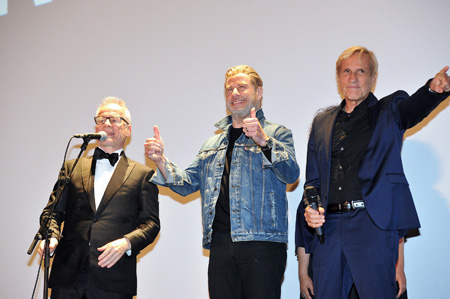
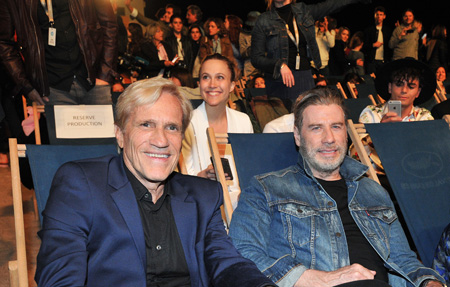
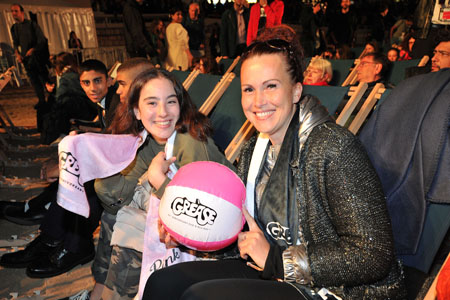
The Academy of Motion Picture Arts and Sciences will present a 40th anniversary screening of "Grease" with director Randal Kleiser in attendance along with stars John Travolta, Olivia Newton-John, Didi Conn and Barry Pearl. Comedian and actor Margaret Cho will emcee. The event takes place on August 15 at the Samuel Goldwyn Theater in Beverly Hills. Tickets go on sale July 25th. Click here for more info.
(All photos copyright Mark Mawston. All rights reserved.)
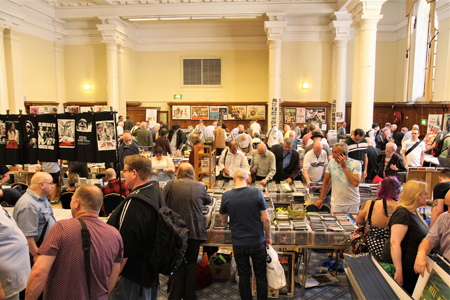
We’ve all had it
happen to us: after years of watching your favourite films in your “second homeâ€,
your favourite cinema closes its doors and the projection light flickers on the
end titles for the last time, only to be replaced by the flutter of pigeon’s
wings who come to roost in the empty theatre before demolition. It happened to
me with the Jesmond Picture House in Newcastle and I’m sure most readers have
had a similar experience. In these days of theatres without flesh and blood projectionists
and the slightly automated feeling that brings to movie-watching, it is always
special to have one last bastion, thriving on the tradition it’s built up over
many years and one you love and visit like an old friend. Such has been the
case with the London Film Fairs at Westminster Halls which I’ve been attending
since moving to London exactly 30 years ago this week. Although it’s great to
have something fresh, it’s also cathartic to have an experience that seems new,
yet traditional at the same time, which is the way I feel about these shows. I
can’t tell you how many wonderful collectibles I’ve picked up over the years here and
although it became a well-loved routine to go there every other month, it never
ceased to provide surprises. Sometimes that pleasure may come from meeting a
memorabilia dealer who had your passion for the same films or having the
opportunity to meet and photograph one of your childhood heroes through their
talks about appearing in the James Bond series or the Hammer and Amicus horror films.
Sometimes there were cast and crew reunions, such as the memorable time the cast
of "Thunderbirds" got back together with no strings attached. Thus, It was a
great shame but sadly not much of a surprise to arrive at Westminster on
Saturday 30June not only to find it was the last day of the month
but also the last fair at these hallowed halls.
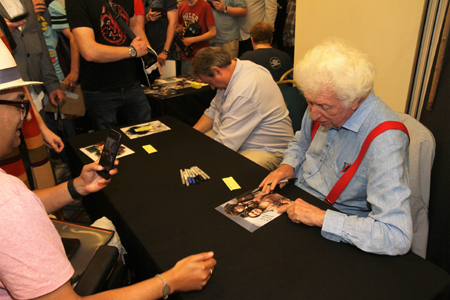
Tom Baker
The London Film Fair
began 45 years ago and was run by the much-missed Ed Mason for many years
before Thomas Bowington took over, retaining the essence of what Ed had begun,
yet bringing a more professional feel to the event, reflected in the many stars
who attended. The shows are now under Showmasters management. Although the
September Fair was always one of the biggest of the year, the next fair has been
cancelled as the event is now moving to The Royal National Hotel in Bedford Way
in London, near Russell Square. It remains to be seen if this change of location
brings with it changes in those dealers and collectors who attend. One would
hope it won’t but it was the familiarity I described earlier that worked so
well, not only for the collectors but alsofor those who were selling, many of whom attended
those first shows. One would hope that the fair, like the films it celebrates,
will be seen as worth preserving by those behind the scenes as well as those
who attend. We’ll know on November 18th.
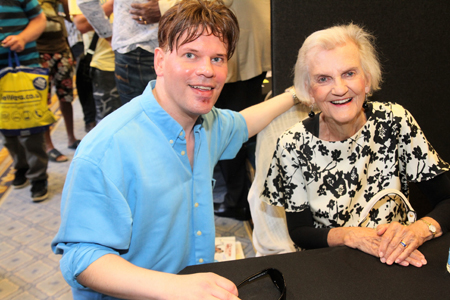
Thomas Bowington & Rosalind Knight
The main stars of the
June show were, as ever, from all genres; from Bond “Octopussy†star Vijay Amritraj,
to Jane Merrow (who I interview in the latest issue of Cinema Retro, #41), Sylvia
Syms, Susan Penhaligon, Rosalind Knight, Leonard Whiting (who posed for Retro
in his best Romeo stance from the 1968 classic), to Dr. Who companion Louise
Jameson and Bond Girls Helen Hunt (“Octopussyâ€) and “You Only Live Twiceâ€â€™s
Yasuko Nagazumi. The star of the show, however, was Tom Baker, who had huge queues
waiting to see him and got rapturous applause when he finally entered the
building after being delayed. All in all it was a great day, although one
tinged with a little sadness as it was the end of an era. Of course, although Tom
Baker was the main draw, the other stars of the day were the dealers whose
incredible posters, soundtracks, stills and other memorabilia still make this
show one of a kind. I hope the London Film Fair's loyal attendees follow it to the new
venue, as they are its beating heart.
Director Randal Kleiser and John Travolta. (Photo: Theo Wood).
In anticipation of the
film’s anniversary, GREASE was
restored to its original vibrancy with the highest quality sound, picture
resolution and color.The original negative
was scanned and received extensive clean up and color correction using
previously unavailable digital restoration tools.In addition, the audio was enhanced from a
six-track mix created for an original 70mm release, giving the music more
clarity.
(Photo: Theo Wood)
A new 40th
anniversary edition of the fully restored film was recently released on 4K
Ultra HD, Blu-ray, DVD and Digital.
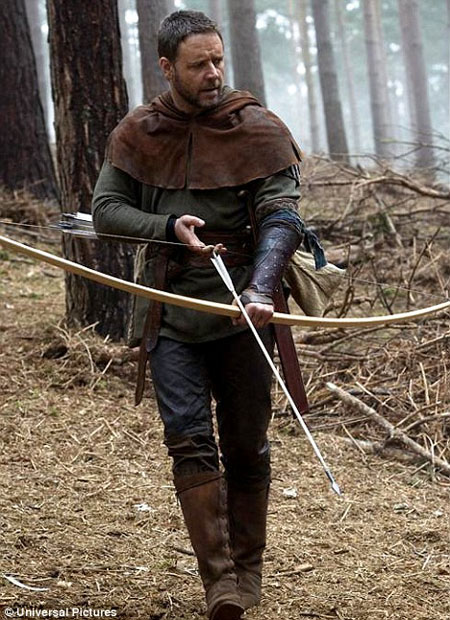
After a costly divorce, Russell Crowe decided to take stock of the vast amounts of memorabilia he had accumulated over the years, including an abundance of costumes and props from his own movies, including a leather jock strap from his 2005 boxing film "Cinderella Man". He decided to part with some of the cherished items at auction in Sydney, where the actor made a surprise personal appearance at the event. In total, the auction raised $3.7 million in revenue, leading the Oscar-winning star to quip that it wasn't a bad hourly rate. Indeed- although it doesn't put much of a dent in the divorce agreement that reputedly saw his wife gain possession of an $11 million mansion and a $20 million payout. That can buy a lot a leather jock straps.... For full coverage and the final prices realized on individual items, click here.
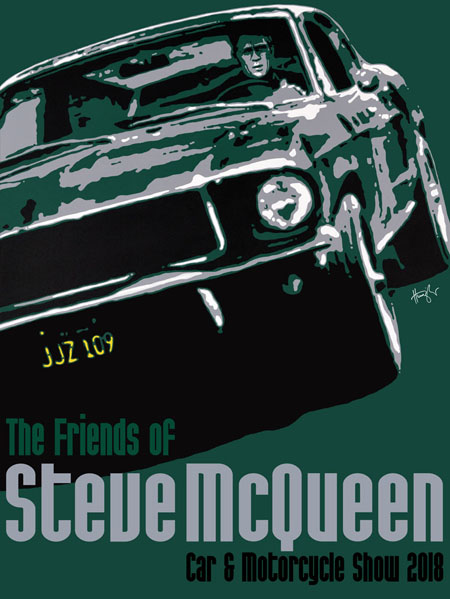
The annual Steve McQueen Car and Motorcycle Show will take place this year on June 18 in Chino Hills, California. As always, the proceeds will benefit the charity organization Boys Republic, a camp where Steve McQueen spent some of his troubled youth. The iconic actor never forgot the positive influence that Boys Republic had on him in his early years. Despite its name, the Club also now benefits young girls who have challenges in life. The annual event operates with the permission and participation of the McQueen family and is much-anticipated by classic car lovers. For details, click here.
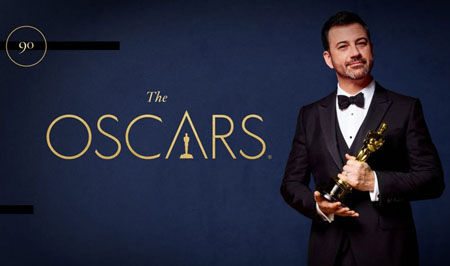
In my critique of the 90th annual Academy Awards ceremony, I criticized the Academy and host Jimmy Kimmel for wasting valuable air time on an elaborat (and unfunny) comedy sketch that deprived viewers from seeing some of the honorees who had received Oscars earlier at a ceremony hosted by the Academy's Governors. Among them was one of the world's finest and most enduring actors- Donald Sutherland, who surprisingly never received a nomination despite giving movie lovers a rich selection of characterizations ranging from those found in screwball comedies to intense dramas. Sutherland delivered a humorous, classy and gracious acceptance speech that viewers never got to see. However, we found this clip of his entire speech that was made available by the Academy. In fairness, the Academy argues that by giving their honorary awards away from the main ceremony, it allows the recipients to speak at length and not be bound by artificial time demands. That's a valid point. However, our guess is that most of the honorees would happily deliver shorter speeches in order to have their moment of glory shared with viewers around the globe.
"There's got to be a morning after" went the strains of the Oscar-winning song from the 1972 film "The Poseidon Adventure" and that somber warning always pertains to coverage of the Oscar events show itself. After last year's abysmal event that saw awful comedy bits, offensive omissions of major stars from the memorial tribute and the historic snafu in which the wrong film was initially announced for Best Picture, there was no where to go but up. Much of the success or failure of these shows rests on the back of the host. I thought it was going to be a mistake to bring back Jimmy Kimmel, as I was generally unimpressed with his performance last year. However, the second time was the charm- or almost. (More on that later). In general, this year's telecast was more tightly structured and moved at a faster clip even though it still ran about three-and-a-half hours. Helping matters was the fact that there was an exciting and highly diverse selection of films competing in the key categories and they boasted some brilliant performances by an eclectic array of actors. Gone are the days when viewers had to suffer through the mandatory opening musical production number, which was generally measured in terms of how misguided it proved to be. Kimmel started off with a witty dialogue that was surprisingly and refreshingly light on the political barbs in spite of the fact that the White House had just gone through a couple of miserable weeks that had brought out a surrealistic number of self-imposed scandals and crises.I had thought there would be so many quips about this that I expected to see President Trump's name listed among the key contributors to the show. (There were, however, some deep digs at Harvey Weinstein, who does not have a political base that can be offended.) However, I was relieved that Kimmel kept himself in check because I'm among those that think major awards shows should try to stick with the subject at hand: the work and the personalities involved in creating it. With Kimmel having decided to follow the old adage and "Leave the messages to Western Union", it fell upon others to promote diversity and equality. Great efforts were made in both areas with Best Actress winner Frances McDormand movingly calling for all female nominees to stand up. It was a moment that illustrated how fast and furiously Hollywood is moving to finally provide opportunities to females in the industry. Similarly, there were many minority artists on stage as presenters, performers and winners. I was glad to see triple-threat Jordan Peele, the director, writer and producer of the ingeniously quirky "Get Out", become the first African American to win the Best Original Screenplay award.
The awards dispensed during the show all went to worthy winners, though I would have liked to have seen "Three Billboards Outside Ebbing, Missouri" take home the Best Picture prize. Gary Oldman and Frances McDormand were popular, if predictable, winners based on their superb performances. "The Shape of Water" took Best Picture, as did its director Guillermo del Toro. The elaborate presentations for Best Song just emphasized the strengths and weaknesses of each of the nominees in this category, as the songs themselves ranged from pleasant to dreadful, which is often the norm. The show was moving along swimmingly until Jimmy Kimmel took viewers and participants on a major, ill-advised detour just as he had last year by introducing an elaborate gag in which people in an adjoining movie theater were used as unknowing props when Kimmel brought an array of celebrities from the Oscars ceremony next door to surprise them. Incredibly, it was a variation of the same awful shtick he pulled off the previous year. There's something rather condescending about bringing in a boatload of rich people to dispense candy and hot dogs to the grateful masses. It's like watching benevolent nobles toss some trinkets to their loyal serfs. Worse, the gag ate up valuable air time that could have been used for more appropriate purposes. Earlier in the show Kimmel made a snide remark about showing some of those honored with Oscars being dismissed with "blink-and-you-miss-them" clips from a ceremony that had been held previously. He correctly needled the Academy for pointing out that these artists and technicians, who would have once been allowed on stage at the "real" event, were now excluded. But his hypocrisy was revealed when he launched his dopey sight gag later. If you think I'm being a grump then ask yourself if it was more appropriate to spend time showing Kimmel and company tossing food to audience members or have the opportunity to see and hear Donald Sutherland accepting the Governor's Award for lifetime achievement.
The segment that honors artists who passed away in the last year should also be retired. Although sensitively presented and well-edited, the number of inexcusable exclusions is now almost downright offensive. Yes, it's great to honor those who make the cut (I counted three personal friends in the montage of artists who have left us in the last year), but if you can't extend the segment for even another few minutes in order to include other worthy honorees, then let's just eliminate it altogether. (The Academy does provide a more comprehensive tribute on their web site. Click here to view).
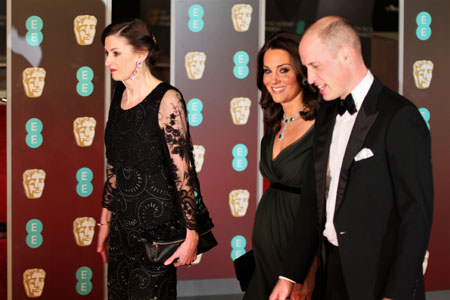
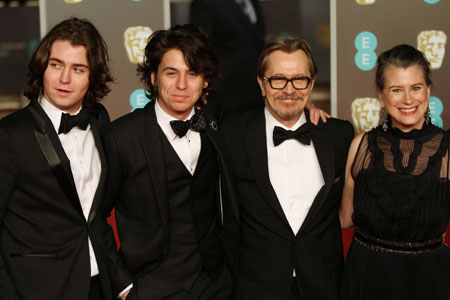
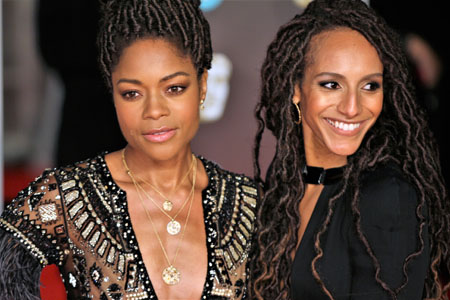
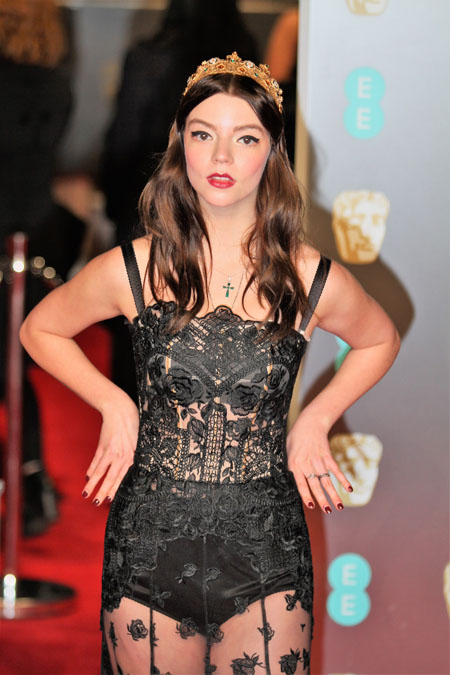
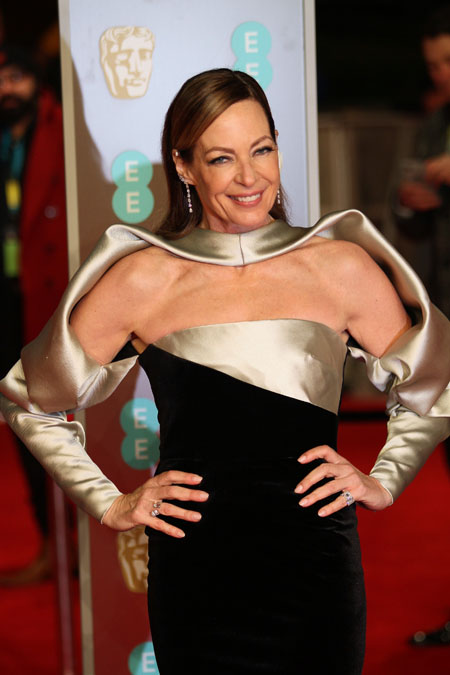
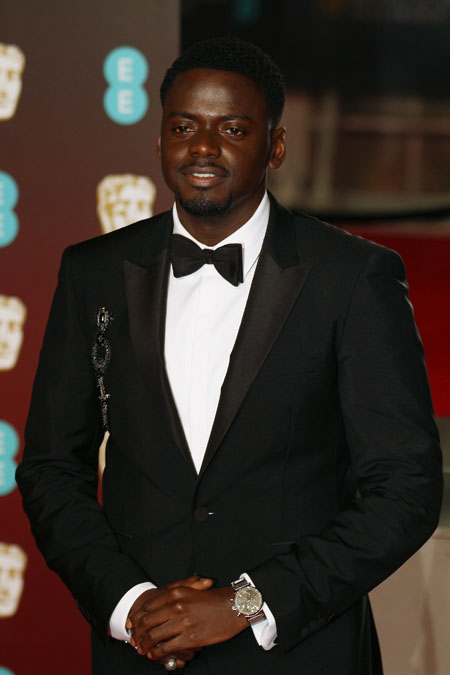
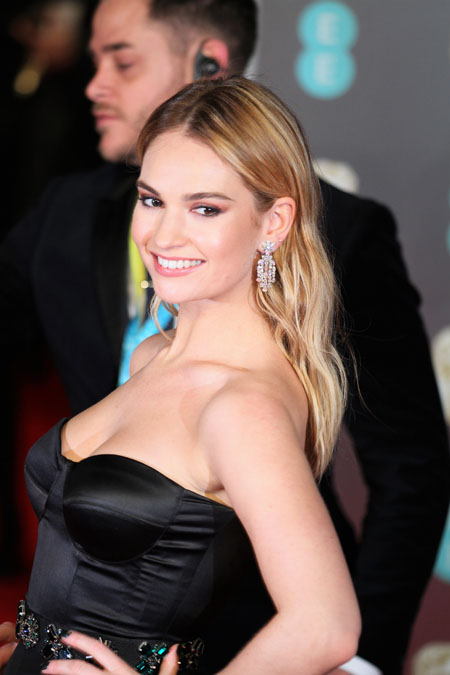
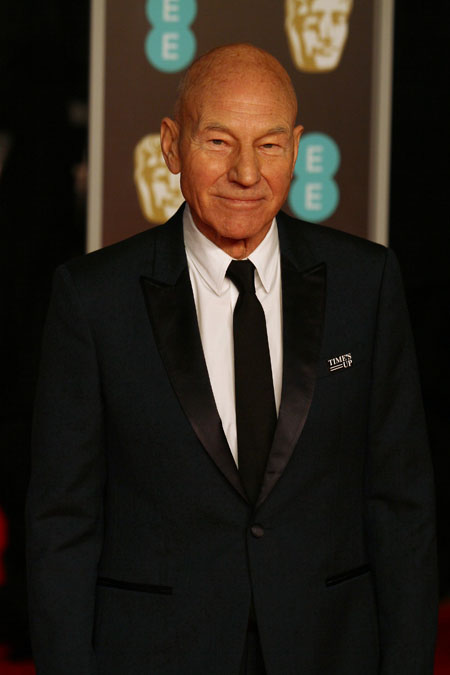
Cinema Retro's Mark Mawston takes you on the red carpet for the 2018 BAFTA Awards at the Royal Albert Hall in London with some up close and personal photos of the celebs. (All photos copyright Mark Mawston. All rights reserved).
The Duke and Duchess of Cambridge arrive at the festivities.
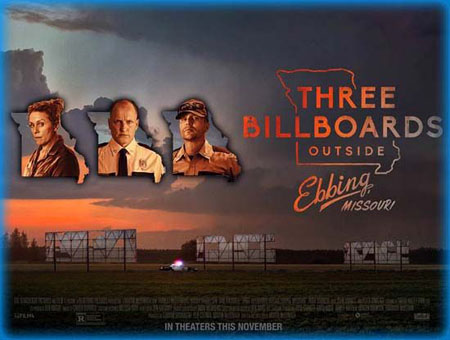
"Three Billboards Outside Ebbing, Missouri" took the top honors for Best Film and Best British Film at last nights BAFTA awards. The film also won best original screenplay for writer/director Martin McDonagh. Frances McDormand was awarded Best Actress and Sam Rockwell received Best Supporting Actor. Allison Janey won Best Supporting Actress for "I, Tonya". Gary Oldman, the odds-on favorite, won Best Actor for his portrayal of Winston Churchill in "Darkest Hour". Guillermo del Toro received Best Director for "The Shape of Water". For complete list of winners, click here. For coverage of the ceremony, click here.
For lovers of classic cinema as well as classic music, the recent emergence of presenting screenings of films accompanied by live orchestras has proven to be manna from Heaven. This was particularly true last week at Lincoln Center's David Geffen Hall when the New York Philharmonic, under the direction of David Newman, presented a big screen showing of "Star Wars: A New Hope" with the Philharmonic providing live accompaniment of John Williams' legendary score. To call the resulting event thrilling would be an understatement. The atmosphere in the hall was unusual for a Philharmonic event, as concert producer Betsey Tumarkin thought outside the box and allowed the Philharmonic to go funky. The hall clearly embraced and catered to the fan movement, which allowed attendees the opportunity to pose for photos with characters from the film. It was an amusing sight, with uppercrust patrons walking about with Martinis intermingling with families with young children who were thrilled to meeting Darth Vader and some of those evil storm troopers. Additionally, self-described "Star Wars" geeks proudly wore their own costumes to the event, making an interesting contrast to those attired more traditionally for a Lincoln Center concert. The resulting detente between both aspects of the audience was due to their common respect for the music of John Williams. Even conductor Newman, an esteemed film composer in his own right, got into the action following four-- yes, four-encore appearances demanded by the thundering ovations - by wielding a light sabre from the podium. I must shamefully admit that I only saw "Star Wars" once, when it opened theatrically in 1977, though I did revisit portions of it back in the dark days of VHS to fact-check a book I was co-authoring with Michael Lewis, "The Films of Harrison Ford". Thus, when the Cinema Retro was invited to attend and review the opening night of the concert series, this became the ultimate offer I couldn't refuse. Perhaps my distance from the film served me well on this particular night because, while I certainly remembered the most iconic aspects of the movie and those classic lines of dialogue, I was able to enjoy the many wonderful nuances of the story and the performances as if for the first time, including the homage to John Ford's "The Searchers" when Luke finds his home destroyed and his family brutally murdered. It was also delightful to see British acting icons Alec Guinness and Peter Cushing evoking applause from contemporary audiences when they first appeared on the screen.
Attendees got into the spirit of things by warming up to dastardly villains.
The version of the film that was screened was the "Special Edition" from 1997. It was especially created for concert events, as it had the dialogue in sub-titles for those instances in which the overwhelming sound of the orchestra drowned out some of the soundtrack. There was an intermission mid-way through the screening, presumably to give the musicians a break, but also to ensure that there was a race to the souvenir stands where attendees could buy exclusive "Star Wars" concert merchandise. In the program created for the event, John Williams states "These live performances allow audiences to hear these scores in a new way. The performance by a live symphony orchestra enables audiences to hear a lot of music that can go unnoticed in the cinema." As for the challenge such events present to musicians, Williams says ""The orchestra must play pretty relentlessly for two hours or more. It is very intense for the brass, particularly in many of the battle sequences that can be 15 or 20 minutes long." Horn player Leelanee Sterrett is quoted as saying, "The brass parts are very prominent in almost all the famous themes you think of: The Imperial March, Princess Leia's Theme, the Throne Room. We have a really important role to play in the storytelling." Of Williams' score, David Newman says "It was so groundbreaking. It completely changed film music".
Sales of concert merchandise were out of this world.
Perhaps the greatest tribute to visionary mind of George Lucas comes from John Williams himself: "(He) created something that seems to be timeless. You'd have to look back to Walt Disney or even Dickens to find a comparison to the longevity enjoyed by the fabulous characters George has conjured. Darth Vader, Yoda and Luke Skywalker are very much still with us and will continue to be for decades to come. Forty years is now looking like a very short time."
(The New York Philharmonic will next present "The Empire Strikes Back" on September 26, 27 and 28; "Return of the Jedi" on October 4 and 5 and "The Force Awakens" on October 6 and 7. Click here for information and tickets.
"Thunderball" co-stars Martine Beswick and Luciana Paluzzi.
Hammer and "Live and Let Die" actress Madeleine Smith.
BY MARK MAWSTON
The London Film Convention, organized by
Thomas Bowington was quite literally a Who’s Who of heroes and villains from
the small and silver screen. The actual Who came in the shape of a Dr. himself
in the guise of Sylvester McCoy, along with Who assistants Katy Manning who played Jo and
Bernard Cribbins from both the Amicus film version and the TV version. There was also a
rare appearance from Garial Woolf. The other key cult British film genres-the Carry On films, James Bond and Hammer horror- were all represented too, with many of the star
guests appearing in all three: from the Carry On Films we had Fenella Fielding,
Anita Harris and Amanda Barrie, from Hammer and Bond we had Maddie Smith,
Valerie Leon, Martine Beswick, Eunice Gayson, John Wyman, Deborah Moore, Jan
Williams, Shane Rimmer, Robert Watts, Golden Girl Shirley Eaton and a rare
appearance from Luciana Paluzzi.
We also had the Star Wars and action films
represented by Vic Armstrong, Wolf Kahler, Jack Klaff, Virginia Hey and many others.
All in all, a fabulous day for the fan and the collector alike with many of the
attendee’s purchasing back copies of Cinema Retro to be signed by the guests! (All photos copyright Mark Mawston. All rights reserved.)
Wolf Kahler- still recovering from looking inside the Lost Ark of the Covenant!
The First Lady of Bond, Eunice Gayson.
Anita Harris & Amanda Barri
Carry On’s Fenella Fielding
Famed Producer & Production Manager from Star Wars, Indiana Jones and Bond Robert Watts with Who assistant Katie Manning.
James Bond's "Golden Girl" Shirley Eaton.
Bernard Cribbins plays ventriloquist to Sylvester McCoy.
CINEMA RETRO HAS RECEIVED THE FOLLOWING PRESS RELEASE:
Sept
12, 2017 - New York, NY – At this year’s 15th edition of the New
York City Horror Film Festival, broad-ranged character actor Brad Dourif,
beloved to fright fans as the voice of killer doll Chucky, will receive the event’s
Lifetime Achievement Award on Saturday, Oct. 28. The prestigious trophy honors Mr.
Dourif for his long-ranging contributions to horror cinema, and the actor will
accept in person.
Brad
Dourif began his career on the stage where he was eventually noticed by Milos
Forman and cast as Billy Bibbit in ONE FLEW OVER THE CUCKOO’S NEST, a role
which earned him an Academy Award nomination for Best Supporting Actor. He has
brought his craft to classic genre films including the John Carpenter-scripted EYES
OF LAURA MARS; David Lynch’s DUNE and BLUE VELVET; and William Peter Blatty’s THE
EXORCIST III. Dourif gained further renown for voicing Chucky in the CHILD’S PLAY
franchise, the latest film of which, CULT OF CHUCKY, debuts this fall.
13
features and 31 short films make up this year’s festival, which opens Thurs Oct.
26, with a range of films including New York premieres of Mitchell Altieri’s THE
NIGHT WATCHMEN; Norbert Keil’s REPLACE starring Barbara Crampton; Benjamin
Arfmann’s DISMISSED starring Dylan Sprouse; Richard Stringham’s CLOSE CALLS;
and Mathieu Turi’s HOSTILE starring Javier (IT) Botet; and the North American
premiere of Michael Mongillo’s ghost story DIANE.
The
NYC Horror Film Festival was born in 2002 by filmmaker Michael J. Hein as a
venue for newer independent horror filmmaking. After Michael’s passing in 2011,
the festival created the Michael J. Hein Achievement Award to celebrate the
hard work and perseverance of creators in the field. George Romero was the
first recipient of the festival’s Lifetime Achievement Award, followed by other
classic scaremeisters including Rob Zombie, Roger Corman, Frank Henenlotter,
Robert Englund, Stuart Gordon, and the beloved late Wes Craven, Tobe Hooper,
Angus Scrimm, and Herschell Gordon Lewis.
The full schedule for the New York City Horror Film Festival is here:
Cinema Retro has received the following press release:
World Premiere of STAR
WARS FILM CONCERT SERIES
To Feature Iconic
Scores Performed Live to Film
John Williams’s
Complete Scores Conducted by David Newman September 15–October 7, 2017
NEW YORK COMIC CON To
Feature RETURN OF THE JEDI and
THE FORCE AWAKENS as
Part of NYCC PRESENTS
“STAR WARS: MUSIC FOR
A GALAXYâ€
With Conductor and
Film Score Composer David Newman Moderated by Mark Travis
Part of FREE INSIGHTS
AT THE ATRIUM
September 12, 2017
The Philharmonic
Presents “Star Wars Film Concert Series Fan Zone†At Each Concert:
Meet-and-Greet with Star Wars Characters, Specialty Drinks,
Event-Themed Photo
Booth, Commemorative Merchandise, and More
The New York
Philharmonic will present the World Premiere of Star Wars Film Concert Series, September 15–October 7, 2017,
featuring screenings of four complete films from the saga — A New Hope, The Empire Strikes Back, Return
of the Jedi, and The Force Awakens —
with Oscar®-winning composer John Williams’s musical scores performed live to
film. The concerts will be led by acclaimed conductor David Newman.
The
New York Philharmonic has partnered with New
York Comic Con to feature the Star
Wars Film Concert Series presentation of Return of the Jedi (October 4–5) and The Force Awakens (October 6–7) as part of NYCC Presents — a
series of concerts, live podcasts, comedy acts, and more that brings New York
Comic Con to various venues throughout New York City.
David
Newman, who is also a film score composer, will discuss John Williams’s
compositional techniques, leitmotifs, and musical philosophy at “Star
Wars: Music for a Galaxy,†a free Insights
at the Atrium event, Tuesday, September 12. Mark Travis — the
New York Philharmonic’s Associate Director, Media Production, and resident Star Wars aficionado — will moderate.
The event takes place at the David Rubenstein Atrium at Lincoln Center
(Columbus Avenue at 62nd Street).
All
concert attendees are invited to take part in the Philharmonic’s “Star
Wars Film Concert Series Fan Zone†at David Geffen Hall, before and
after each performance as well as during intermission. Ticket holders will have
the opportunity to meet R2D2, Stormtroopers, and other Star Wars characters from costumed fan groups; in addition, they
can take photos in an event-themed photo booth. A commemorative program and
other merchandise will be available for purchase and a specialty cocktail
called the Cantina Margarita (and its non-alcoholic version) will also be
available. Those planning to attend are encouraged to come in costume and share
their Fan Zone experience on social media using
On April 29 the Tribeca Film Festival hosted an historic reunion between director Francis Ford Coppola and cast members from "The Godfather" and "The Godfather Part II". Significantly, the event was held at the nation's crown jewel of theaters, Radio City Music Hall. Joining Coppola were James Caan, Robert De Niro, Robert Duvall, Talia Shire, James Caan, Al Pacino and Diane Keaton. The sold out venue first saw back-to-back screenings of the first two "Godfather" films, which were rapturously received by fans who applauded loudly at the introduction of certain beloved characters as well as classic lines of dialogue. (The audience predictably went wild when the scene arrived of Michael and Kay attending the Christmas show at Radio City Music Hall.) Since neither film had ever been shown in the Music Hall, it was especially pleasing for retro movie lovers to experience them in Gotham's famed venue. Upon the final credits of "The Godfather Part II" ending, Coppola and the cast members took the stage for a discussion moderated by director Taylor Hackford. The "Godfather" alumni clearly relished seeing each other after so many years. Coppola was the father figure among the group and most of the comments about the making of the film were appropriately recalled by him. Coppola related how Paramount was skeptical about his abilities to bring the bestselling novel to the screen. At one point early in the production he was alerted that he was to be fired from the $6 million production. The studio brass didn't like the initial footage he had shot, specifically the scene in which Don Corleone rejects a business proposal from Sollozzo to join him in the drug trade. Coppola frantically arranged to reshoot the footage over the weekend and managed to avoid getting fired the following Monday. Coppola credited producer Al Ruddy and Paramount mogul Robert Evans for standing by him as allies, even though he admitted that the mercurial Evans caused him endless agita. Al Pacino related he was also in the studio's crosshairs. Unimpressed with his performance as Michael, he was due to be fired. Coppola came to his rescue by prioritizing the scene in which Michael Corleone shoots Sollozzo and corrupt police captain McCluskey in a restaurant. Coppola presumed that Pacino would carry off the scene brilliantly. He was proven to be correct when Pacino was retained on the film. Talia Shire, sister of Francis Ford Coppola, related how she desperately wanted to play the role of Michael's vulnerable and fragile sister Connie. Coppola actually made her screen test for the part and still felt she was all wrong for it because he envisioned a homely actress in the role. Coppola and the cast member recalled Marlon Brando being in an exceptionally good mood during production perhaps because he saw the film as his lifeline to a career comeback after a decade of boxoffice disappointments. (Brando was represented by a photograph placed prominently on stage among his cinematic "family".) Caan recalled practical jokes played by Brando on the set and Duvall remembered Brando leading male cast members in a mooning contest during filming of the wedding scene. Keaton acknowledged that she had only recently watched the film for the first time in decades because she felt her character never fit in with the all-Italian cast and that she was particularly bothered by her voice in the film. Coppola also revealed how Lenny Montana, who played hitman Luca Brasi, could not remember his lines and delivered them in a halting fashion. To get around the obstacle, he quickly wrote a scene showing the dim-witted Luca rehearsing his "thank you speech" to Don Corleone as though it was a difficult homework assignment. It was a brilliant improvisation that got Montana off the hook and made his brief presence in the film even more memorable. Coppola also paid tribute to the many artists from the films who are no longer with us and specifically praised Al Letieri for his performance as Solazzo.
Special campaign poster designed for the event.
If there was a weak link in the memorable discussions on stage it was Taylor Hackford as moderator. Hackford was understandably enthused about his role but he forgot the golden rule that interviewers should follow: remember that the audience is there to hear the guests, not the interviewer. Hackford seemed to be winging it instead of having carefully prepared questions and often ate up valuable time by giving long personal observations before getting to the point. He also had no rhyme or reason when it came to allocating the questions. Understandably, he went to Coppola more than anyone else but some cast members were treated almost as stage props. Duvall was rarely called upon to make a point, Shire told some good tales in the beginning but was barely heard from again and, to the consternation of audience members this writer spoke to afterward, De Niro was virtually ignored throughout the entire 90 minute discussion. It was only at the very end that Hackford seemed to remember that De Niro was sitting right next to him and the iconic star was given a single question before the evening came to a conclusion. Consequently there was very little discussion of "The Godfather Part II" and no mention at all was made of "The Godfather Part III". Hackford also wasted a good deal of time discussing trivial aspects of the production such as Coppola having the last minute idea of placing a cat on Don Corleone's lap in the first scene of the film, a minor point of interest that Hackford discussed ad nauseum. To his credit, however, Hackford realized the historic nature of the occasion and made it clear he would blow past the imposed timetable and continue the discussions for as long as possible. Consequently, those lucky enough to be in attendance certainly got their money's worth.
In all, "The Godfather" reunion was a superb, full day of entertainment, even if it tested the endurance of everyone's rear ends (the entire event lasted almost nine hours!). Kudos to the Tribeca Film Festival and Robert De Niro for making it a possible and giving classic movie lovers an offer they couldn't refuse.
(To read Star Ledger film critic Stephen Whitty's take on the event, click here).
The New Jersey Symphony Orchestra will provide live musical accompaniment for a screening of "Harry Potter and the Chamber of Secrets". The concert takes place at the New Jersey Performing Arts Center in Newark on October 28. Click here for details.
Some enterprising fans of Patrick McGoohan's landmark television series "The Prisoner" intend to celebrate the show's 50th anniversary with a multi-day convention that will be held in Seattle on September 29-October 1, 2017. You may not get to meet Number One but you will have plenty of activities including screenings, lectures, appearances by actors who were in the show, musical performances, cocktail parties and theatrical re-enactments. For more details and ticket info click here. "Be seeing you!"
In the most notorious snafu in Oscars history, the wrong film- "La La Land"- was announced by presenters Faye Dunaway and Warren Beatty (reunited for the 50th anniversary of "Bonnie and Clyde") as the winner of the Best Picture. However, within minutes, the triumphant producers had to hand the award over to the makers of "Moonlight", which was the official winner. Beatty and Dunaway were not to blame- they had been handed the envelope for Best Actress, which had just been given to Emma Stone for "La La Land". Confused, Dunaway announced the winner was "La La Land". The debacle left a group of incredulous people on stage even while the producers of "La La Land" graciously handed over the award to the "Moonlight" team. The finale looked like a scene from "It's a Mad, Mad, Mad, Mad World".
The ceremony itself was over-produced and over-long with Jimmy Kimmel as less-than-satisfactory host. He turned the entire event into a cheap comedy segment from one of his late-night shows with cringe-inducing bits that were both elaborate and unfunny. They ranged from literally parachuting donuts onto the audience to bringing in a busload of incredulous tourists into the auditorium. The latter was a one-minute joke stretched to interminable lengths as we watched the tourists ask the stars for autographs! Meanwhile, political punditry was predictably in vogue with many snipes at President Trump, whose obsession for media attention is considered a mental illness by opponents and an amusing eccentricity by his supporters, If Kimmel and company really wanted to get under the president's skin, they would have refrained from mentioning his name at all. Besides, nobody tunes into the show for political advice. There was an offensive comedy segment in which stars read actual offensive Tweets about themselves. More ridiculous was the segment that paid tribute to artists we lost over the last year. As usual, there were bizarre exclusions including director Guy Hamilton and Oscar nominee Robert Vaughn, to name just two. Meanwhile, the segment featured countless people the public never even heard of. With all the time wasted on comedy skits, couldn't they have extended this segment another couple of minutes to include more artists? The Best Song nominees were mostly duds and the banter between presenters was dreadful. On the up side there were some genuinely inspiring acceptance speeches and it was great to see so many films about people of color being honored. It had been a very fine year for movies but this Oscar telecast was one of the worst. The only upside is that during the Best Picture confusion, Kimmel was heard to promise that he won't be back as host. Let's hope it's a promise that is kept.
The annual British Academy of Film and Television Arts has presented its awards for the year 2016. For a full list of nominees and winners click here. Cinema Retro's London photographer Mark Mawston was there to cover all the action on the red carpet. Here is a selection of some of his photos. (All photographs copyright Mark Mawston. All rights reserved.)
It looks like the big Hollywood musical is back from the cinematic graveyard as "La La Land" swept the Golden Globes with a record number of seven wins including Best Picture (Musical or Comedy), Best Director, Best Actor, Best Actress and Best Screenplay. Click here for more. Click here for complete list of winners and nominees.
One of the great joys any retro movie lover can experience is to view a screening of a classic film with a world-class orchestra playing the musical score as live accompaniment. Many acclaimed orchestras are now doing just that and delighting movie lovers across the globe. Among the most impressive performances, not surprisingly, are those presented by the New York Philharmonic, which has a very popular film-related series that is as diversified as it is irresistible. On May 19, the the NYP presented a superb tribute to Charlie Chaplin with a screening of his 1931 masterpiece, "City Lights". Conductor Timothy Brock informed that audience that by 1931 silent film was already dead. The new era of sound was all the rage but Chaplin's clout and popularity were such that he could still find financing for his films despite his insistence that they would be shot and presented as silent movies. Clearly the beloved Little Tramp would have seemed out of place in the new era. Chaplin not only wrote, starred in and directed the film but he also composed it's marvelous score. Brock was approached by Chaplin's estate to see if he could reconstruct the original score based on Chaplin's original notes. Over the decades, the score had been bastardized into many variations performed by countless orchestras and musicians around the world. The task took over a year but the effort was worth it. A sold-out audience at David Geffen Hall at Lincoln Center applauded wildly throughout. The evening was a triumph not only for Brock and the orchestra but also for Chaplin's legacy.
Cinema Retro has received the following press release:
Film hisotiran Bruce Crawford's 38th salute to classic
cinema and a 60th anniversary
tribute to Cecil B. DeMille's classic epic The Ten
Commandments will be Friday May 27th, at 7pm at the Joslyn Art Museums'
Witherspoon Hall theater 2200 Dodge St Omaha Nebraska.
Special guests, Miss Holly Heston, daughter of screen legend
and star of the film, Charlton Heston and actress Kathy Garver who portrayed
young Rachel in the film. Kathy is best known as Cissy from the classic TV
series Family Affair. Artist Nicolosi will have a United States Post Office
Commemorative Envelope honoring the film and Charlton Heston and the legendary
director of the film, Cecil B DeMille, unveiled at the event.
Tickets on sale May 4th at all Omaha only Hy Vee stores
customer service counters
The Metrograph is a two-story, rather flat and
rectangular building located at 7 Ludlow Street. The theater is sandwiched inconspicuously
between a funeral parlor and an iron works foundry, a couple of blocks east of
the Canal Street entrance to the Manhattan Bridge. It’s here, where the Lower East Side meets -
or perhaps blurs - with the border of Chinatown, New York City’s cineastes will find the borough’s
brightest new twinplex – one specializing exclusively in indie, art house, and repertory
programming. Since it’s opening in March
2016, the theater has already screened an intriguing variety of shorts, foreign
films, retrospectives, and silents.
On the weekend of April 8-10, the Metrograph partnered
with Subway Cinema (the 501(c) (3) non-profit that has steered the New York
Asian Film Festival since 2002) to host the sixth annual “Old School Kung-Fu
Fest.†This year’s series of wild martial
art extravaganzas was programmed to celebrate the legacy of Golden Harvest
Productions, the Hong Kong based-studio founded by rogue producer Raymond Chow and
Leonard Ho following their break with the Shaw Brothers. It was through a series of Bruce Lee films
released through Golden Harvest that martial arts-action films would make their
first successful inroads into western markets. Lee, justifiably disappointed by his treatment in Hollywood and relegated
to sidekick and second-fiddle parts, moved to Hong Kong where he would star in no
fewer than four Golden Harvest productions from 1971 through 1973. (Lee’s fifth and final film for the company, the
posthumously released Game of Death (1978)
was cobbled together from bits of footage left behind following his tragic
death at age 32).
The film I was most anxious to revisit – for the first
time in nearly forty years - was Brian Trenchard-Smith’s The Man From Hong Kong (1975) (aka The Dragon Flies), featuring Jimmy Wang Yu (“The One-Armed
Swordsmanâ€) and one-shot James Bond George Lazenby. Having brashly walked away from the role of Bond
following his single-turn in On Her
Majesty’s Secret Service (1969), the former model-turned-actor had anxiously
found subsequent film work mostly unavailable. He reportedly financed a good portion of his first post-007 motion
picture, Cy Endfield’s Universal Soldier
(1971), out of his own pocket. In 1972,
Lazenby would accept an offer to appear in the grim and disturbing Italian
Giallo Chi L’ha Vista Morire? (Who Saw Her Die?). As director Aldo Lara would later recall in a
supplemental interview accompanying the film’s DVD release:
George
Lazenby had already played the role of James Bond and acquired a certain
international fame. This was useful for
the producers… He had deep issues with (Cubby) Broccoli and the entire James
Bond organization… In the end, he didn’t make a lira. He was going to the casinos, staying in big
hotels, and nothing was free. At the end
he was shown the bills and everything had been deducted from his pay… he had
made nothing. His only dream was to
return to his homeland of Australia, buy a boat and sail off alone. He was happy that [this film] would earn him
the money to buy the boat. He was very
available and very nice, but he disappeared after this.â€
Well, not entirely. Near broke and recently married with a child on the way, Lazenby was
wandering around London’s Leicester Square where, on a whim, he caught a
late-night screening of Bruce Lee’s Fists
of Fury (aka The Big Boss, 1971). Though sensing a window of opportunity had
opened, the actor hadn’t done his homework particularly well. Lazenby booked a flight to Singapore, only to
discover Hong Kong was Lee’s actual base of operation. He caught a second flight to Hong Kong and, following
a brief meeting with the powerful but uninterested Shaw Brothers, found his way
to Raymond Chow’s office. Though Chow also
seemed indifferent to Lazenby’s unannounced visit, the producer did have the
presence of mind to call down to Lee (“James Bond is here to see you. Can I send him down?â€). Though Lee’s answer was a curt “No,†an hour
later the martial arts star emerged from his screening-room session. He asked the down-and-out Australian if he’d
care to share a luncheon with Chow and himself. Midway through that meal – and to Raymond Chow’s sputtering surprise –
Lee coolly instructed his business partner to write out a check in the amount
of $10,000. “I want George to come back
here and do a movie with me, [Game of
Death] and I know he’ll come back if he’s got my money.â€
Though he had already begun work on Game of Death, production was temporarily suspended when Golden
Harvest teamed with Warner Bros. for the international breakthrough Enter the Dragon. We’ll never know exactly what role Lee had in
mind for the former James Bond since, on July 20, 1973 and only four days following
their first meeting, Lee was found dead. The executives at Golden Harvest were
devastated. Not only had they lost a
friend and essential creative partner, they now inherited the liability of having
George Lazenby on the company payroll. The
company’s chagrin wasn’t personal. The
truth of the matter was their newly signed leading man was Hong Kong box-office
dead weight: he had absolutely no
kung-fu training and couldn’t speak a word of Mandarin.
Tired of hanging around Hong Kong waiting for something
to be offered in the weeks following Lee’s passing, Lazenby returned home. In January 1974 the actor announced to
reporters that he was offered a role in The
Golden Needles of Ecstasy to be shot “in both Hong Kong and Los
Angeles.†The plot was to involve
ecstasy-producing acupuncture needles of solid gold that “are “So precious […] people in the Orient will do anything to acquire
them.†Though that film actually would see
the light of day – as the disastrous Golden
Needles – Joe Don Baker and Jim Kelly had been assigned the lead male roles
and Lazenby was, once again, left out in the cold.